
How Long Does 4-Month Sleep Regression Last and What Are the Causes?


Key Takeaways:
- At around 4 months old, your baby's likely to experience signifcant changes to their sleep patterns, which can result in more frequent night awakenings.
- This sleep regression is a normal part of your little one's development and is likely to pass in a couple of weeks. Hang in there!
- You can support them by staying super consistent with your nighttime routine. Make sure they're clean, dry, and comfortable. Stick to a dark room. White noise can also be super helpful.
- Check out the Smart Sleep Coach by Pampers™ app for dedicated sleep tips, expert training, and tracking tools for getting your little one into a peaceful sleep routine.
Have sleepless nights with your baby crept back into your life? If your 4-month-old was sleeping well but is now waking up in the night and can’t fall back to sleep alone, the term “sleep regression” is occasionally used. Keep reading to learn more about 4-month sleep regression, including its causes and signs, and to pick up some tips on how to deal with this phase.
If you’re struggling with the 4-month sleep regression and looking for support, start your free sleep consultation with the Smart Sleep Coach by Pampers™ and get a personalized sleep plan for your baby.

What Is 4-Month Sleep Regression?
Just when you thought you had put sleep deprivation behind you, your 4-month-old surprises you by waking up multiple times during the night! If you’re wondering “Why is my 4-month-old not sleeping,” and your healthcare provider has ruled out any medical issues, your little one may be experiencing what is sometimes called 4-month sleep regression.
Sleep regression is when your little one stops sleeping as well as they did before. They may have trouble falling asleep at bedtime, or they may cry out for your attention when they wake up and have difficulty falling back to sleep by themselves. This sleep issue may appear during a period of growth or development in your baby. And around 4 months of age is when a baby’s brain and body are rapidly developing and they’re adjusting to these changes—which is why 4-month sleep regression is common.
One of the big changes your baby may be going through around 4 months is the development of their sleep and wake cycle. Newborn babies sleep in short intervals, but around 4 months of age, their sleep pattern starts to become similar to that of an adult’s, meaning they may sleep for longer periods of time at night. But of course, your little one may take some time to adjust to these changes—and that’s when 4-month sleep regression may pop up!
What Causes 4-Month Sleep Regression?
Sleep regression can occur at any age, but 4 months old is often when a baby’s sleep cycle is maturing. As babies learn the difference between night and day, and their sleep-wake cycles become more regulated, they start to sleep longer at night and take fewer naps during the day. So, what causes 4-month sleep regression, what factors can lead to sleep issues and sleep regression in general, and why is your little one restless at night?
In Summary
The term “4-month sleep regression” refers to your 4-month-old baby not sleeping as well as they once did. They may struggle to fall asleep at bedtime and aren't able to get themselves back to sleep during the night when they wake up. This can occur at any age but is common at 4 months.
Sleep regression at 4 months may be connected to factors such as developmental changes, adjusting to a new sleep pattern, not being able to self-soothe, lack of routine, and a growing level of independence and activity.
To help you deal with your baby’s sleep disruptions, and keep track of their nap and sleep schedule, download the Smart Sleep Coach app by Pampers. Co-created by pediatricians and sleep experts, this app can make it easier to adapt to a bedtime routine, assist with sleep training, and help you deal with sleep regression if it arises.

4-Month Sleep Regression Signs
The following signs and changes in sleep habits may indicate that your 4-month-old is experiencing 4-month sleep regression:
If you’ve noticed some of these signs in your baby at 4 months or even older, your little one may be going through a period of sleep regression or 4-month sleep regression. However, your 4-month-old baby can wake up and have trouble sleeping for a number of reasons, among them illness or teething . Contact your baby’s healthcare provider if you have any concerns.
How Long Does 4-Month Sleep Regression Last?
Even one sleepless night can be a struggle, and a week or two without proper sleep can make a good night’s rest feel like a distant memory. But you’re not alone in this! Most parents have experienced sleepless nights with their little ones.
So, when does a 4-month sleep regression end? It's likely that after a week or two, your baby will adjust to their new sleep cycle and begin to sleep for longer stretches at night. At 8 to 9 months old, many babies will begin to sleep through the night. But remember, every child is different, and some may take more or less time to settle into a consistent sleep pattern, while others may not experience 4-month sleep regression at all.
Studies have shown that teaching and forming good sleep habits while your baby is young is easier compared to when they’re reaching toddlerhood. It just takes a little (or a lot) of time and patience—but better sleep is on the horizon!
“The act of falling asleep is a learned skill and your baby needs the space and time to practice. Four months is the perfect time to start sleep coaching. By delivering consistent bedtime routines that always end with your baby drowsy but awake, you’re setting your baby up for sleep success from an early age!” Says Mandy Treeby, Pediatric Sleep Coach and Co-founder of the Smart Sleep Coach by Pampers™ app.
Can You Prevent 4-Month Sleep Regression?
As mentioned above, sleep regression may be connected to developmental changes in your baby, and around four months is a time when their sleep cycle is starting to mature. It's not possible to predict if your baby will go through a 4-month sleep regression or sleep regression at any age. There are, however, ways of helping your little one sleep better at night and these may provide potential solutions for your baby's sleep issues. Keep reading for some 4-month sleep regression tips.
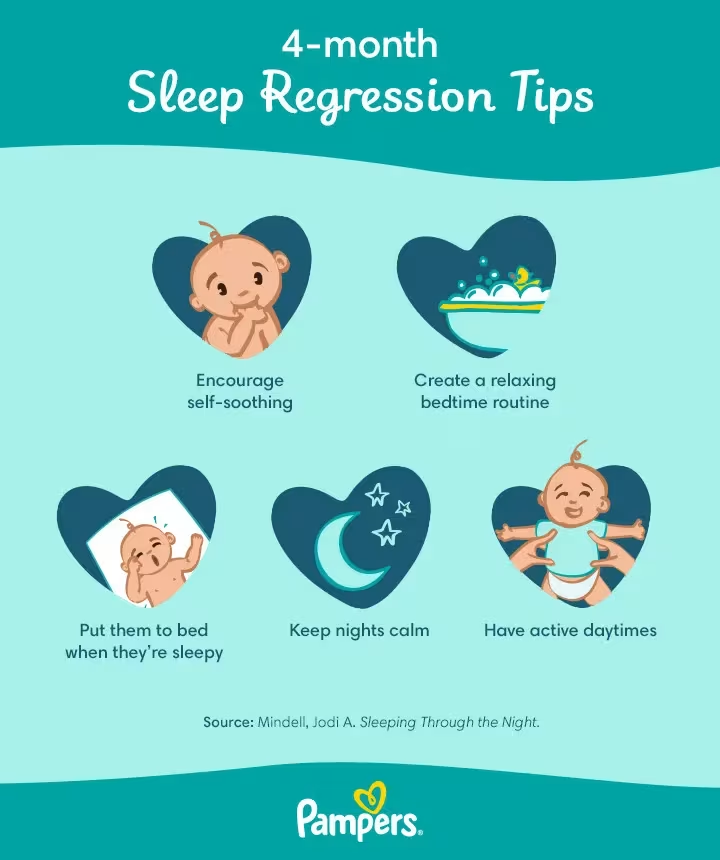
Tips: How to Deal With 4-Month Sleep Regression
With some time and patience, and by following our helpful tips, you and your baby can get through the 4-month sleep regression and work toward a more peaceful night’s sleep.

When to Consult Your Baby’s Healthcare Provider
Occasionally, sleep disruptions or 4-month sleep regression can be caused by sleep disorders or certain illnesses. Contact your child’s healthcare provider if:
FAQS AT A GLANCE
Although there's no standard duration for a 4-month sleep regression, it may last about a week or two. Check out the tips in our article to help give your child (and yourself) the best night’s sleep possible.
The Bottom Line
A newborn baby often comes with sleepless nights, but as your little one grows, they will sleep for longer stretches and sometimes all through the night. But it’s not always smooth sailing! Around 4 months of age, a baby’s sleep cycle usually starts to mature. This can occasionally cause a disruption in their sleep—often called 4-month sleep regression—as they adjust to a new sleep pattern and learn to sleep longer throughout the night.
Sleep regression can occur at any age, often cropping up at times of development and growth in your baby. To help your 4-month-old adjust and sleep better at night, you could try encouraging them to self-soothe, create a relaxing bedtime routine and environment, put them to bed when they’re drowsy but not asleep, feed them before bedtime, and make a clear distinction between daytime and nighttime activity. With some time and patience, your little one will be nodding off—and you will too!
As you settle into your baby’s new bedtime routine, don’t forget to download the Pampers Club app and earn rewards on all those diapers and wipes your little one goes through!
How We Wrote This Article The information in this article is based on the expert advice found in trusted medical and government sources, such as the American Academy of Pediatrics and the American College of Obstetricians and Gynecologists. You can find a full list of sources used for this article below. The content on this page should not replace professional medical advice. Always consult medical professionals for full diagnosis and treatment.
- American Academy of Pediatrics, Caring for Your Baby and Young Child: Birth to Age 5, 7th ed. (New York: Bantam Books, 2019).
- Cleveland Clinic. “Sleep in Your Baby’s First Year.”
- Cleveland Clinic. “The 4-Month Sleep Regression: What Parents Need to Know.”
- Cleveland Clinic. “When and How to Sleep Train Your Baby.”
- Dr Craig Canapari. “Sleep Regression.”
- Healthy Children. “Getting Your Baby to Sleep.”
- Healthy Children. “Self-Soothing: Helping Your Baby Learn This Life Skill.”
- Kids Health. “Formula Feeding FAQs: How Much and How Often.”
- Mayo Clinic. “Infant development: Milestones from 4 to 6 months.”
- Mindell, Jodi A. Sleeping Through the Night: How Infants, Toddlers, and Their Parents Can Get a Good Night's Sleep, revised ed. (New York: Harper Resource, 2005).
- Sleep Foundation. “4-Month Sleep Regression.”
- Zero to Three. “Coping With Sleep Challenges: Birth to 3 Months.”

Baby and Toddler Nap Schedules
Effective strategies for establishing a nap schedule tailored to your baby's needs. Learn about ideal nap durations and the number of naps recommended for infants and toddlers.
Read moreBaby Sleep Training: Nap and Bedtime Routines
A well-rested baby will actually sleep better at night. So, try your best to keep nap times consistent during the day. Watch and learn more.
Read more
Babies and toddlers in cars: Top safety tips
Read these car safety tips for babies & toddlers. From ensuring that you have the appropriate gear, to the best driving habits, this guide has it covered.
Read more
Baby Sleep Training
As every new parent knows, it can be challenging to put your baby to bed. Developing good bedtime habits is crucial, especially when the baby is four-month old. Click here on Pampers India for the best baby sleep training routine.
Read more
How To Put Your Baby To Sleep Fast: 9 Tips & Tricks
Learn simple techniques on how to make your newborn baby or infant sleep quickly. Discover proven ways to help your put your baby to sleep at night.
Read more
When Can Babies Start Sleeping With Blankets?
why blankets increase the risk of SIDS in the first 12 months. Learn when it's safe for your baby to sleep with a blanket and get expert advice on baby sleep safety. Read on for crucial tips to keep your infant safe.
Read more
How Much Sleep Does a Toddler Need?
Find out how much sleep your toddler needs, effective toddler nap tips, and bedtime routines. Get insights on handling nightmares, teeth grinding, and more for a restful sleep
Read more
Everything Explained About the Cry-It-Out Method for Your Baby's Sleep Training
Sleep training methods like 'cry it out' may work for some families and not for others. Learn more about how to try this tactic to help your baby sleep better.
Read more
Everything Explained About The Ferber Method for Sleep Training
Learn about the Ferber Method, a popular sleep training method to help babies learn to sleep on their own. Read this guide to understand whether it could be a good fit for your little one.
Read more
Why an Early Bedtime Is Important to Babies and Toddlers
the importance of infant sleep routines & newborn bedtime practices. Uncover evolving sleep needs & the significance of a consistent bedtime routine for infants & toddlers.
Read moreBaby and Toddler Nap Schedules
Effective strategies for establishing a nap schedule tailored to your baby's needs. Learn about ideal nap durations and the number of naps recommended for infants and toddlers.
Read moreBaby Sleep Training: Nap and Bedtime Routines
A well-rested baby will actually sleep better at night. So, try your best to keep nap times consistent during the day. Watch and learn more.
Read moreBabies and toddlers in cars: Top safety tips
Read these car safety tips for babies & toddlers. From ensuring that you have the appropriate gear, to the best driving habits, this guide has it covered.
Read moreBaby Sleep Training
As every new parent knows, it can be challenging to put your baby to bed. Developing good bedtime habits is crucial, especially when the baby is four-month old. Click here on Pampers India for the best baby sleep training routine.
Read moreHow To Put Your Baby To Sleep Fast: 9 Tips & Tricks
Learn simple techniques on how to make your newborn baby or infant sleep quickly. Discover proven ways to help your put your baby to sleep at night.
Read moreWhen Can Babies Start Sleeping With Blankets?
why blankets increase the risk of SIDS in the first 12 months. Learn when it's safe for your baby to sleep with a blanket and get expert advice on baby sleep safety. Read on for crucial tips to keep your infant safe.
Read moreHow Much Sleep Does a Toddler Need?
Find out how much sleep your toddler needs, effective toddler nap tips, and bedtime routines. Get insights on handling nightmares, teeth grinding, and more for a restful sleep
Read moreEverything Explained About the Cry-It-Out Method for Your Baby's Sleep Training
Sleep training methods like 'cry it out' may work for some families and not for others. Learn more about how to try this tactic to help your baby sleep better.
Read more