
Breast feeding 101


Breastfeeding is a wonderful way to nourish and bond with your baby. It's a natural process, but one that may be challenging at first, until you get the hang of it. Learn about what happens when you breastfeed, the benefits for you and your baby, and how to breastfeed, from latching to pumping.

What are the benefits of breastfeeding my baby
Breastfeeding your baby gives her plenty of benefits. Breast milk comes packed with minerals and nutrients to help your little one grow. It also lowers the chances of:
What are the benefits of breastfeeding for me ?
It’s not only the baby who benefits, but also mum, too. Breastfeeding helps mother-baby bonding, because it stimulates the release of oxytocin, the “love hormone,” which also helps shrink the uterus back to its pre-pregnancy size. Breast milk is convenient, needing no preparation, and is always available. Another important advantage: breastfeeding may reduce the risk of breast cancer and ovarian cancer.
Breastfeeding can also help you shift the baby weight. Nursing uses up some of the fat you gained during pregnancy, so you can lose weight at the right pace for your body. Don’t worry if your weight goes down slowly, as your body will need some of this fat as your baby grows and demands more milk.

How do I breastfeed?
Right after your baby is born, hold her directly against your bare skin. This should trigger the reflex that helps your baby latch on. Try to cup your breast in your hand and stroke your baby's lower lip with your nipple. If she yawns or opens her mouth wide, pull her close to you, and aim the nipple toward the roof of her mouth. Bring your baby to your breast, not your breast to your baby. Newborns might breastfeed for 10 to 15 minutes on each breast. You might find that your baby only wants to feed from one breast, or she may want double portions. When she releases from one breast, offer the other to see if she's still hungry. If she's not, just plan to start feeding with the other breast next time. Feel free to try different breastfeeding positions to find the one that's most comfortable.
What does healthy breast milk look like
In those first few days when you start breastfeeding, you may notice your milk is more of a thick, yellowish substance. You might wonder if that's really what breast milk is supposed to look like, but don't worry, it is perfectly normal. What you're producing at this stage is called colostrum, and it's intended to be your baby's very first meal and first immunisation against diseases. At this age, your baby's tummy can only hold about a teaspoon of liquid, so don't expect her to feed much at first.
Around two to five days after your baby's birth, you will notice your milk is getting creamier. This transitional milk is produced as your breasts shift from producing colostrum to mature breast milk. Mature breast milk comes into full production at the end of the second week after your baby is born. Mature milk is thinner than transitional milk when it's first secreted, not unlike skim milk, but it becomes creamier when fat is released later during feeding.
How can I tell if my baby is hungry ?
Timing is also important when it comes to breastfeeding. If your baby is crying, it’s a late sign of hunger, and an unhappy baby may have trouble latching on. Keep an eye out for tell-tale signs of hunger; for example, when your baby:
When your baby is full, he’ll close his eyes and relax his arms and legs.
How often should I breastfeed?
Let your baby set her own schedule. Don’t be surprised if she wants to nurse every hour for the first couple of days. This helps stimulate a good milk supply that’s tailored to your newborn’s breastfeeding needs. As your breast milk comes in, you can expect your baby’s hunger to subside, meaning you’ll probably only nurse every 2 to 3 hours, or 8 to 12 times a day.
How do I know my baby is getting enough milk?
You may be wondering if your baby is getting enough milk. If you hear him swallow as he nurses, you’ll know he’s getting some milk. If he falls asleep after a meal, then he’s definitely full. You know your newborn is getting enough to eat if:
What are the Dos and Dont’s of Breastfeeding
You may be wondering what you can and can’t do while you’re lactating, or if you need to eat a special breastfeeding diet to make sure your baby is getting all the nutrients she needs. While you’re nursing you’ll want to:
What Do I Need to Know About Pumping Breast Milk ?
Breast milk production is based on supply and demand, so the more you feed or pump, the more milk you’ll produce. Pumping can help if you’re going back to work while you’re still breastfeeding, or if you want to maintain your milk supply when your baby doesn’t want to nurse.
Here are some tips for pumping breast milk :
How long should I breastfeed for ?
Healthcare professionals recommend exclusively breastfeeding your baby for the first six months of life. After, you can start to introduce a more varied diet, adding solid foods in addition to breast milk until he’s a 1-year-old. There is no set time limit for how long you can breastfeed your baby — it’s a choice that should be right for both of you. When you're ready to wean him off breastfeeding, read our advice on weaning
Is there anything else that can help me with breastfeeding ?
You may need a little help getting started, especially if it’s your first time nursing, and that’s perfectly normal. Here are a few tips to make breastfeeding a little easier:
Breastfeeding is a natural process, but it can take time for both you and your baby to get into a successful routine. In fact, many mums need a little help at some point. Read more about nursing a newborn for help with those first few feeds. You can also get help from a lactation consultant who can help teach you proper breastfeeding techniques.
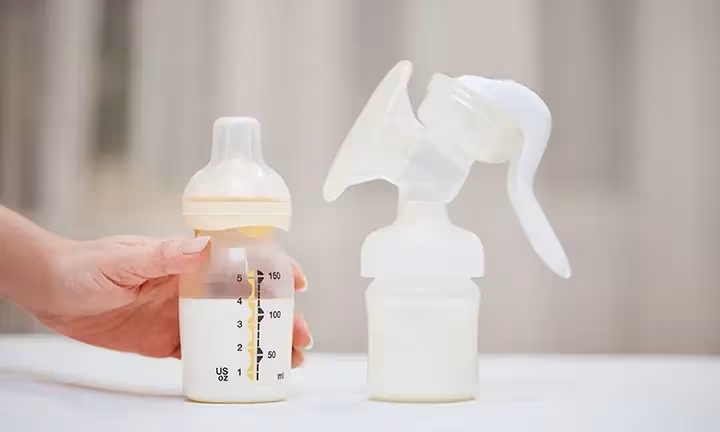
Understanding the Differences Between Manual and Electric Breast Pumps
Learn the pros and cons of manual vs electric breast pumps. Choose the best one for your needs with tips on comfort, efficiency & usage.
Read more
Five Breastfeeding Positions and Tips
If you’re having trouble finding a comfortable breastfeeding position, these useful tips and graphics will help to make it an enjoyable experience.
Read more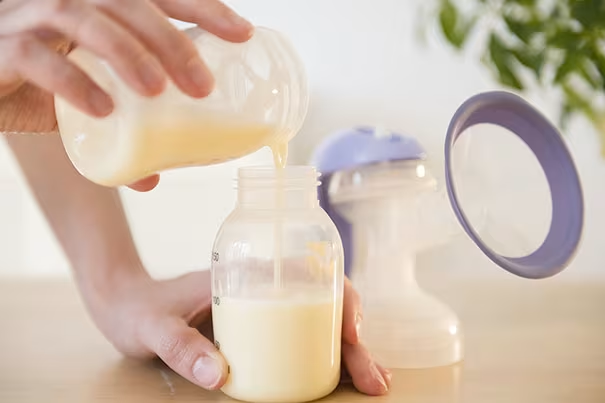
8-Step Guide on How to Use a Breast Pump
Breastfeeding is an essential aspect of a baby's development. For mothers who cannot manage regular feeding sessions, a breast pump proves to be a good solution. Click here on Pampers India for the perfect 8 step guide on how to use a breast pump.
Read more
Baby's First Breastfeeding: When and How to Start Nursing
Learn how to breastfeed your baby for the first time with Pampers India. Experience the beautiful journey of breastfeeding your new born baby here.
Read more
Foods To Increase Breastmilk Production
Discover foods that increase breast milk production, including Indian diet options and natural lactation-boosting ingredients.
Read more
How to Store Breast Milk: All About Proper Storage
It’s possible that you may not always be available to nurse, especially in the later stages when mommy needs to get back to work or has other responsibilities. Click here on Pampers India if you want to know how to store breast milk.
Read more
Giving Your Baby Water: How and When to Start
Learn when babies can drink water safely & why it's crucial to wait. Get expert advice on the right age for your little one to start hydrating.
Read more
A Perfect Diet Plan for a Breastfeeding Mom
Read our comprehensive guide on healthy and balanced diet plans for breastfeeding mothers. Because having a nutritious breastfeeding diet is crucial for both you and your baby's well-being.
Read more
Everything to Know About Dream Feeding Your Newborn
Learn how to successfully dream feed your newborn baby. Discover when it’s beneficial, tips for success, and how this strategy can improve your baby’s sleep patterns.
Read moreUnderstanding the Differences Between Manual and Electric Breast Pumps
Learn the pros and cons of manual vs electric breast pumps. Choose the best one for your needs with tips on comfort, efficiency & usage.
Read moreFive Breastfeeding Positions and Tips
If you’re having trouble finding a comfortable breastfeeding position, these useful tips and graphics will help to make it an enjoyable experience.
Read more8-Step Guide on How to Use a Breast Pump
Breastfeeding is an essential aspect of a baby's development. For mothers who cannot manage regular feeding sessions, a breast pump proves to be a good solution. Click here on Pampers India for the perfect 8 step guide on how to use a breast pump.
Read moreBaby's First Breastfeeding: When and How to Start Nursing
Learn how to breastfeed your baby for the first time with Pampers India. Experience the beautiful journey of breastfeeding your new born baby here.
Read moreFoods To Increase Breastmilk Production
Discover foods that increase breast milk production, including Indian diet options and natural lactation-boosting ingredients.
Read moreHow to Store Breast Milk: All About Proper Storage
It’s possible that you may not always be available to nurse, especially in the later stages when mommy needs to get back to work or has other responsibilities. Click here on Pampers India if you want to know how to store breast milk.
Read moreGiving Your Baby Water: How and When to Start
Learn when babies can drink water safely & why it's crucial to wait. Get expert advice on the right age for your little one to start hydrating.
Read moreA Perfect Diet Plan for a Breastfeeding Mom
Read our comprehensive guide on healthy and balanced diet plans for breastfeeding mothers. Because having a nutritious breastfeeding diet is crucial for both you and your baby's well-being.
Read more