Placenta Praevia: What Is It and What to Do?


Placenta praevia is a condition that affects a small percentage of mums-to-be. It involves the abnormal growth and positioning of the placenta, the organ that brings nutrients and oxygen to and takes away waste from the foetus. Read on to learn more about what placenta praevia is, and the best ways to treat and manage it.

What Is Placenta Praevia?
In most pregnancies, the placenta attaches itself to the side or top part of the uterus. Placenta praevia is a rare condition in which the placenta lies low in the uterus and partially or completely covers the cervix. This can cause severe bleeding upon delivery or even during pregnancy.
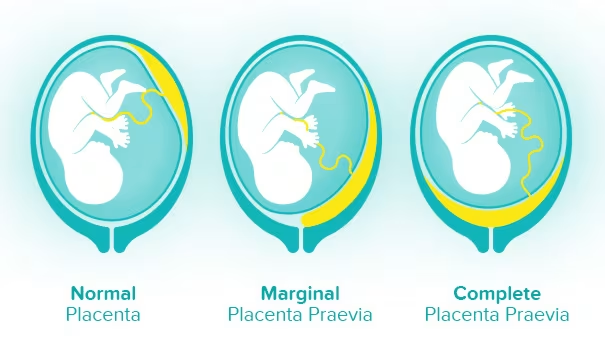
Many women who are diagnosed with placenta praevia early in their pregnancy find that the condition resolves itself, especially in the case of marginal placenta praevia, when the cervix is only partially covered by the placenta. But in the case of complete placenta praevia, which is when the placenta completely covers the cervix, it's unlikely to resolve itself before giving birth.
What Are The Different Types of Placenta Praevia?
The types of placenta praevia are:
Complete placenta praevia happens when the placenta completely covers the opening from the womb to the cervix
Partial placenta praevia happens when the placenta partly covers the cervical opening
Marginal placenta praevia happens when the placenta is located next to, but not covering, the cervical opening
What Are the Symptoms of Placenta Praevia?
The main symptom of placenta praevia is painless bleeding from the vagina in the second half of the pregnancy. Call your doctor if you experience any vaginal bleeding in your second or third trimester or if you experience contractions. Seek emergency medical care if bleeding is severe.
What Causes Placenta Praevia?
The causes of placenta praevia are not known, but some possible risk factors include if
What Risks Are There With Placenta Praevia?
It's important that your doctor monitors both you and your baby to reduce the risk of complications. The possible placenta praevia risks are:
What are the Symptoms of Placenta Praevia?
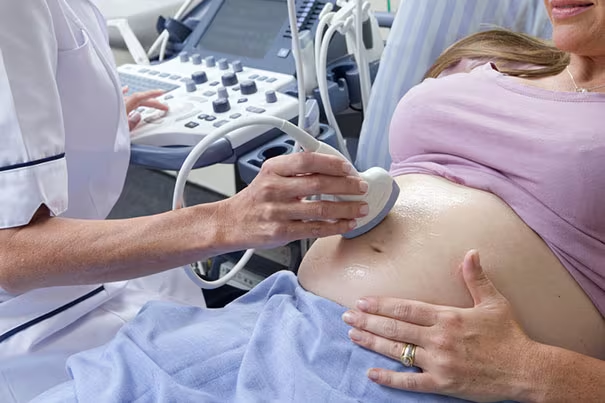
Should you have placenta praevia, it will show up during your usual prenatal check-ups or a second trimester ultrasound. To be certain or to get a more thorough diagnosis, your doctor may also need to do a transvaginal ultrasound, using a wand-like device placed inside the vagina.
Should your doctor suspect or notice any signs of placenta praevia, then he may do additional ultrasounds to determine the precise location of the placenta and assess whether it can resolve itself over the course of your pregnancy.
However, if you experience any heavy bleeding during your pregnancy, see your doctor or go to the hospital immediately.
What Can My Doctor Do About Placenta Praevia?
Placenta praevia is rare, and if you do have it, the severity of the condition also depends on factors such as your and your baby's health; how far along your pregnancy is; the position of the placenta; and to what extent it actually covers the cervix. Your doctor will monitor whether the placenta praevia resolves itself, and, if it doesn't, he will aim to get you as close to full term as possible.
If you're late into your pregnancy and you still have placenta praevia, a caesarean section may be required. If your placenta lies in a low position, but doesn't cover the cervix, you may be able to have a vaginal birth, but talk this through with your doctor.
In any case, the most important thing you need to do is take care of yourself, rest as much as possible, and avoid any activities that may trigger bleeding, like exercise.
There is no need to worry about placenta praevia. It's a rare condition, and even if your doctor diagnoses you with it or you show placenta praevia signs, there is a good chance it will go away by itself. And if it doesn't resolve itself, your doctors can manage the condition so both you and your baby are safe and healthy.
Articles Related To Healthy Pregnancy

Understanding Faint Lines on Pregnancy Test: Light Line or Fading Positive Result
Unsure about a faint test line on your pregnancy kit? Learn if a light line indicates a real life positive or if it’s a false result. Understand faint lines in pregnancy tests and what they mean.
Read more
Implantation Cramps: Duration, Pain, and How to Differentiate from Period Cramps
Understand implantation cramps, including their how long they last, pain location, and how to differentiate them from period cramps, along with other related symptoms.
Read more
Fever During Pregnancy: Causes, Symptoms, and Home Remedies
Getting a high fever during early or late pregnancy can be stressful. Learn about the causes and symptoms of fever during pregnancy, and safe home remedies.
Read more
Headaches during pregnancy
Headaches are a common occurrence during pregnancy. Here’s why you might have more frequent headaches while pregnant, and the best remedies and treatments for headaches during pregnancy.
Read more
Here’s Why You Might Get a Positive Result Without a Period
Experiencing a false pregnancy test but no period? Learn what causes a false positive pregnancy test and whether a positive result can be wrong.
Read moreMeaning of Negative Pregnancy Test: Understanding HCG Levels
Confused by a negative pregnancy test kit result? Discover the meaning behind negative HCG tests and what negative pregnancy results might indicate for your health.
Read more
When Does a Baby's Heartbeat Start? Understanding Ultrasound Scans
Learn when the baby's heartbeat will start, when the fetus heart begins beating, and how heartbeat scans help track development during pregnancy
Read more
Black Stools During Pregnancy: Causes, Safety Concerns and What It Means
Worried about black stool during pregnancy? Discover if dark poop or black potty is safe and the possible causes of black stools for expecting mothers.
Read more
Fetal Movement During Pregnancy: What to Expect from 2nd Trimester to 32 Weeks?
Understand fetal movement during pregnancy, including 7 months pregnant baby movement and kicks at 32 weeks. Know what to expect during your third trimester!
Read more
How to Differentiate Between Evaporation Lines and Faint Positive Results?
Learn about pregnancy test evaporation lines, how to identify a pink evaporation line, and the key differences between evaporation lines and faint lines.
Read moreUnderstanding Faint Lines on Pregnancy Test: Light Line or Fading Positive Result
Unsure about a faint test line on your pregnancy kit? Learn if a light line indicates a real life positive or if it’s a false result. Understand faint lines in pregnancy tests and what they mean.
Read moreImplantation Cramps: Duration, Pain, and How to Differentiate from Period Cramps
Understand implantation cramps, including their how long they last, pain location, and how to differentiate them from period cramps, along with other related symptoms.
Read moreFever During Pregnancy: Causes, Symptoms, and Home Remedies
Getting a high fever during early or late pregnancy can be stressful. Learn about the causes and symptoms of fever during pregnancy, and safe home remedies.
Read moreHeadaches during pregnancy
Headaches are a common occurrence during pregnancy. Here’s why you might have more frequent headaches while pregnant, and the best remedies and treatments for headaches during pregnancy.
Read moreHere’s Why You Might Get a Positive Result Without a Period
Experiencing a false pregnancy test but no period? Learn what causes a false positive pregnancy test and whether a positive result can be wrong.
Read moreMeaning of Negative Pregnancy Test: Understanding HCG Levels
Confused by a negative pregnancy test kit result? Discover the meaning behind negative HCG tests and what negative pregnancy results might indicate for your health.
Read moreWhen Does a Baby's Heartbeat Start? Understanding Ultrasound Scans
Learn when the baby's heartbeat will start, when the fetus heart begins beating, and how heartbeat scans help track development during pregnancy
Read moreBlack Stools During Pregnancy: Causes, Safety Concerns and What It Means
Worried about black stool during pregnancy? Discover if dark poop or black potty is safe and the possible causes of black stools for expecting mothers.
Read more