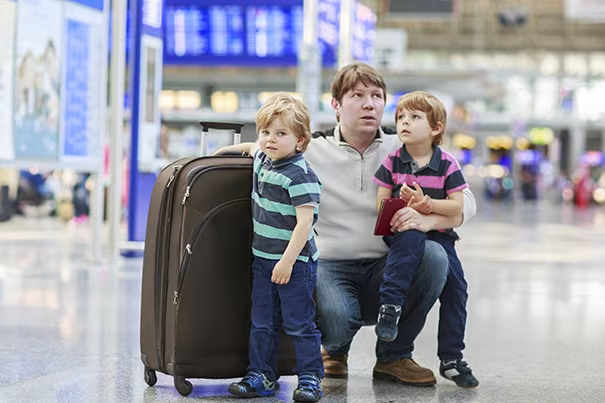
Travelling With Two or More Children


It's time to take that long-delayed family holiday. Or maybe you're gearing up to tackle multiple errands, with your children in tow. Either way, it's not uncommon to feel a little overwhelmed, and wonder if it would just be easier to stay at home and stay put.

Parents often think that once they've mastered arranging their lives to include a child that it can't be that much harder to add more children. But the logistics of outings and travel with more than one child can be challenging, to put it mildly. Careful planning in advance, a little luck, a lot of patience and a bag full of tricks can make travel possible and even pleasurable. If you consider the trip an adventure, your children will also. If you can make the trips fun, children are less likely to resist the confinement.
Allowing plenty of time for your trip is a key element in reducing stress. If your errand would typically take one hour with one child, plan for at least two hours for the same outing with two or more children. And by all means, never turn down offers of help for your outings. Those extra hands can truly make things easier.
Keep in mind that taking family trips or running simple errands are opportunities for learning: learning about the places you will visit and learning important social lessons such as sharing, taking turns and patience. These trips involve time together as a family and can create wonderful family memories.
Follow these guidelines to help make your trip as enjoyable and stress-free as possible.
Consider your children's age and developmental stage
Toddlers, for example, have a short attention span, and they learn by touching everything. So, for trips to the supermarket you might take the older children with you, but leave the infant or toddler at home with a parent or babysitter. If you do have to take all the children with you to the supermarket, make sure that you have a list so you can get through the aisles more quickly. Bring along a toy for the youngest to keep him busy and less likely to grab things in the checkout aisle. Never leave children alone in the car, even if you think you just need a few things and can return quickly. For longer trips with the entire family, younger children will need more toys or objects to distract them while the older children can spend more time with fewer activities.
Plan ahead
Even though spur-of-the-moment activities/errands can be fun, changes in routine can be difficult for children, especially for toddlers and pre-schoolers. Let them know in advance and include them in the planning as much as possible. For longer trips, parents should pack for the youngest children but encourage older children to pack for themselves with suggestions given for appropriate clothing and toys. Try to pack as much as you can the day before leaving to minimise stress at the last minute. Encourage school-age children to learn about the places you plan to visit including looking at maps, investigating the weather forecast, etc.

Take precautions to prevent illness
Sitting in crowded airports or train stations or even just being closely confined in a car with stops at public places can be sources for many illnesses. Frequent, thorough hand-washing when possible or use of hand sanitisers can help to minimise the spread of germs. Dummies, teething rings or toys that fall on the floor or are handled by others should be washed or cleaned with hand sanitisers frequently. breastfeeding an infant can help to prevent illnesses as well.
Travel at night
For long car trips some families suggest driving through the night or leaving in the middle of the night hoping that the kids will sleep a significant part of the way.
Don't forget the comfort item
Double check to make sure you've got the dummy (take extras) or favourite blanket for the kids that need them.
Organise all the non-perishable 'stuff' ahead of time
That includes clothes for each child as well as toys and books, pushchair, nappy bag, rucksacks, car seats, etc.
Encourage children to help select games, books and toys to take along
You might include DVDs, CDs (sing-alongs are good), or books on tape; many of these can be borrowed from local libraries. Alternate activities during the trip to minimise the boredom.
Make travel boxes
If there is enough room in your vehicle, bring along a shoe box for each child filled with age-appropriate activity materials such as colouring or activity books with crayons or markers, stickers, paper dolls, etc. Do not allow scissors in the car, however, as they could be dangerous if there is a sudden stop.
Include some easy-learning games or activities
Ask younger children what colours they see or to count the lorries. Older children may like to draw a picture of what they see along the way.
Take plenty of healthy snacks and drinks and some plastic utensils
This saves time and money and can minimise fighting about where and when to stop for food. Allow the kids to help with selections. Try to make an eating plan so trips do not become an excuse for all-day eating.
Make frequent stops
Use those breaks for visiting the toilet and also for stretching those legs and expending some energy. Even 10 to 15 minutes of running, throwing a ball around or playing with a skipping rope can make the next few hours tolerable. Depending on your route, you might look ahead and find a park along the way and take a short hike or find a playground.
Drive safely
Always use seat belts and keep the infants/children properly restrained in car seats or booster seats. Driving can be stressful, and you may need to pull over if the noise/fighting/fatigue affects driving safety.
With a good planning and a little bit of luck you just might make your family trip an enjoyable and memorable experience for all.
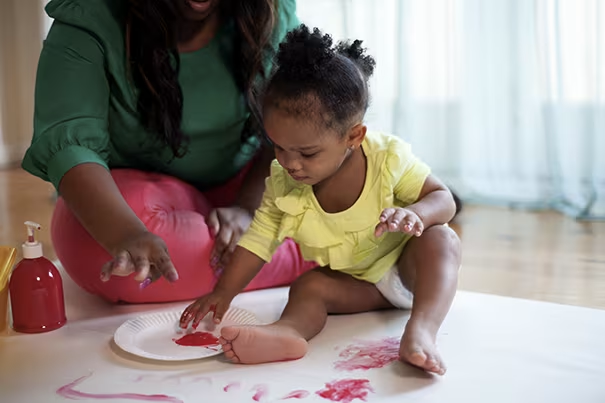
Crafts for toddlers: Ideas and Tips
Arts & crafts can be fun and educational for toddlers, while keeping them busy. Learn how to boost your child's creativity and fine motor skills with art.
Read more
Toddler development: the terrible twos
The 'terrible twos' will include a range of emotional outbreaks and activities that will test the best of parents. Learn how to manage during this period.
Read more
Cooking with kids
Thinking of playing cookery games with your toddler? Get some practical ideas on creating fun and tasty cooking activities for your kids.
Read more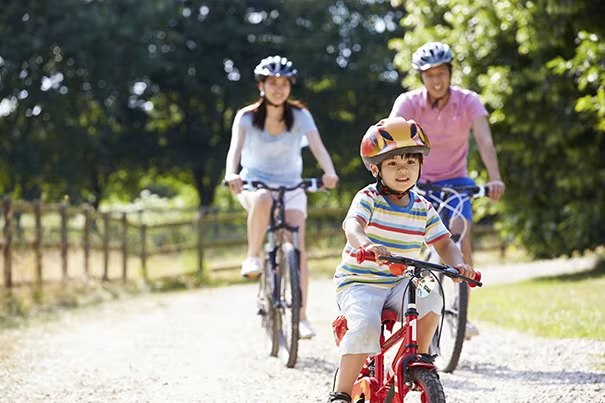
Toddler Bike Safety and Baby Bike Seat Safety
Thinking about teaching your toddler how to ride a bike? Learn more about bike safety for young children, as well as tips for learning to ride a bike.
Read more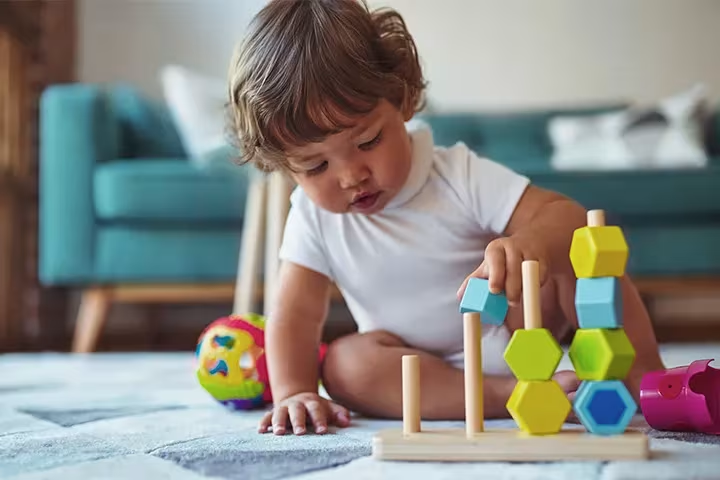
Pincer Grasp Development
Understand the stages of infant pincer grasp development with Pampers IN. Discover engaging activities to foster your baby's fine motor skills and pincer grip.
Read more
Thumb Sucking: What To Do About It?
Learn why babies suck their thumbs and how to manage thumb sucking in babies effectively. Also understand if thumb sucking is bad for your baby and why.
Read more
Toddler Growth Spurts: Do They Exist?
Is your toddler experiencing sudden changes like increased hunger or longer sleep? Explore our guide on growth spurts in toddlers, including patterns, signs, and more.
Read more
Toddler development: 21 to 23 months
Learn how to handle toddler tantrums, mood swings and other emotional-related challenges that your child will experience, positively.
Read more
Play-dates for toddlers
Take a look at these tips from experienced mums about how to find and set a stress-free play-date for your toddler, either indoors our outdoors.
Read moreCrafts for toddlers: Ideas and Tips
Arts & crafts can be fun and educational for toddlers, while keeping them busy. Learn how to boost your child's creativity and fine motor skills with art.
Read moreToddler development: the terrible twos
The 'terrible twos' will include a range of emotional outbreaks and activities that will test the best of parents. Learn how to manage during this period.
Read moreCooking with kids
Thinking of playing cookery games with your toddler? Get some practical ideas on creating fun and tasty cooking activities for your kids.
Read moreToddler Bike Safety and Baby Bike Seat Safety
Thinking about teaching your toddler how to ride a bike? Learn more about bike safety for young children, as well as tips for learning to ride a bike.
Read morePincer Grasp Development
Understand the stages of infant pincer grasp development with Pampers IN. Discover engaging activities to foster your baby's fine motor skills and pincer grip.
Read moreThumb Sucking: What To Do About It?
Learn why babies suck their thumbs and how to manage thumb sucking in babies effectively. Also understand if thumb sucking is bad for your baby and why.
Read moreToddler Growth Spurts: Do They Exist?
Is your toddler experiencing sudden changes like increased hunger or longer sleep? Explore our guide on growth spurts in toddlers, including patterns, signs, and more.
Read moreToddler development: 21 to 23 months
Learn how to handle toddler tantrums, mood swings and other emotional-related challenges that your child will experience, positively.
Read more