
3-year-old Behaviour and Development


3-year-old's are fascinating creatures. Fantasy, imagination, and their attempts to really be in charge of their lives make them very special.
Make-believe play
Make-believe is now a way of life, with every object, person and event likely to be wonderfully transformed into something else.
Your 3-year-old now makes up little stories to explain events in his life and he's discovered the power of words to make things happen.
Imaginary friends, who are completely at his beck and call, are very normal and healthy household additions. Don't pay too much attention to them, as they disappear or assume too great an importance under too tight scrutiny.
Your 3-year-old can't lie at this age, but he may creatively reconstruct reality so it matches the way he would like things to be. He thinks his words can create a preferable reality and that reality can be truly denied.

Playing with others
Play at this age should be cooperative and really interactive. Giving your 3-year-old the opportunity to play with other children and work out conflicts with them is perhaps the most vital part of parenting support at this age.

The Role of Routine
Three-year-olds are dependent on predictability, which is part of their effort to understand and control their world. When no two days are same, you're very likely to have an irritable, whiny child. By keeping a set order of events each day it helps them know what is coming next, giving them a feeling of control.
Three-year-olds adopt rituals to keep a sense of sameness and control over their world. Respect these, provided they don't seriously get in the way.
Wonderful Words
Listening to your 3-year-old talk is wonderful. It's a fantastic narrative drawn from experience and imagination, filled with a few facts and a lot of commentary. A child this age is never slowed down by lack of vocabulary, so nonsense words appear regularly, causing you to see the world with different eyes. Water fountains become 'crash waters' and an estate car becomes a 'box car', for example. Enjoy these ‘mistakes' as soon enough their vocabulary will expand and the made up words will disappear.
Let your 3-year-old practise stringing words together and reconstructing events. She won't understand metaphors, word jokes or puns, so be careful with these as they can lead to frightening visions in her head. Saying a man was boiling with rage or that the computer crashed or that a day really went downhill all make for strange images if you are three. Watch for puzzled looks, and clarify things for your literal child. It's helpful to read slightly more complex books to your child at this age. Look for ones with short sentences composed of lots of action verbs, adjectives and nouns, associated with appropriate pictures and a strong story.
Disciplining Your 3-year-old
Discipline now means clearly linking wrong-doing to its consequence, such as having a child clean up a mess she's made or taking away a toy that he threw.
If your three-year-old does something wrong, it's important you handle it straight away, you might remember it later but they won't
Most of all, enjoy the magic of three and marvel at the hard work it takes to put the world in order.

Dealing with anxiety & fear in children
Check out these practical tips on how parents can help their toddler to overcome anxiety and deal with their emotions effectively.
Read more
Why Toddlers say ‘no’ to everything
Helping your toddler to speak confidently, while pronouncing words correctly is a top goal for all parents. See our tips for getting toddlers to speak.
Read more
Why does my toddler hit?
Teaching your toddler to express their emotions verbally, as opposed to physically will provide them with a solid emotional foundation to live with.
Read more
2.5-year-old: what to expect
Find our what to expect when your toddler is 2.5-years-old. From temper tantrums to their growth phases, this article will explain it all in detail.
Read more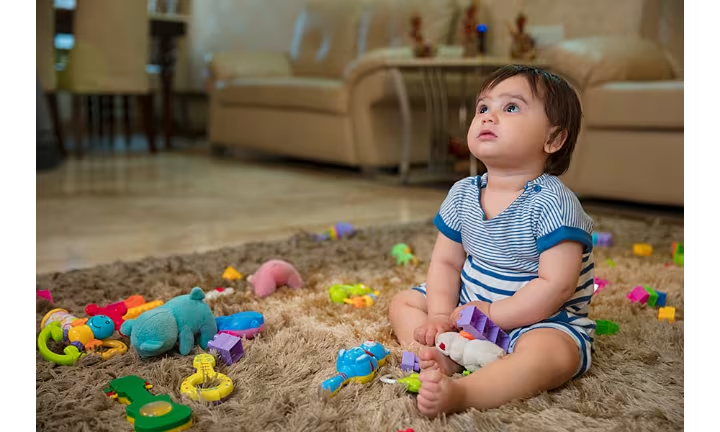
Thumb-Sucking Habit in Children: When to Stop It?
Thumb-sucking is a behaviour that soothes and comforts your baby. But a thumb-sucking habit can hinder a baby's dental development. Click here on Pampers India to know more!
Read more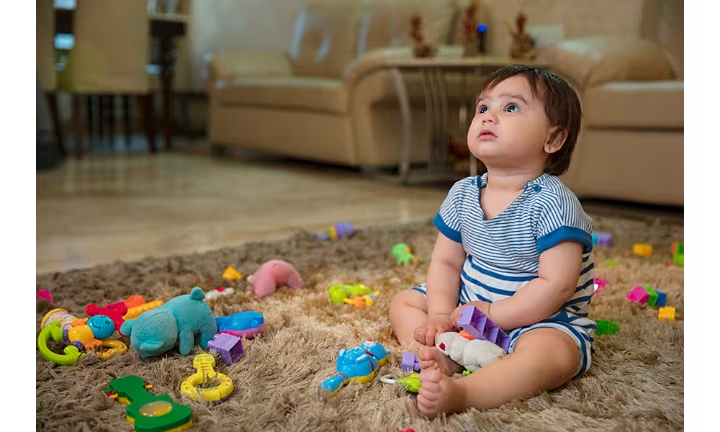
How to Handle Toddler Tantrums
Toddler tantrums are a part of your child's growing phase. To learn how to handle toddler tantrums, click here on Pampers India.
Read more
How Understanding ‘Power' Can Help With Toddler Behavior
the power of back-to-basics parenting tools to resolve 90% of behavior issues at home. Master the principle of 'power' for tantrum-free parenting. Learn more here!
Read more
The Benefits and Importance of Pretend Play in Child Development
Pretend play can spur child development while learning new dramatic play ideas, activities, and games. Learn all about the benefits and get ideas on how to encourage fun and creative play.
Read more
Toddler activities: playmates and interaction
Finding playmates for your toddler can help to increase their group interaction and sociability, which can be useful prior to joining nursery school.
Read more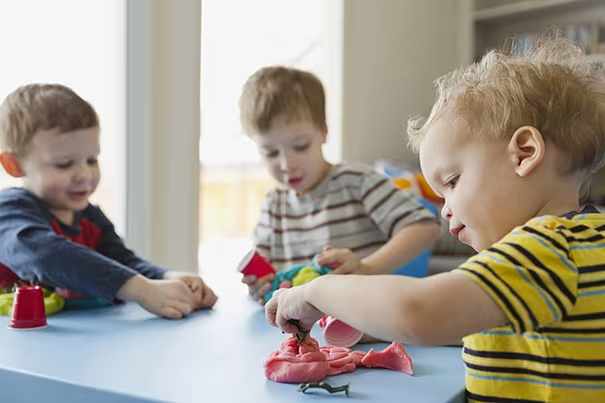
Importance of play in childhood development
Here we write about the role of different types of play activities and how they affect the cognitive development of your 2-year old toddler.
Read moreDealing with anxiety & fear in children
Check out these practical tips on how parents can help their toddler to overcome anxiety and deal with their emotions effectively.
Read moreWhy Toddlers say ‘no’ to everything
Helping your toddler to speak confidently, while pronouncing words correctly is a top goal for all parents. See our tips for getting toddlers to speak.
Read moreWhy does my toddler hit?
Teaching your toddler to express their emotions verbally, as opposed to physically will provide them with a solid emotional foundation to live with.
Read more2.5-year-old: what to expect
Find our what to expect when your toddler is 2.5-years-old. From temper tantrums to their growth phases, this article will explain it all in detail.
Read moreThumb-Sucking Habit in Children: When to Stop It?
Thumb-sucking is a behaviour that soothes and comforts your baby. But a thumb-sucking habit can hinder a baby's dental development. Click here on Pampers India to know more!
Read moreHow to Handle Toddler Tantrums
Toddler tantrums are a part of your child's growing phase. To learn how to handle toddler tantrums, click here on Pampers India.
Read moreHow Understanding ‘Power' Can Help With Toddler Behavior
the power of back-to-basics parenting tools to resolve 90% of behavior issues at home. Master the principle of 'power' for tantrum-free parenting. Learn more here!
Read moreThe Benefits and Importance of Pretend Play in Child Development
Pretend play can spur child development while learning new dramatic play ideas, activities, and games. Learn all about the benefits and get ideas on how to encourage fun and creative play.
Read more