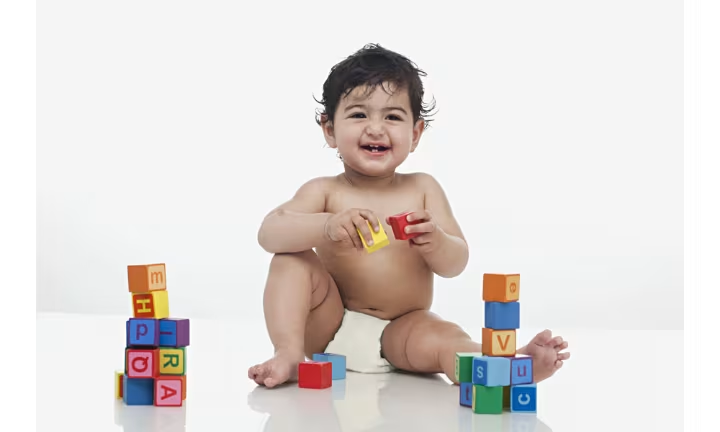
Important things know before choosing a good preschool for your toddler


Once your child is about, she is mostly ready for a regular outside-the-home experience with other kids and adults. Now is the right time to consider enrolling your kid to a preschool. Preschool is a program for children of age between two and five years old. This program is run by experienced teachers with specialised training in early childhood development, and it offers a curriculum with some structured preschool activities. Here's a detailed guide that talks about the key factors you need to know about choosing a preschool for your child. So, read on to understand when to enrol your kid in preschool, how to choose a good one, and what questions to ask when choosing a preschool.
Independence and Social Skills
The goals of preschool are to give a child a sense of independence away from home, to teach her to negotiate relationships with other children, and to encourage her to interact with adults outside the family. Although social skills are the main focus, a good preschool also offers new things to explore and the chance to learn in a group setting. Parents should see their child growing in social skills, independence, and maturity, and developing an excitement about learning and discovery.

Determine Preschool Readiness
Before considering preschool for your child, it is important to understand if your child is ready. Remember, what may be right for one toddler may not always be appropriate for the other. Once your child reaches the preschool age and is ready, selecting the perfect preschool for your little one can be a daunting process. Read on to know if your toddler is ready for nursery school. But worry not; most of it happens quickly if you know what you want and what is ideal for your child. Generally, preschools meant for children of the age three- to four-years-old sometimes also accept two-years-old.

How to Choose a Good Preschool
Good preschools allow a child a lot of freedom to explore different activities; they encourage a sense of excitement with discovery and offer a child-centred experience. Those that push "academic skills" and are largely teacher-directed only dampen motivation for learning. These schools aren't very successful since ready for formal training in reading and writing at this stage. Good-quality preschool enhances development, self-confidence, and self-regulation. Focus your preschool selection on a school that has these attributes and where you and your child are comfortable.
Gather Some Intel
You might need several visits to various preschools before you can be sure of the right placement for your child and for you. See if you are comfortable with the philosophy, the approach, the policies, and the personnel, particularly the director of the school. You should also gather some specifics. It would be good to get references, but not just from happy parents: get in touch with those who have left the program to find out why.
Take the following into consideration as you check out different preschools:
Two- and three-year-olds should be in groups of fewer than eight children. Four-year-olds can be in larger groups if there is an aide to assist the teacher. A teacher/student ratio of 1:7 is best at these young ages.
Teachers should have specialised training in early childhood development, and the principal should have a bachelor's or master's degree in this area.
Good preschools retain teachers, so ask about turnover. Turnover of more than 33 per cent per year usually means something isn't right, in pay or morale or both. If a teacher is replaced every six months, you may want to find out why.
In a good preschool, the classroom and the play area meet all applicable health and safety guidelines. Watch the kids while they play inside and outdoors to see if there are any hazards.
Ideally, the teacher will have a teaching plan, so she is presenting learning and exploring opportunities in some kind of sequence, building on seasonal ideas and offering activities for a range of skill levels. There should be a daily schedule, which you should be able to examine. There also should be school policies for handling emergencies and for evaluating each child's adjustment and progress.
Consider how it would feel to be a child at this school. Watch how the teacher helps kids through the tough transition at the start of the day. Observe how discipline is handled. Notice if it follows your own approach, or if it strikes you as too permissive or too severe. See how arguments and fights between kids are handled. These are inevitable and can be learning experiences if the teacher gives the children ways to handle their problems and disagreements. Watch how a sad or withdrawn child is managed. The approach here should be gentle and kind, aimed at keeping the child comfortable but also drawing him into group activities. The noisy and/or involved kids shouldn't be the only ones getting the attention.
Questions to Ask When Choosing a Preschool
Takeaway
Watching your child have experiences in a world separate from your own can be a little tough. And it is normal to inevitably feel some sense of displacement. However, look at the brighter side - if your child is participating and enjoying a preschool experience, it's because of your love, support, and confidence to take the next step. Stay positive - a little separation will be good for you both and enriching for her!

Teaching toddlers to share
Sharing is something that is crucial for toddlers to learn at an early age, as it will shape the way that they interact their peers and act in older life.
Read more
How Toddlers Learn through Play
Active toddlers will typically learn well using the medium of play, especially with other children their own age, who are also practical learners.
Read more
Potty talk: curbing bad language in toddlers
Teaching your toddler what words are appropriate and not is an essential part of both their mental and speech development. Find out how to curb potty-talk.
Read more
How to Teach Manners to Children
Teaching manners to your child at a young age will help set a clear framework for the way that they act towards others throughout the rest of their lives.
Read more
Toddler Pushing Boundaries? Learn Techniques to Help you Best Handle the Situation
Learn the importance of setting boundaries for children's behavior. Explore effective parental responses to guide them towards acceptable conduct.
Read more
What Moms of Babies Close in Age Need to Know
Handling Close-in-Age Babies: Balancing needs, spreading yourself thin. Tips for nurturing their bond while managing their unique demands.
Read more
Socialising for babies: learning from others
Socialising at a young age will give your toddler strong interpersonal and relationship management skills, which will benefit them throughout their life.
Read more
Toddler Discipline: Being Consistent
Learn why is it essential to be consistent with toddler discipline to ensure that their behaviour does not deviate from the desired outcome.
Read more
Toddler pronunciation: speaking properly
Find out about how to track and progress your toddlers language development milestones with the details outlined in this article.
Read moreTeaching toddlers to share
Sharing is something that is crucial for toddlers to learn at an early age, as it will shape the way that they interact their peers and act in older life.
Read moreHow Toddlers Learn through Play
Active toddlers will typically learn well using the medium of play, especially with other children their own age, who are also practical learners.
Read morePotty talk: curbing bad language in toddlers
Teaching your toddler what words are appropriate and not is an essential part of both their mental and speech development. Find out how to curb potty-talk.
Read moreHow to Teach Manners to Children
Teaching manners to your child at a young age will help set a clear framework for the way that they act towards others throughout the rest of their lives.
Read moreToddler Pushing Boundaries? Learn Techniques to Help you Best Handle the Situation
Learn the importance of setting boundaries for children's behavior. Explore effective parental responses to guide them towards acceptable conduct.
Read moreWhat Moms of Babies Close in Age Need to Know
Handling Close-in-Age Babies: Balancing needs, spreading yourself thin. Tips for nurturing their bond while managing their unique demands.
Read moreSocialising for babies: learning from others
Socialising at a young age will give your toddler strong interpersonal and relationship management skills, which will benefit them throughout their life.
Read moreToddler Discipline: Being Consistent
Learn why is it essential to be consistent with toddler discipline to ensure that their behaviour does not deviate from the desired outcome.
Read more