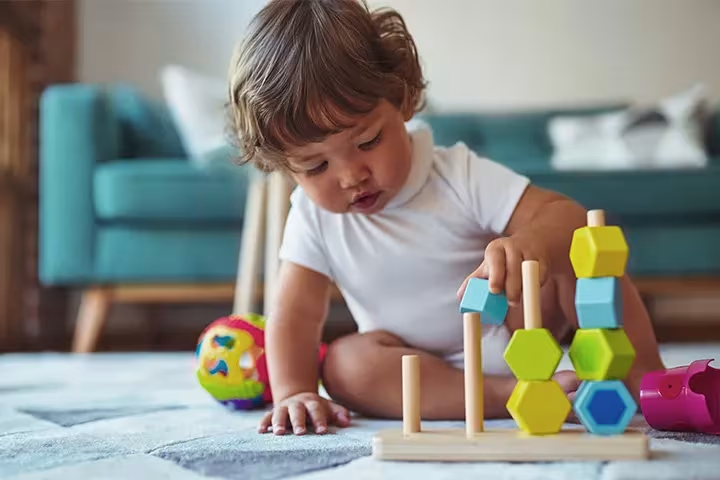
Pincer Grasp Development


There's nothing better than seeing your baby grow and develop new skills and abilities. As you watch for and celebrate your little one's various milestones, one that you won't want to miss is the appearance of the pincer grasp. This important hand and finger skill enables your baby to pick up small objects and move them from place to place, even if it means dropping them or throwing them—which will happen! Find out when your baby will develop the pincer grasp and what activities can help her strengthen it.

What Is the Pincer Grasp?
Pincer grasp refers to using the forefinger or middle finger and thumb together to "pinch" or grasp an object. The pincer grasp is an important fine motor skill that’s key to many functions such as self-feeding with fingers or utensils, buttoning and zipping clothing, and even holding a pencil.

At What Age Does the Pincer Grasp Develop in Babies?
Most babies develop the pincer grasp around 9 months of age. Before then you may see your baby use his hands in what’s described as a raking motion with a mitten or claw-like grip using all his fingers and thumb. When first starting to use the pincer grasp, your baby may pick up objects but not yet know how to let go. She may even hold the object toward you as if offering it to you. Eventually she may drop the object, throw it, or push it against a surface like a tabletop; in time, she'll learn to let it go carefully.
How Does Your Baby Develop the Pincer Grasp?
Your baby develops the pincer grasp by practicing. His early attempts may be clumsy—he may try to rake something toward him, for instance—but he'll improve quickly, with his grasp soon becoming stronger and more accurate. Your baby will likely practice every chance she gets, especially if she sees something she wants. Watch her use the pincer grasp to pick up small toys, like baby blocks, or pieces of cereal and other finger foods. Before long, if taught how, your baby may even be able to snap his fingers. This will be fun to watch and is a nice way to help develop his pincer grasp.
What Activities Can Help Your Baby Develop the Pincer Grasp?
Give your baby opportunities to develop her pincer grasp by offering toys and other objects that she can pick up using her forefinger and thumb. You may need to demonstrate certain actions, depending on the objects, but this will all help your baby learn. Here are some playthings and activities that will help develop the pincer grasp:
The Bottom Line
At around 9 months old, your baby may begin attempting the pincer grasp, which is using her forefinger (or sometimes the middle finger) and thumb to pick up objects. She may pick up toys, let them go, throw them, or simply put them down. Around this time, as you offer finger foods, your baby may use the pincer grasp to pick them up and feed herself. If you like, you can encourage your baby's pincer grasp development by offering him toys that require that type of grasp, such as baby blocks or a puzzle with knobs. You can also read baby board books together and encourage him to turn the pages.
How We Wrote This Article The information in this article is based on the expert advice found in trusted medical and government sources, such as the American Academy of Pediatrics and the American College of Obstetricians and Gynecologists. You can find a full list of sources used for this article below. The content on this page should not replace professional medical advice. Always consult medical professionals for full diagnosis and treatment.
- AAP
- The Wonder Years: Helping Your Baby and Young Child Successfully Negotiate the Major Developmental Milestones. American Academy of Pediatrics, 2006.
- Zero to Three: Stages of Play From 6–12 Months: Discovering Connections
- Healthy Children: Hand and Finger Skills
- Kids Health: Smart Toys
- Kids Health: Finger Foods for Babies

Toddler development: the terrible twos
The 'terrible twos' will include a range of emotional outbreaks and activities that will test the best of parents. Learn how to manage during this period.
Read more
Cooking with kids
Thinking of playing cookery games with your toddler? Get some practical ideas on creating fun and tasty cooking activities for your kids.
Read more
Travelling With Two or More Children
Take a look at our tips on how to plan for a family holiday. Knowing what to prepare in advance when travelling with a toddler can save time and money.
Read more
Toddler Bike Safety and Baby Bike Seat Safety
Thinking about teaching your toddler how to ride a bike? Learn more about bike safety for young children, as well as tips for learning to ride a bike.
Read more
Thumb Sucking: What To Do About It?
Learn why babies suck their thumbs and how to manage thumb sucking in babies effectively. Also understand if thumb sucking is bad for your baby and why.
Read more
Toddler Growth Spurts: Do They Exist?
Is your toddler experiencing sudden changes like increased hunger or longer sleep? Explore our guide on growth spurts in toddlers, including patterns, signs, and more.
Read more
Toddler development: 21 to 23 months
Learn how to handle toddler tantrums, mood swings and other emotional-related challenges that your child will experience, positively.
Read more
Play-dates for toddlers
Take a look at these tips from experienced mums about how to find and set a stress-free play-date for your toddler, either indoors our outdoors.
Read more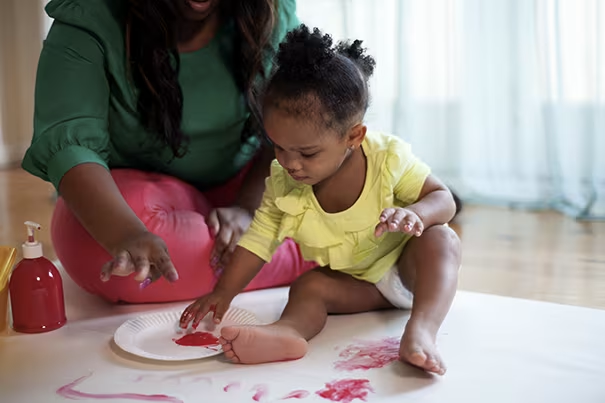
Crafts for toddlers: Ideas and Tips
Arts & crafts can be fun and educational for toddlers, while keeping them busy. Learn how to boost your child's creativity and fine motor skills with art.
Read moreToddler development: the terrible twos
The 'terrible twos' will include a range of emotional outbreaks and activities that will test the best of parents. Learn how to manage during this period.
Read moreCooking with kids
Thinking of playing cookery games with your toddler? Get some practical ideas on creating fun and tasty cooking activities for your kids.
Read moreTravelling With Two or More Children
Take a look at our tips on how to plan for a family holiday. Knowing what to prepare in advance when travelling with a toddler can save time and money.
Read moreToddler Bike Safety and Baby Bike Seat Safety
Thinking about teaching your toddler how to ride a bike? Learn more about bike safety for young children, as well as tips for learning to ride a bike.
Read moreThumb Sucking: What To Do About It?
Learn why babies suck their thumbs and how to manage thumb sucking in babies effectively. Also understand if thumb sucking is bad for your baby and why.
Read moreToddler Growth Spurts: Do They Exist?
Is your toddler experiencing sudden changes like increased hunger or longer sleep? Explore our guide on growth spurts in toddlers, including patterns, signs, and more.
Read moreToddler development: 21 to 23 months
Learn how to handle toddler tantrums, mood swings and other emotional-related challenges that your child will experience, positively.
Read morePlay-dates for toddlers
Take a look at these tips from experienced mums about how to find and set a stress-free play-date for your toddler, either indoors our outdoors.
Read more