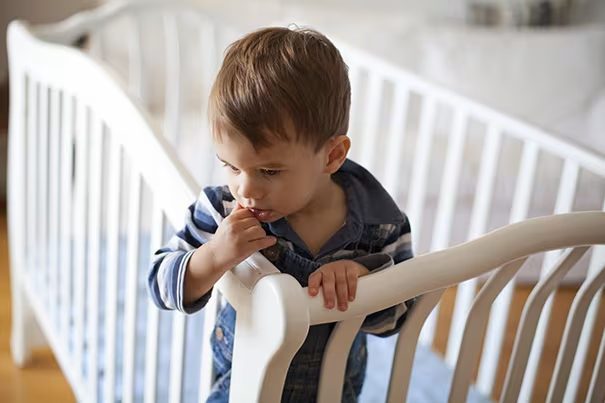
Bed-wetting and urinary infection in children


Being alert to urinary symptoms can ensure that if there is a problem, your child will get the treatment he needs. Most urinary problems are easily fixed if identified early.
Bedwetting
Even after your pre-schooler learns to use the toilet and stays dry all day (usually between ages two and four), she may still wet the bed at night now and then. This is normal until the ages of six or seven. After this age, bedwetting is still normal, but it can be upsetting to your child and keep her from enjoying social activities such as sleepovers.
You don't want to punish or criticise your child for wetting the bed. It is not intentional and not under his control.

When is it an infection?
The following signs can indicate an infection:
Consult your paediatrician, who will check for infection with a urinalysis.

Girls get more infections
This is because the opening of the urethra, the tube leading from the bladder to the outside, is short and close to the anus. Bacteria can easily enter the bladder. There are some precautions you can take to minimise the risk of a urinary infection:
When to worry
Alert your paediatrician if your child who seldom or never wets at night begins to do it often. This could be a sign of urinary infection, or it could signal diabetes, kidney disease or constipation. Similarly, when a child who has been dry during the day begins to have daytime wetting, there is almost always a physical reason. Any change requires some detective work and maybe a check-up.
How it flows
Watch your child's urine stream, especially if you have a boy. A nice, strong flow that arcs well away from the body is normal in boys. A weak, dribbling stream, or the constant release of small amounts of urine that leave underwear or nappies perpetually damp, can signal an abnormality of the urinary tract. If a child has to strain to urinate or has a hard time starting, let your healthcare provider know; there may be a problem with the urinary tract.
Colour and odour
If your child's urine is pink or cola-coloured or is very dark or smells unusual, bring it to your healthcare provider's attention straight away. Kidney or liver problems may be the cause, and this needs immediate investigation. Early treatment may avoid kidney damage.
While most urinary problems are easily fixed, it is important to be able to recognise problems so they can quickly be addressed.
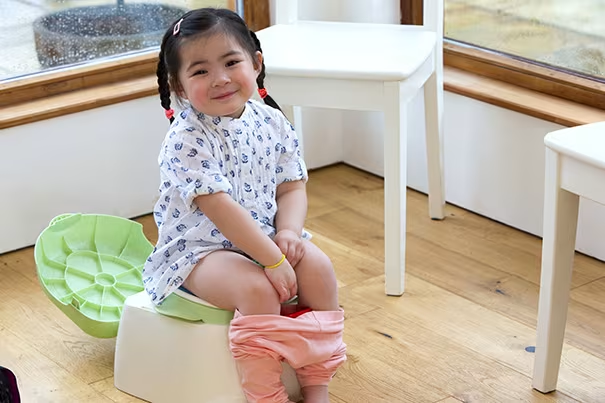
Potty-training: Rewards for Potty-Training
Rewards can be a used as a positive incentive for potty-training with toddlers. Varying from treats to games, find out some common potty-training rewards.
Read more
When to start potty-training?
Knowing when your toddler is ready to start potty-training is an essential part of their growing up. Learn from the experts.
Read more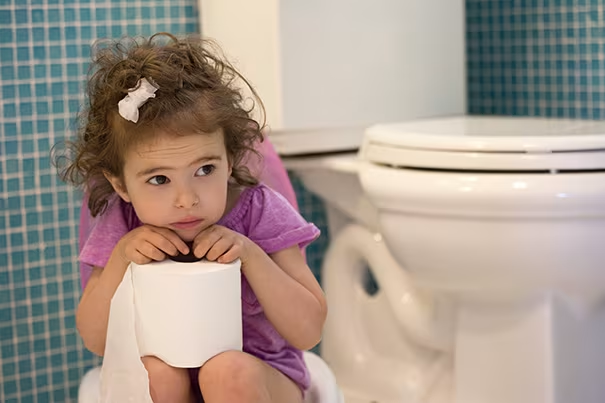
Potty-trained toddlers and accidents
While your toddler is potty trained, during their early years they are likely to still have accidents. See how to deal with these accidents.
Read more
Potty-training while travelling
Learn about potty-training while travelling. You must ensure that your child is comfortable using the potty while travelling to help prevent accidents.
Read more
Managing Bed-Wetting (Nocturnal Enuresis) in Children
Bedwetting causes for toddlers include constipation, stress or minor illness. Read on Pampers India to know more about bedwetting causes and solutions for toddlers.
Read more
Potty-training problems?
Is your toddler having problems coming to grips with using the potty? We explore some of the most common potty-training issues and ways to resolve them.
Read morePotty-training: Rewards for Potty-Training
Rewards can be a used as a positive incentive for potty-training with toddlers. Varying from treats to games, find out some common potty-training rewards.
Read moreWhen to start potty-training?
Knowing when your toddler is ready to start potty-training is an essential part of their growing up. Learn from the experts.
Read morePotty-trained toddlers and accidents
While your toddler is potty trained, during their early years they are likely to still have accidents. See how to deal with these accidents.
Read morePotty-training while travelling
Learn about potty-training while travelling. You must ensure that your child is comfortable using the potty while travelling to help prevent accidents.
Read moreManaging Bed-Wetting (Nocturnal Enuresis) in Children
Bedwetting causes for toddlers include constipation, stress or minor illness. Read on Pampers India to know more about bedwetting causes and solutions for toddlers.
Read morePotty-training problems?
Is your toddler having problems coming to grips with using the potty? We explore some of the most common potty-training issues and ways to resolve them.
Read morePotty-training: Rewards for Potty-Training
Rewards can be a used as a positive incentive for potty-training with toddlers. Varying from treats to games, find out some common potty-training rewards.
Read moreWhen to start potty-training?
Knowing when your toddler is ready to start potty-training is an essential part of their growing up. Learn from the experts.
Read more