Caring for the Soft Spot on Your Baby's Head
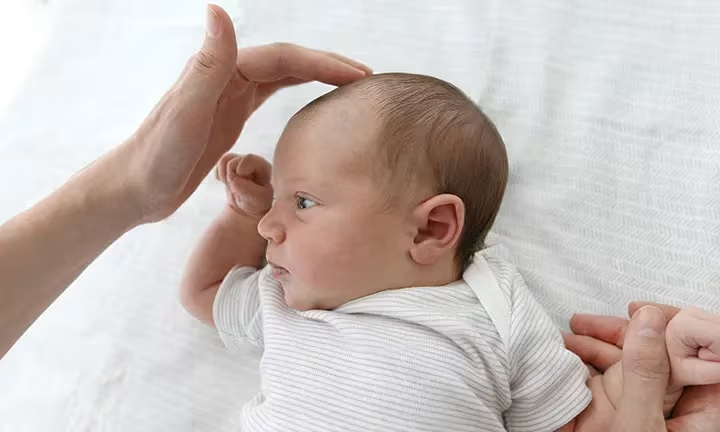
As you spend hours gazing at your newborn and stroking his face, you’ll no doubt notice a couple of soft spots on his head. These soft spots, called fontanelles, are perfectly normal and actually play an important role in your baby’s development.
Learn more about these soft spots, including how to protect them, when the bones of the skull will harden, and which warning signs to look out for by reading on.

What Are Baby Soft Spots and Where Are They?
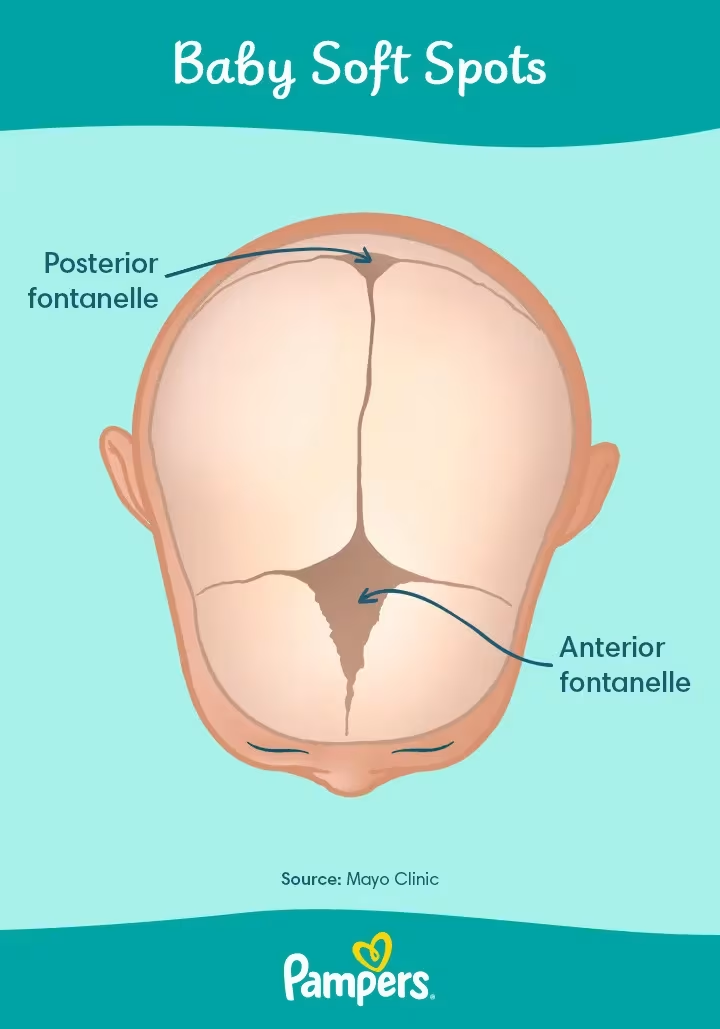
All babies are born with two soft spots (fontanelles) on their heads: The larger soft spot (anterior fontanelle) is toward the front of the head, and the smaller soft spot (posterior fontanelle) is toward the back.
These softer areas are made up of immature skull bones that are still forming and expanding as your baby’s brain grows.
Why Do Babies Have Soft Spots?
The soft spots on babies' heads have two main functions:
When Does a Baby's Soft Spot Close or Go Away?
In your baby’s first few months, both soft spots should be open and flat. At about 2 to 3 months of age the soft spot at the back of your baby’s head may close. The soft spot at the front may close around the time your toddler turns 18 months old.
What Happens If You Touch the Soft Spot on Your Baby's Head?
As long as you touch your baby’s soft spots gently — for example, when you’re holding your baby and supporting his head and neck or when you’re washing your baby’s hair — you shouldn’t be afraid of hurting him.
There is a thick and durable membrane just under your baby’s scalp that protects her brain, so gently touching the fontanelles won’t hurt her.
To help ensure your baby’s head is protected, it’s a good idea to remind friends, family members, and caregivers to be careful and gentle with your baby’s head.
What Does It Mean When a Baby's Soft Spot Is Pulsating?
Sometimes it may appear that your baby’s soft spot is pulsating. This is completely normal — blood is pulsing through your baby’s body, and this movement can sometimes be visible where the soft spot is. There’s no need to worry if you see your baby’s soft spot pulsing.

What Causes a Sunken Soft Spot on Your Baby’s Head?
A sunken soft spot may be due to dehydration, which can happen if your baby does not get enough breast milk or formula. Your baby may also be more likely to be dehydrated if she has a fever, has been vomiting, or has diarrhea.
Beyond a sunken soft spot, these are some of the other signs of dehydration:
Contact your baby’s healthcare provider right away if you’re concerned your newborn may be dehydrated.
Keep in mind, a sunken soft spot can sometimes occur in babies who are not dehydrated. It’s safest for your baby’s healthcare provider to make a diagnosis.
What Should You Do If Your Baby Hits His Soft Spot?
Contact your baby’s healthcare provider if your baby hits his soft spot.
If you notice swelling/bulging of the soft spot and/or bruising around her eyes or behind her ears, it may be due to a concussion. Call 911 immediately.
Other signs of a head injury or trauma requiring immediate medical attention include:
When Should You Be Concerned About Your Baby's Soft Spot?
The lack of soft spots on your baby’s head may be a sign of very rare condition called craniosynostosis, a birth defect in which your baby’s skull bones fuse together earlier than normal, resulting in a misshapen head. Contact your baby’s healthcare provider if
The Bottom Line
Although it might seem a little odd that your baby would have soft spots on her head, they actually serve two important purposes: to make it easier for your baby to pass through the birth canal during a vaginal delivery, and to ensure your baby’s skull can expand to make room for her growing brain.
By around 18 months, your baby’s fontanelles will have closed. In the meantime, be gentle with your baby’s head when holding her.
If your baby accidentally bumps or hits a soft spot, or if you’re concerned that one of the soft spots may be sunken or injured, contact your child’s healthcare provider right away.
When it comes to the shape of your little one’s head, if you’ve noticed flatter spots, it could be because your little one is spending too much time lying on his back looking the same way. Prolonged pressure on the softer skull bones can flatten out the area. Find out more about flat head syndrome and what you can do to treat or prevent it.
How We Wrote This Article The information in this article is based on the expert advice found in trusted medical and government sources, such as the American Academy of Pediatrics and the American College of Obstetricians and Gynecologists. You can find a full list of sources used for this article below. The content on this page should not replace professional medical advice. Always consult medical professionals for full diagnosis and treatment.
Articles Related To Baby Development
Your 11 Month Old Baby’s Development & Activities
Your 11 month old baby is now ready to take her first step while holding onto furniture for support. So make sure your house is childproof! Know more about 11 month old baby activities & development on Pampers India!
Read more
Your 10 Month Old Baby’s Development & Activities
Your 10 month old baby will now become more mobile & independent & he may also be cautious about straying too far from you. To know more about 10 month old baby activities & development visit Pampers India!
Read more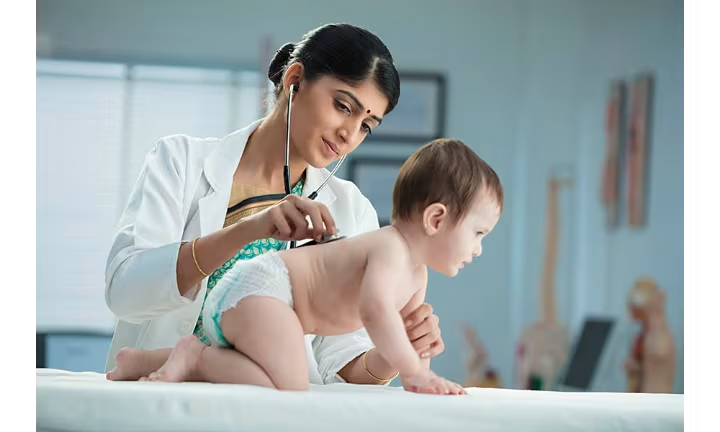
When Do Babies Crawl?
Learn to spot the signs that your baby is preparing to crawl, also know the timeline when babies typically start to crawl, the different stages of crawling, and how to teach your baby to crawl.
Read more
Your 8 Month Old Baby’s Development & Activities
Your 8 month baby is growing stronger, understand how you can help your baby walk, speak words. To know more about 8 month old baby activities & development visit Pampers India!
Read more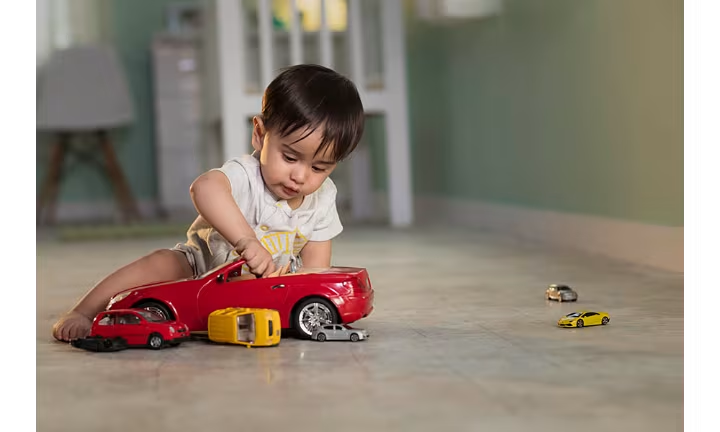
Fine Motor Skills Development of Infants and Toddlers
Every kid has his own pace of fine motor skills development. Read on Pampers India to know how fine motor development activities will help your child.
Read more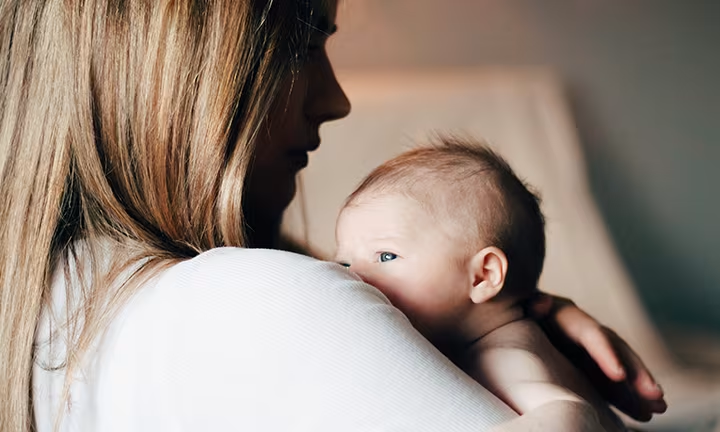
Separation Anxiety in Babies
When do babies develop separation anxiety? Separation anxiety can start when your baby is about 8 months old. Learn more to know about separation anxiety.
Read more
When Do Babies Start Crawling?
When do babies start crawling? In the second half of the first year, most babies are really starting to move. Learn how to encourage the little ones to crawl.
Read more
When Can Babies Sit Up By Themselves?
Find out at what age your baby might sit up on his own, learn the signs your baby is about to reach this milestone, and how to help your baby learn to sit up.
Read more
When Does the Change in Baby's Eyes Colour Occur?
When do babies eyes change colour? It could take about six to eight months for your baby’s eye colour to change after birth. Learn how genetics will influence the final eye colour.
Read more
Baby Crawling 101: When do Babies Crawl & 5 Tips to Encourage
Crawling is like the bridge between a baby sitting and beginning to walk. Soon after your baby learns to roll, the little one also learns other ways and means of mobility. Click here to read more about baby crawling 101 on Pampers India
Read moreYour 11 Month Old Baby’s Development & Activities
Your 11 month old baby is now ready to take her first step while holding onto furniture for support. So make sure your house is childproof! Know more about 11 month old baby activities & development on Pampers India!
Read moreYour 10 Month Old Baby’s Development & Activities
Your 10 month old baby will now become more mobile & independent & he may also be cautious about straying too far from you. To know more about 10 month old baby activities & development visit Pampers India!
Read moreWhen Do Babies Crawl?
Learn to spot the signs that your baby is preparing to crawl, also know the timeline when babies typically start to crawl, the different stages of crawling, and how to teach your baby to crawl.
Read moreYour 8 Month Old Baby’s Development & Activities
Your 8 month baby is growing stronger, understand how you can help your baby walk, speak words. To know more about 8 month old baby activities & development visit Pampers India!
Read moreFine Motor Skills Development of Infants and Toddlers
Every kid has his own pace of fine motor skills development. Read on Pampers India to know how fine motor development activities will help your child.
Read moreSeparation Anxiety in Babies
When do babies develop separation anxiety? Separation anxiety can start when your baby is about 8 months old. Learn more to know about separation anxiety.
Read moreWhen Do Babies Start Crawling?
When do babies start crawling? In the second half of the first year, most babies are really starting to move. Learn how to encourage the little ones to crawl.
Read moreWhen Can Babies Sit Up By Themselves?
Find out at what age your baby might sit up on his own, learn the signs your baby is about to reach this milestone, and how to help your baby learn to sit up.
Read more