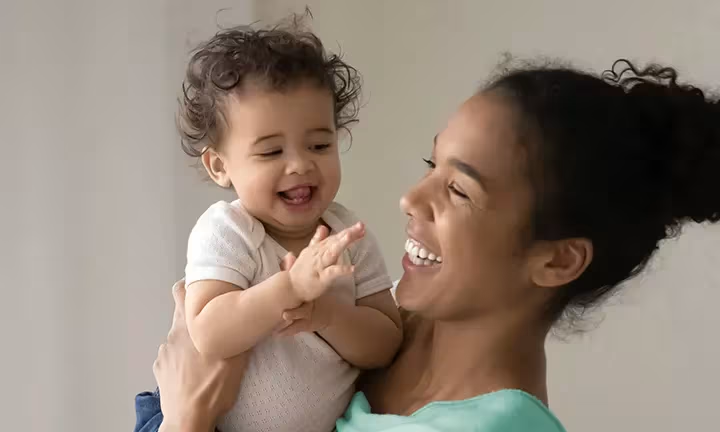
When Do Babies Start Laughing?


Perhaps your little one has already favored you with a sweet smile and a few adorable coos. If so, you may be wondering, and even asking yourself, when do babies start laughing? Anticipating and watching your baby reach this milestone and others is among the many joys of being a new parent. We’ve compiled information and insights on when you might hear those first giggles and squeals, why they happen, and how to encourage your baby’s laughter.

When Do Babies Laugh and Giggle?
A common question parents have is, when do babies laugh for the first time? Around 4 months is when babies typically start laughing, but do keep in mind that children develop at their own unique rate. If your little one is at the four-month mark and hasn’t let out a laugh, that’s OK! Laughter is an early form of communication and self-expression, just one step in your child’s complex journey of development.
Your baby’s laughter evolves from smiling and cooing, so another question that crops up is this one: When do babies start smiling and laughing? It's helpful to know that these may be different baby developmental milestones but that they’re certainly related. Babies tend to start smiling much earlier than laughing, typically sometime around 6 to 8 weeks old. These early smiles are called social smiles, and they reflect the bond you’re creating with your little one.
Once you see those smiles more regularly, keep an ear out for cooing and then, eventually, giggles. Your baby’s first laugh might arrive around one month after their first smile. Though 4 months of age is a common time for laughter to emerge, it could happen at 5, 6 or even 7 months old. So get your phone or camera ready to capture these exciting sounds and endearing facial expressions.
Why Do Babies Laugh?
Initially, your baby’s laughter is most likely a reaction to something, such as seeing a silly face or playing a game like peekaboo. But as your little one starts to develop laughter, they might start giggling for other reasons, such as to get your attention or simply to enjoy making a funny noise. And then, eventually, you may notice the beginnings of your child’s sense of humor and the unique things that make them laugh!
How and Why to Encourage Your Baby’s Laughter
Once you hear your baby’s first laugh, you probably want to listen to that sweet sound as much as possible. Many parents wonder how to make a baby laugh or want to know what makes babies laugh. Of course, you can’t “make” a baby do anything, but you can certainly support and encourage laughter. Here's why laughing is important and how to inspire those baby chuckles.
Why Is Your Baby’s Laughter Important?
When you and your baby are laughing together, good things can happen. Family laughter can help with the following:

How to “Make” a Baby Laugh
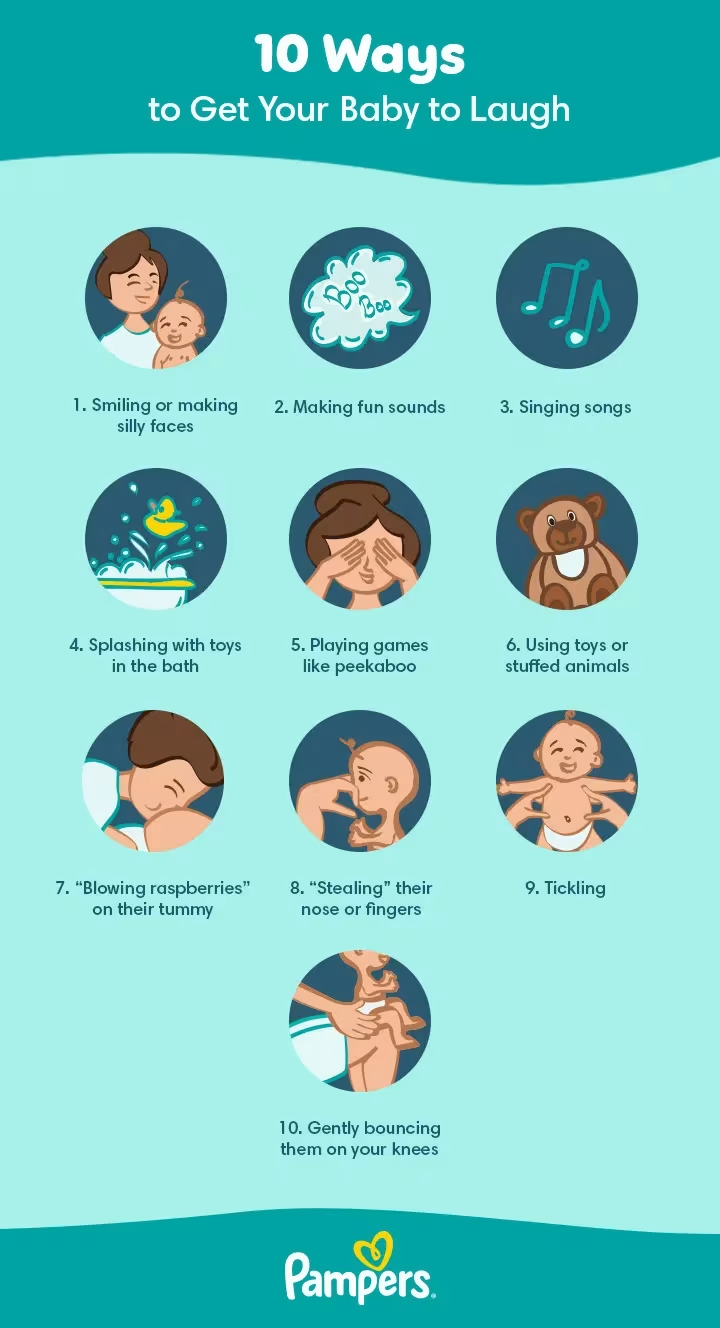
So, when babies start laughing, there are some things you can do to encourage that behavior. Of course, you can’t “make” your little one laugh, but there are ways to trigger that reaction. Try things like
Remember that at this age, your baby’s laughter is most often a reaction to something. But as your little one develops those laughing skills, it’ll become easier to giggle and laugh just because it's fun.
Why Would a Baby Not Laugh?
Perhaps your little one was a giggle machine in the morning but doesn’t seem to react to anything in the afternoon. Or maybe your baby is 5 or 6 months old but doesn’t laugh often or at all. Why?
Remember that babies develop at their own rate. If your baby smiles a lot but doesn’t laugh or is not laughing at 5 or 6 months, they might just need a little more time. By the end of 7 months, most children can giggle and laugh. Consult your child’s healthcare provider if this milestone hasn't been reached or if you have questions or concerns about any aspect of their development.
Laughter is also part of your baby’s emotional makeup. Sometimes babies with a quieter, more sensitive, or shy temperament might not laugh as much, but they need just as much support and connection as any other child. Give them the space and time to warm up to situations, so they feel comfortable expressing themselves.
FAQS AT A GLANCE
Children develop on their own timeline, but it’s not common for babies to laugh at 2 months old. Baby laughter evolves from smiling and cooing, typically occurring at around 4 months of age.
The Bottom Line
Seeing your baby smile for the first time might prompt the question, when do babies start laughing? As a parent, you’re probably eager to hear this precious sound, and you can anticipate your baby’s first laugh around 4 months, or roughly a month or so after their first real smile.
But laughter is part of your baby’s journey with communication, language, and emotions, so your little one may start to laugh before or after 4 months of age. If you still haven’t heard any giggles by 7 months old, contact your child’s healthcare provider. Most likely, your child just needs a little extra time, but the provider can help offer support or rule out any issues.
Do you know that babies tend to laugh when stimulated, such as when tickled or while playing games, “singing” songs, or watching you make silly faces? If you want your little baby to laugh hysterically when you do something, try being extra silly. “Blowing raspberries” on their belly, bouncing them on your knees, and splashing around with toys in the bathtub typically get those big reactions!
Remember that your little one is on their own unique path and those big milestones will come in time. Before you know it, you’ll be celebrating many more achievements: not just smiles and laughter but crawling, walking, and talking!
How We Wrote This Article The information in this article is based on expert advice found in trusted medical and government sources, such as the American Academy of Pediatrics and the American College of Obstetricians and Gynecologists. You can find a full list of sources used for this article below. The content on this page should not replace professional medical advice. Always consult medical professionals for full diagnosis and treatment.
- American Academy of Pediatrics. Caring for Your Baby and Young Child: Birth to Age 5, 7th ed. (New York: Bantam Books, 2019).
- Mayo Clinic. Guide to Your Baby’s First Years, 2nd ed. (Rochester, MN: Mayo Clinic Press, 2020).
- healthychildren.org. “Emotional and Social Development 4 to 7 Months.”
What Is the Moro Reflex in Babies?
Moro reflex: The Moro reflex is when your baby startles in reaction to the sensation of falling, such as when their head shifts suddenly. Learn causes, importance, and what to expect.
Read more
When Do Babies Start Clapping, Waving, and Pointing?
Learn when babies start clapping, waving, and pointing. Discover milestone timelines and practical tips to encourage and support your baby’s exciting developmental journey.
Read more
Learn How to Teach Your Baby Sign Language with Tips and Signs.
Does teaching your baby signs help or slow down his verbal speech? Discover what baby sign language is, learn about the basic signs, and find out how you can teach it. Read our explainer, along with tips and techniques, here.
Read more
Baby talk: making sense of it all
Understanding what your baby is trying to communicate with you at an early age can be both entertaining and frustrating.
Read more
When Do Babies Start Talking?
If you are wondering when do babies start talking, then here are details about when do babies say their first words, baby talking timeline & how to communicate with them.
Read more
How Positive and Proactive Discipline Can Help Change Your Child's Behavior
Effective ways to manage your child’s outbursts with key tools: understanding power, setting boundaries, consistency, and positive discipline. Learn more here!
Read more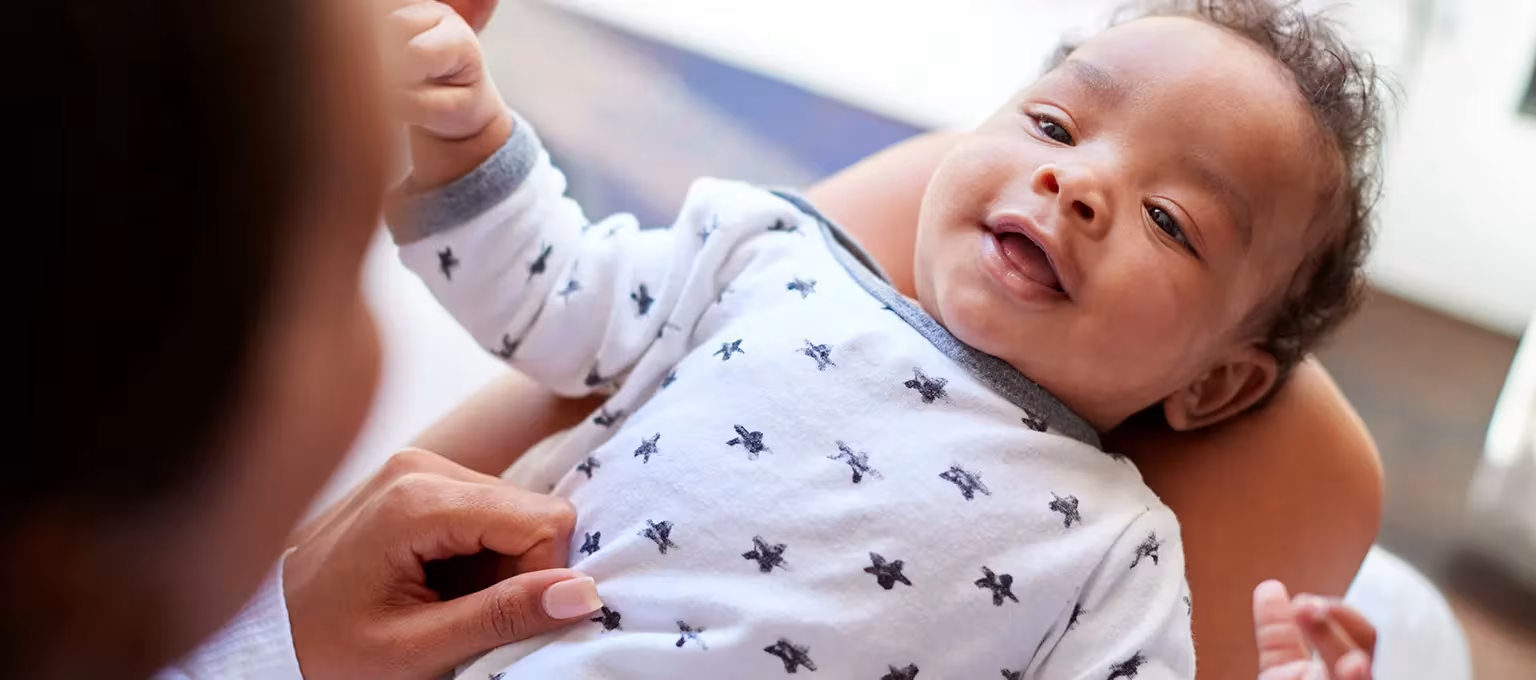
When Do Babies Start Smiling?
when your baby's first genuine smile appears in their developmental journey. Learn about the milestone moments and joyful expressions along the way.
Read moreWhat Is the Moro Reflex in Babies?
Moro reflex: The Moro reflex is when your baby startles in reaction to the sensation of falling, such as when their head shifts suddenly. Learn causes, importance, and what to expect.
Read moreWhen Do Babies Start Clapping, Waving, and Pointing?
Learn when babies start clapping, waving, and pointing. Discover milestone timelines and practical tips to encourage and support your baby’s exciting developmental journey.
Read moreLearn How to Teach Your Baby Sign Language with Tips and Signs.
Does teaching your baby signs help or slow down his verbal speech? Discover what baby sign language is, learn about the basic signs, and find out how you can teach it. Read our explainer, along with tips and techniques, here.
Read moreBaby talk: making sense of it all
Understanding what your baby is trying to communicate with you at an early age can be both entertaining and frustrating.
Read moreWhen Do Babies Start Talking?
If you are wondering when do babies start talking, then here are details about when do babies say their first words, baby talking timeline & how to communicate with them.
Read moreHow Positive and Proactive Discipline Can Help Change Your Child's Behavior
Effective ways to manage your child’s outbursts with key tools: understanding power, setting boundaries, consistency, and positive discipline. Learn more here!
Read moreWhen Do Babies Start Smiling?
when your baby's first genuine smile appears in their developmental journey. Learn about the milestone moments and joyful expressions along the way.
Read moreWhat Is the Moro Reflex in Babies?
Moro reflex: The Moro reflex is when your baby startles in reaction to the sensation of falling, such as when their head shifts suddenly. Learn causes, importance, and what to expect.
Read more