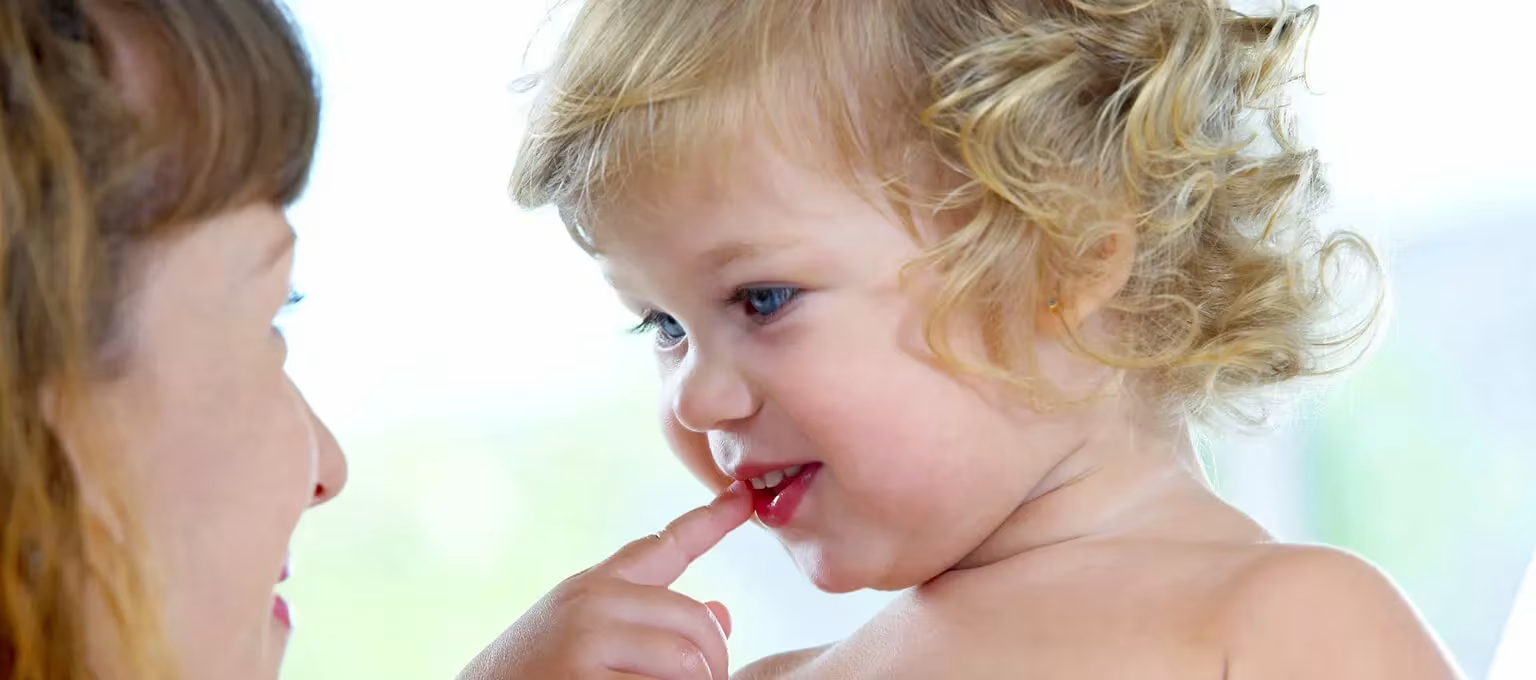
How Positive and Proactive Discipline Can Help Change Your Child's Behavior


Resolving behavior issues we have with our little ones can be challenging, but with four major tools, we can help settle those outbursts. The first tool we’ve discussed is understanding power, the second is setting boundaries, that is followed by consistency and follow through and this article will focus on the final tool you need; positive and proactive discipline
Once you have your boundaries and expectations of your child in place, and you are consistently responding appropriately to your child testing that boundary, giving your child positive discipline is one final step to complete the process. Without adding in positive discipline, you won’t see a huge or lasting impact with your child's behavior. All four of these tools need to be operating together in order to see positive changes in behavior.

Positive Discipline After You Correct Their Poor Behavior
To make it easy, I will refer back to my example I mentioned in an earlier article about whining. In this example, my little one whines and is met consistently with me telling them they need to speak in a nice voice. They try again in a nice voice and my immediate reaction is, “Wow! It is so nice to hear you use that lovely voice! I’d love to _____ for you!”
You can also try to mix in statements that bring awareness to your child feeling good about the choice they made, in this case that would sound like this, “Wow! That must feel so good to use your big kid voice!” It seems like a slight difference, but the first reaction is teaching your child that you are proud of them and the second statement is teaching your child to feel proud of themselves, which is a wonderful way to sneak in gems of self-confidence.
You child craves your love, attention, time, encouragement and being silly with you. That is a constant and is always going to be more important than the tangible item they want when they are whining. In the moment that they behave in a way that makes you proud and would like to see more of, your job is to reward that behavior with positive love and attention. They will feel so good about the loving reaction they get from you, that it will motivate them to repeat the great behavior to get that reaction next time. Positive reinforcement for desirable behavior is something your child and your family will benefit from.

Referring Back to the Tangible Item They Want
When your child is whining, like in our example above, it’s because they want something. Once you get the behavior you want from your child and have reinforced the positive behavior, you don't always give the tangible item as a result of asking nicely for it. This would become a disaster because they will ask for toys, screen time, junk food, and other things, way more often than is actually healthy for them.
There's no way of establishing a hard and fast rule here as there are way too many "if/then" scenarios to account for. But in general, my flexible rule is that I give them positive, loving attention 100% of the time they are behaving nicely, and I selectively pick and choose when to also give them the tangible thing they are wanting. My baseline reaction is always to give the positive, loving reaction, then the icing on top as I deem appropriate is the screen time, the sweets, a new toy/book, or whatever it is they want.
This is a fine line because if every time a child asked nicely for candy or screen time or a new toy and I gave them what they wanted, I'd create a terribly spoiled child. We have to also remember we are responsible for creating realistic life expectations for them. Real life isn't always going to be fair and favorable no matter how nicely we behave, so the idea of being told "no" is something our children just need to get used to. It is our job to teach them how to manage those feelings, rather than attempting to shield them from those feelings. Alongside this is the fact that we don’t want to teach our children that kind behavior is only a means of getting what they want. We want to make sure we are teaching them the long term value that kind behavior and esteem-able acts are their own reward.
I want to be absolutely clear about the difference between rewarding positive behavior with a loving reaction versus rewarding with a tangible item before we move on so I am going to say it again: The go-to response can always be a positive response from you, but a tangible item reward for great behavior needs to be way less frequent and decided on your terms.
Proactive Discipline Before Any Poor Behavior Even Occurs
Just as important as giving them a positive reaction after they have corrected behavior and followed directions, is giving them a positive reaction when they make good choices on their own, without being asked or reminded. When you haven’t asked them to do or not do something it's just as important that their good choices are noticed. This requires more of your attention.
We naturally tend to pay more attention to their good behavior that follows a poor choice simply because the poor choice is so undesirable it prompts us to spring into action. But when they are just being polite, sweet, thoughtful, considerate, funny, and behaving in other ways that we love, all on their own, it is less noticeable. We tend to chalk it up to our day just seemed smoother. Don’t let these little moments go unnoticed. As often as you can remember to, reward your little one with the same love and attention that you would after you have to ask them to behave nicely. It will make such an enormous difference to proactively notice their wonderful choices they make on their own.
These four principles of the Back To Basics Parenting Lifestyle, not only encourage great behavior, they also:
All of those vital lessons are taking place when you are living within this parenting lifestyle.
The younger you start the better! Starting at any age is better than never trying, but these are principles you can begin putting into place within the first year of life in simple ways and continue implementing as they get older. It is easier to teach these desirable habits as you go than it is to try to unlearn months or years of undesirable habits and then abruptly pile on new positive habits.
To bring this all together neatly, these four principles will help you see a difference in your child’s behavior.
Articles Related To Baby Development
When Do Babies Start Clapping, Waving, and Pointing?
Learn when babies start clapping, waving, and pointing. Discover milestone timelines and practical tips to encourage and support your baby’s exciting developmental journey.
Read more
Learn How to Teach Your Baby Sign Language with Tips and Signs.
Does teaching your baby signs help or slow down his verbal speech? Discover what baby sign language is, learn about the basic signs, and find out how you can teach it. Read our explainer, along with tips and techniques, here.
Read more
When Do Babies Start Laughing?
Want to know when babies start laughing? Read this guide to find out when your baby will laugh for the first time and how to keep the giggles coming with some tried-and-true ways to make a baby laugh.
Read more
Baby talk: making sense of it all
Understanding what your baby is trying to communicate with you at an early age can be both entertaining and frustrating.
Read more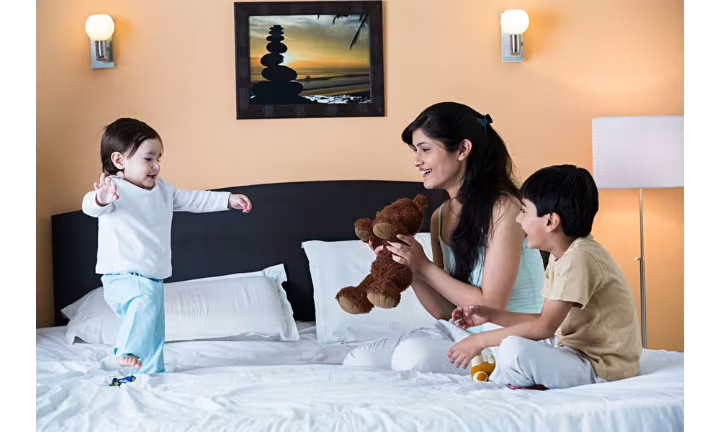
When Do Babies Start Talking?
If you are wondering when do babies start talking, then here are details about when do babies say their first words, baby talking timeline & how to communicate with them.
Read more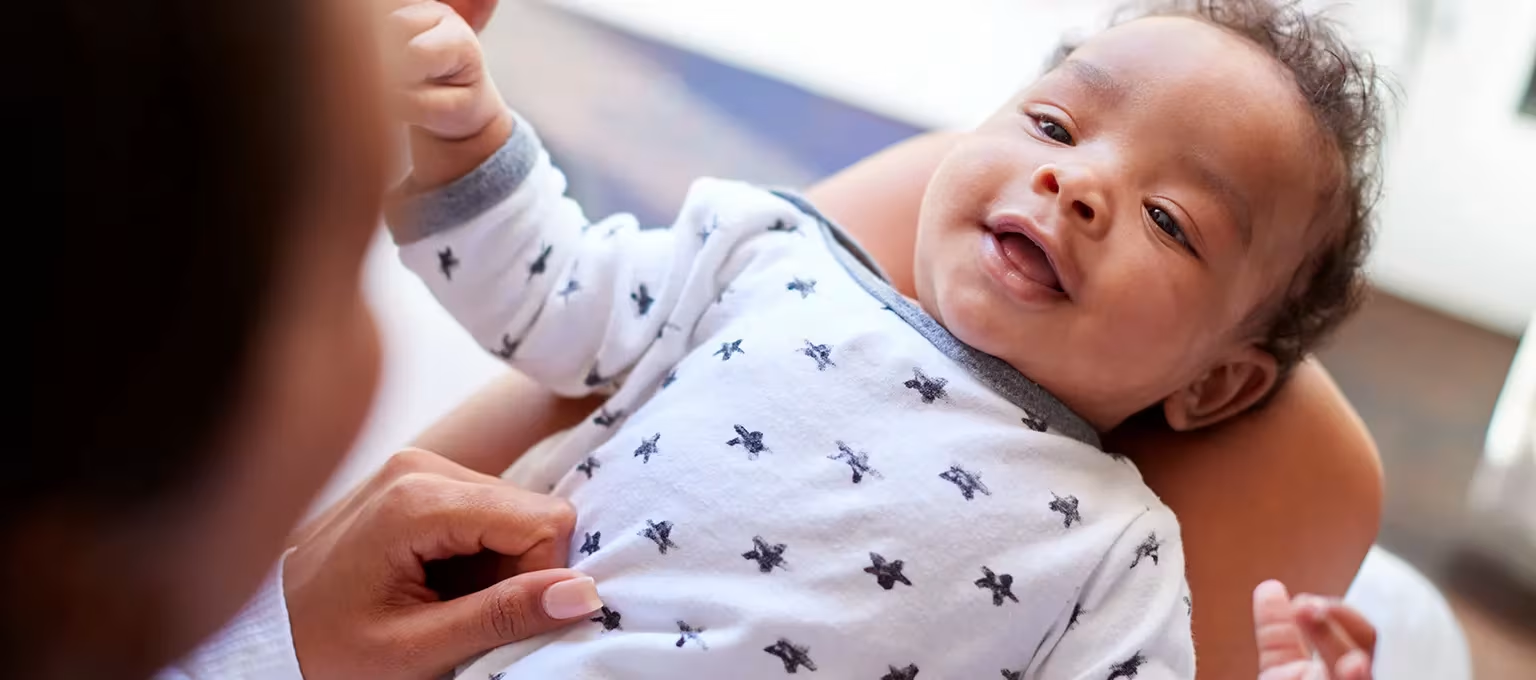
When Do Babies Start Smiling?
when your baby's first genuine smile appears in their developmental journey. Learn about the milestone moments and joyful expressions along the way.
Read more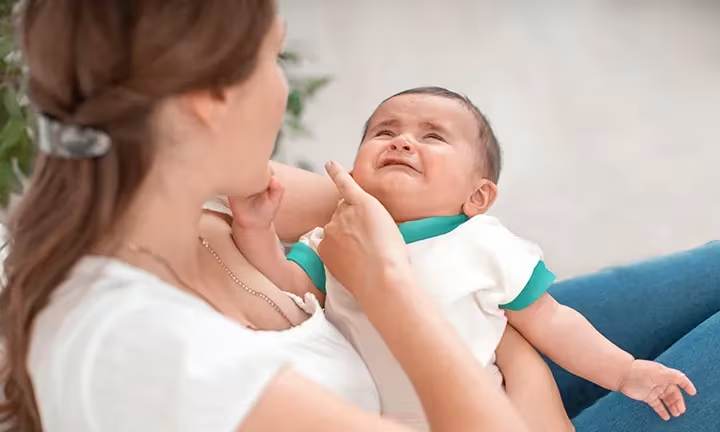
What Is the Moro Reflex in Babies?
Moro reflex: The Moro reflex is when your baby startles in reaction to the sensation of falling, such as when their head shifts suddenly. Learn causes, importance, and what to expect.
Read moreWhen Do Babies Start Clapping, Waving, and Pointing?
Learn when babies start clapping, waving, and pointing. Discover milestone timelines and practical tips to encourage and support your baby’s exciting developmental journey.
Read moreLearn How to Teach Your Baby Sign Language with Tips and Signs.
Does teaching your baby signs help or slow down his verbal speech? Discover what baby sign language is, learn about the basic signs, and find out how you can teach it. Read our explainer, along with tips and techniques, here.
Read moreWhen Do Babies Start Laughing?
Want to know when babies start laughing? Read this guide to find out when your baby will laugh for the first time and how to keep the giggles coming with some tried-and-true ways to make a baby laugh.
Read moreBaby talk: making sense of it all
Understanding what your baby is trying to communicate with you at an early age can be both entertaining and frustrating.
Read moreWhen Do Babies Start Talking?
If you are wondering when do babies start talking, then here are details about when do babies say their first words, baby talking timeline & how to communicate with them.
Read moreWhen Do Babies Start Smiling?
when your baby's first genuine smile appears in their developmental journey. Learn about the milestone moments and joyful expressions along the way.
Read moreWhat Is the Moro Reflex in Babies?
Moro reflex: The Moro reflex is when your baby startles in reaction to the sensation of falling, such as when their head shifts suddenly. Learn causes, importance, and what to expect.
Read moreWhen Do Babies Start Clapping, Waving, and Pointing?
Learn when babies start clapping, waving, and pointing. Discover milestone timelines and practical tips to encourage and support your baby’s exciting developmental journey.
Read more