
What to Know About Your Baby’s 2-Month Checkup


At 2 months, your baby still keeps you guessing, but her sleeping and eating habits are starting to become more predictable. At this point her natural eye color will start to change and her face will start looking thinner and her body chubbier than even a week ago. Her size and weight will be the focus of this health check visit, along with feeding and the build-up in crying that's expected at this age. Also, it's time for the first set of immunizations.

At this visit, your provider will probably:
What your provider will want to know
Talk It Over

Speak Up!
Many new parents notice changes in their baby's vision and hearing around this age. Talk to your provider about any concerns you have. Your provider will want to know about it if your baby:
If things are not falling into place for you as a parent or haven't improved at all since last month, let your provider know. If you are depressed, your baby will be able to pick up on it and it could affect his development. He needs you to be at your best for his own mental and emotional growth, so get some help now. You can ask your provider or the healthcare facility for a referral.Finally, remember that every baby is different and develops at his own pace. Talking with your provider if you have any concerns can be just the reassurance a new parent needs.

Neonatal Intensive Care Unit (NICU): Common Problems
Retrieving data. Wait a few seconds and try to cut or copy again.
Read more
Hand, Foot, and Mouth Disease: Causes, Symptoms, Prevention & Treatment Hand, Foot, and Mouth Disease Explained
Hand, Foot, and Mouth Disease (HFMD) in newborns: Learn all the symptoms, causes, prevention tips, and treatment options to tackle this contagious illness in babies. Hand, Foot, and Mouth Disease (HFMD) in newborns: explore symptoms, causes, and treatment options to tackle this contagious illness for your baby's well-being.
Read more
Stork Bite Birthmarks
Navigate newborn skin markings: Stork bites, angel kisses, & nevus simplex—frequent birthmarks on baby's face or neck. Uncover their traits and significance.
Read more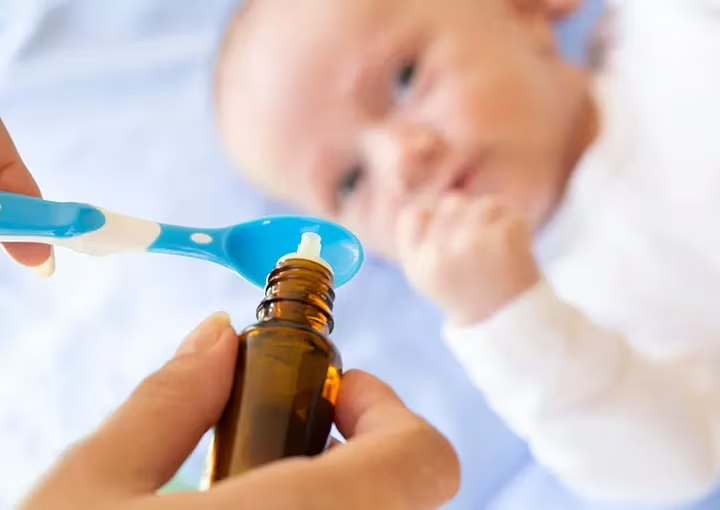
Benefits of Vitamin D for Babies
Unlock the benefits of vitamin D for newborns with expert guidance. When to start supplements? Find out here for your baby's optimal health!
Read more
Oral Thrush in Babies: Causes, Symptoms and Treatment
Oral thrush is a common fungal infection detected in babies. With proper treatment, oral thrush in newborns can be resolved easily. Click here on Pampers India to know more!
Read more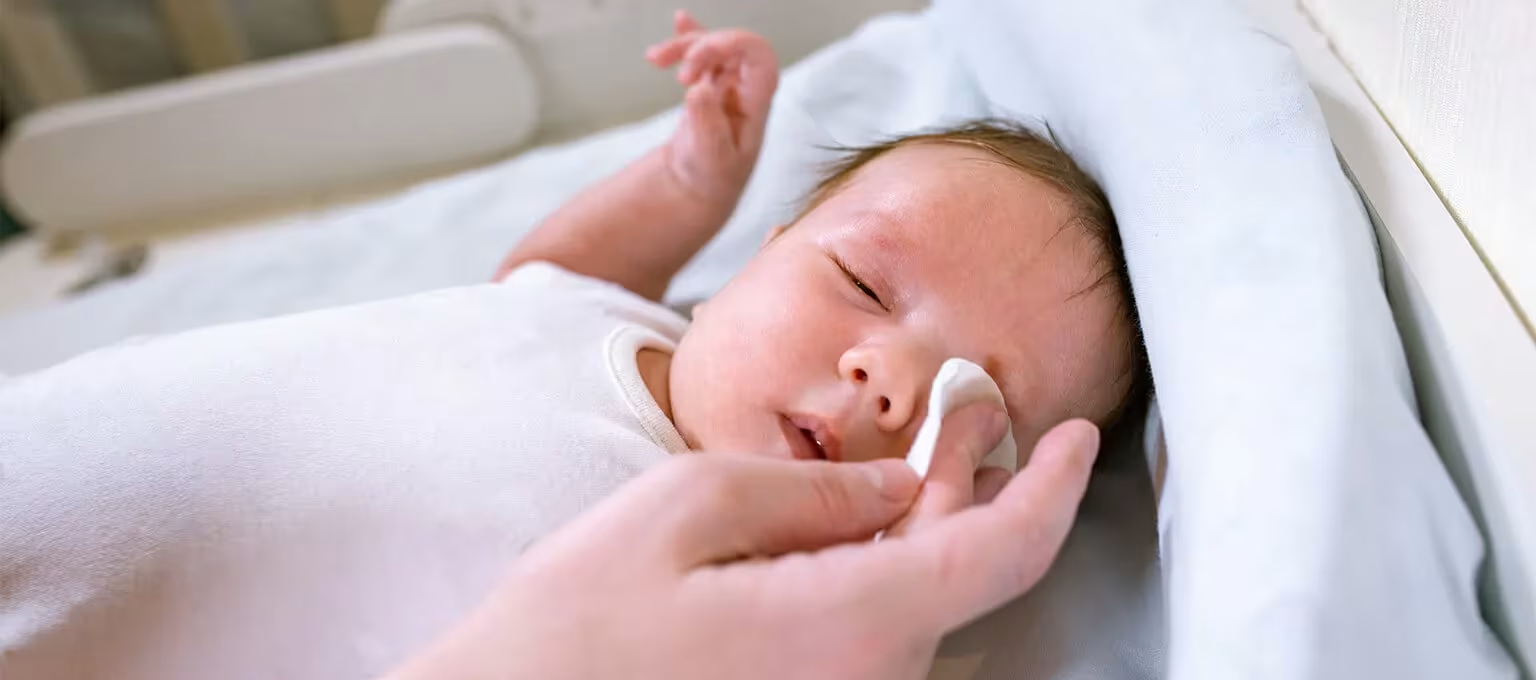
Pinkeye (Conjunctivitis) in Babies: Signs, Causes and Treatment
Pinkeye in babies and newborns can be caused by an infection or allergy. Read this guide to learn about the symptoms, treatments for pink eye, and how you can prevent it.
Read more
How to stop your newborn baby's hiccups in 10 easy ways
Newborn baby hiccups are very common and usually harmless. Get 10 tips on how to stop your baby's hiccups, and learn what causes baby hiccups and how to prevent them.
Read more
Baby Arching Back: Why Do Babies Arch Their Backs?
Learn why babies might arch their backs. So learn about common reasons, understand when it's normal, potential medical issues, and when to seek professional advice.
Read more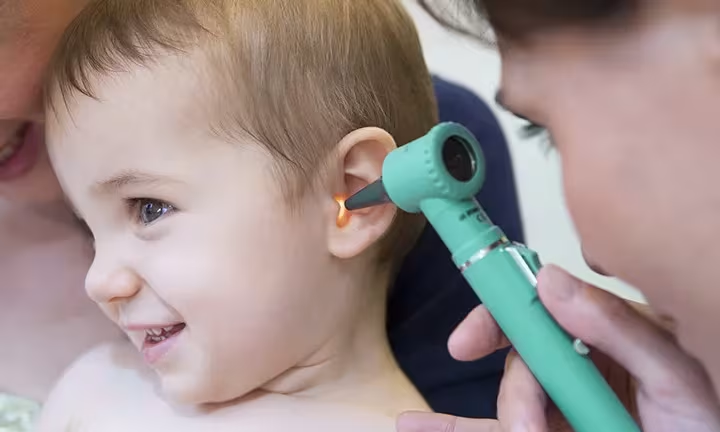
Ear Infections in Babies and Toddlers: Signs and Symptoms
Is your baby pulling their ear, crying, or having trouble sleeping? These may be signs of an ear infection. Learn about the symptoms, causes, treatment, and how to tell if your child has one.
Read more
Neonatal Intensive Care Unit (NICU): Equipment
Get to know the NICU equipment crucial for premature baby care. Find out what tools are in the neonatal intensive care unit and their role in supporting your baby's health and growth.
Read moreNeonatal Intensive Care Unit (NICU): Common Problems
Retrieving data. Wait a few seconds and try to cut or copy again.
Read moreHand, Foot, and Mouth Disease: Causes, Symptoms, Prevention & Treatment Hand, Foot, and Mouth Disease Explained
Hand, Foot, and Mouth Disease (HFMD) in newborns: Learn all the symptoms, causes, prevention tips, and treatment options to tackle this contagious illness in babies. Hand, Foot, and Mouth Disease (HFMD) in newborns: explore symptoms, causes, and treatment options to tackle this contagious illness for your baby's well-being.
Read moreStork Bite Birthmarks
Navigate newborn skin markings: Stork bites, angel kisses, & nevus simplex—frequent birthmarks on baby's face or neck. Uncover their traits and significance.
Read moreBenefits of Vitamin D for Babies
Unlock the benefits of vitamin D for newborns with expert guidance. When to start supplements? Find out here for your baby's optimal health!
Read moreOral Thrush in Babies: Causes, Symptoms and Treatment
Oral thrush is a common fungal infection detected in babies. With proper treatment, oral thrush in newborns can be resolved easily. Click here on Pampers India to know more!
Read morePinkeye (Conjunctivitis) in Babies: Signs, Causes and Treatment
Pinkeye in babies and newborns can be caused by an infection or allergy. Read this guide to learn about the symptoms, treatments for pink eye, and how you can prevent it.
Read moreHow to stop your newborn baby's hiccups in 10 easy ways
Newborn baby hiccups are very common and usually harmless. Get 10 tips on how to stop your baby's hiccups, and learn what causes baby hiccups and how to prevent them.
Read moreBaby Arching Back: Why Do Babies Arch Their Backs?
Learn why babies might arch their backs. So learn about common reasons, understand when it's normal, potential medical issues, and when to seek professional advice.
Read more