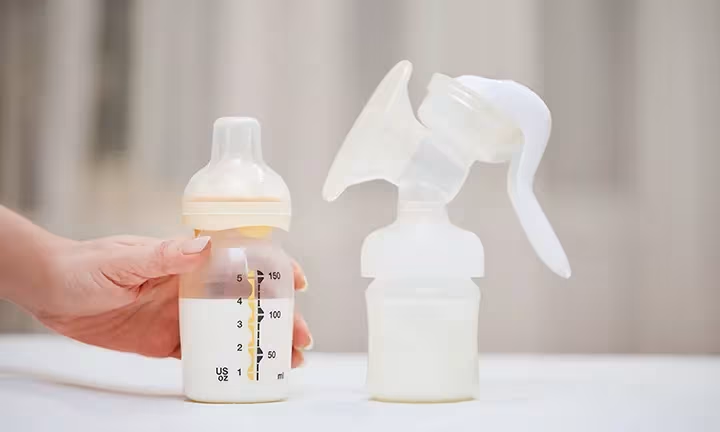
Breast Milk Pumping: Techniques, Tips, and Benefits


Breast pumping is a convenient way to provide breast milk to your baby when they’re unable to breastfeed directly, when your breasts are engorged, or you’d prefer to bottle feed. If you’re considering breast pumping and want to learn more, keep reading for the benefits of pumping and tips on how to pump, as well as learning when to start pumping, how often to pump, and how to combine pumping and breastfeeding.

When to Start Pumping
You can start pumping soon after giving birth if you wish; however, it may be helpful to begin after you've breastfed your baby for a few weeks. This may help you and your baby settle into a breastfeeding routine and allow your milk supply to become well established. This usually happens around three to four weeks after birth.
You may decide to pump because you’re returning to work or school, or perhaps you’ll be apart from your baby for a period of time. If that’s the case, start pumping a few weeks beforehand to get the hang of it, and get your baby used to bottle feeding.
Tip Check with your healthcare provider and insurance carrier, or with the WIC program (Special Supplemental Nutrition Program for Women, Infants, and Children) in your state, about buying or renting your breast pump and having the cost covered through your health insurance or WIC. |
How to Pump Breast Milk
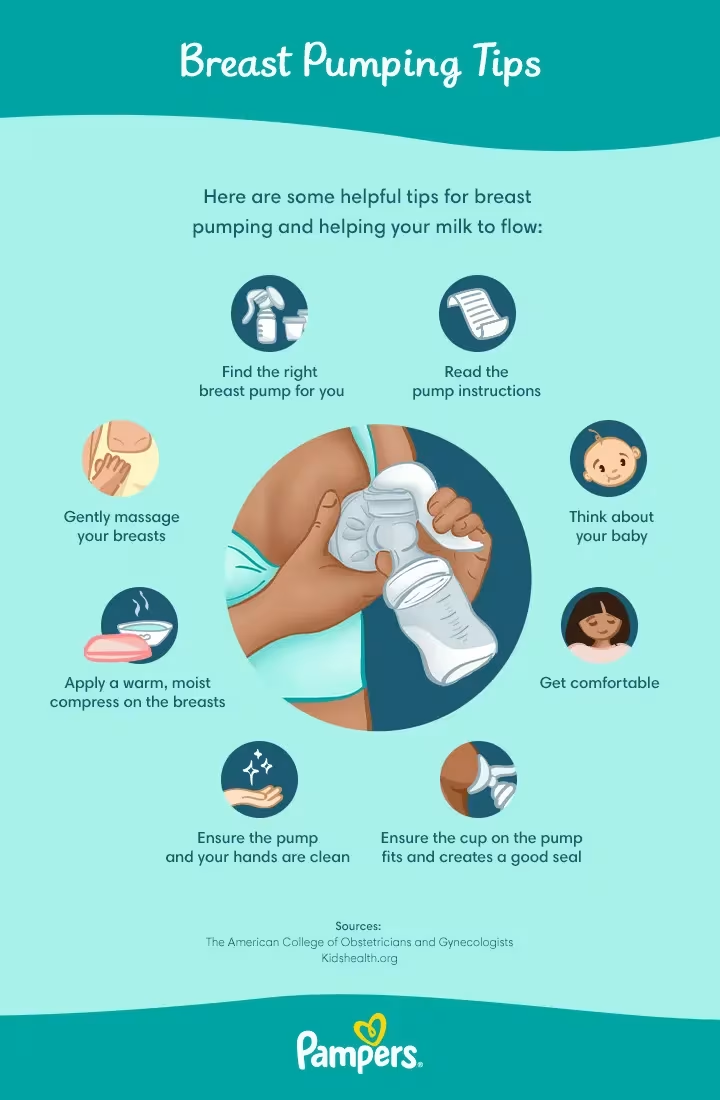
You can express your milk with your hand or by pumping with a breast pump (manual or electric). Here are some breast-pumping tips:
If you’re looking for the best breast pump for you, we created a helpful guide, including the pumps voted for by Pampers parents.
Can You Pump Colostrum?
Colostrum is the “first milk” your breasts produce. It’s a lot thicker than your regular milk and is highly beneficial for your baby. If you’re not breastfeeding, you can still utilize this special milk. But because it’s so thick, it’s harder to pump—therefore, it may be easier to hand express your colostrum until your regular milk comes in.
Some experts even recommend hand-expressing colostrum onto a spoon to get every drop of it. And once you’ve manually expressed or pumped your colostrum, what can you do with it? Just like your regular milk, you can feed it to your baby right away or store it in clean containers for later.
How Often Should You Pump?
How often and how many times a day or night you “should” pump depends on your individual situation and whether you’re exclusively pumping or you’re combining it with breastfeeding. One pumping schedule doesn’t necessarily fit all!
If you’re with your baby throughout the day and you’re breastfeeding, try to pump between feedings. Many moms find that pumping every two to three hours is doable.
If you’re going to be away from your baby for a period of time or you’re wondering how to exclusively pump your milk, it’s recommended to pump as frequently as your baby feeds in order to maintain your milk supply. It’s also common to wonder, “Do I have to pump at night?” If you’re exclusively pumping your milk, you may wish to pump at night to help maintain your milk supply.
Whether you’re breastfeeding, pumping, or formula feeding, check out our guide on how much a newborn should eat, which includes a helpful feeding schedule.
How to Combine Breastfeeding and Pumping
Combining both can be helpful and prevent breast engorgement. If your baby isn’t breastfeeding frequently, you can manually express or pump between feedings. Or pump from the other breast if your baby only feeds from one breast.
If you’ve decided to combine breastfeeding and pumping, you may wish to start pumping between nursing sessions until you have a small supply of bottled breast milk. Then, you could gradually introduce one or two bottle feedings into your baby’s schedule.
It’s important to remember that the nipple of your breast is different from that of a bottle, and your baby may have some difficulty adjusting to bottle feeding. It can take some time and patience.
You may want to have someone else offer your little one a bottle, as some babies find it easier to drink from a bottle when the mother isn’t around. Your baby can recognize your scent and voice, which they may associate with breastfeeding.

How Long Should You Pump For?
How long to pump per session: It’s recommended to pump for at least 15 to 20 minutes per session or until the milk stops flowing, but, of course, everyone is different, so you may need more time. It may take a little longer during your early days of pumping.
If you need a fast and efficient pumping option, you could consider using an electric pump that does both breasts at once.
How long to pump overall: Just like with breastfeeding, you can continue pumping for as long as you want before weaning your baby off breast milk. You may decide to do this gradually when your baby is starting to eat solids, at around 4 to 6 months. The gradual approach reduces the likelihood of engorgement or clogged ducts.
As you start breastfeeding or pumping less, your milk supply will gradually decrease.
How Much Milk Should You Be Pumping?
The amount of milk produced can vary from person to person and session to session. If you’re exclusively feeding your baby the breast milk you’ve pumped, it’s a good idea to pump as frequently as your baby feeds. This may help your body produce the amount your little one needs. Keep in mind that this can vary from baby to baby and increase during growth spurts.

What Are the Benefits of Pumping Breast Milk?
Breast pumping can provide numerous benefits to both mom and baby. Here are some of the benefits of pumping along with breastfeeding or exclusive pumping:
The Challenges of Pumping Breast Milk
Though pumping is a relatively straightforward process, some moms may encounter a few issues along the way. Here are a few potential challenges of pumping breast milk:
Of course, everyone is different, and you will soon find what works best for you and your little one. If you have any concerns or need any help with pumping, contact your healthcare provider or a lactation consultant for more advice.
Pumping at Work: Going Back to Work After Having a Baby
Are you returning to work after maternity leave? If so, and you’ve also decided to breastfeed, pump your milk, or both, it’s important that you feel comfortable and supported in your workplace throughout this process. Here are a few tips for navigating pumping at work:
FAQS AT A GLANCE
It’s not recommended to pump every hour, as it may lead to oversupply and discomfort. Most experts suggest pumping every 2-3 hours for optimal milk production, which is generally how often a baby feeds.
The Bottom Line
Breast pumping can be a great way for you to provide breast milk to your baby. It’s important to understand when to start, how to pump, and how often to pump, as well as the benefits pumping offers. Whether you decide to combine breastfeeding and pumping, or exclusively pump, you and your little one will soon fall into a feeding schedule that works best for you both. Be sure to consult your healthcare provider or a lactation consultant if you have any questions or concerns.
How We Wrote This Article The information in this article is based on the expert advice found in trusted medical and government sources, such as the American Academy of Pediatrics and the American College of Obstetricians and Gynecologists. You can find a full list of sources used for this article below. The content on this page should not replace professional medical advice. Always consult medical professionals for full diagnosis and treatment.
- American Academy of Pediatrics, Caring for Your Baby and Young Child: Birth to Age 5, 7th ed. (New York: Bantam Books, 2019).
- American Academy of Pediatrics, Heading Home With Your Newborn: From Birth to Reality, 3rd ed. (Elk Grove Village, IL: American Academy of Pediatrics, 2015).
- Mayo Clinic. Guide to Your Baby’s First Years, 2nd ed. (Rochester, MN: Mayo Clinic Press, 2020).
- CDC. “Pumping Breastmilk.”
- Cleveland Clinic. “Benefits of Breastfeeding.”
- Cleveland Clinic. “Colostrum.”
- Healthy Children. “Expressing Breastmilk on the Job.”
- LLLI. “The Power of Hand Expression.”
- LLLI. “Pumping Milk.”
- Kids Health. “Breastfeeding FAQs: Pumping.”
- Mayo Clinic. “Solid foods: How to get your baby started.”

When Can Babies Eat Eggs?
Wondering when it's safe to give eggs to your baby? Explore tips on introducing eggs safely into your baby's diet and how to prepare them. Plus, find Pampers IN for more parenting advice.
Read more
Newborn to 12 Month Old Baby: Feeding Schedule & Charts
Develop a perfect feeding schedule for your baby with our detailed guide. Ensure your baby receives the right nutrition at every stage of their growth.
Read more
Baby-Led Weaning- (BLW): How to start solids, best foods & safety tips
Baby-led weaning involves introducing solid foods to babies while skipping the pureed food phase. Get expert tips on when to start BLW and the safest foods for BLW.
Read more
How a Lactation Consultant Can Help You
Tips on how lactation consultants can support breastfeeding, addressing issues like sore nipples and low milk supply. Get expert advice to enhance your breastfeeding experience with help from Pampers.
Read more
What is nipple confusion and how to prevent it?
Understand what nipple confusion is, its causes, signs, and practical tips to prevent confusion between breast and bottle feeding for newborns.
Read more
5 Tips for Breastfeeding in Public
Make public breastfeeding easier with these tips. Learn how to breastfeed comfortably and what essentials to have on hand for a smooth experience.
Read more
Sore, Cracked, or Bleeding Nipples While Breastfeeding
Effective relief for cracked nipples during breastfeeding. Explore causes, treatments, and prevention methods for soothing comfort. Find solutions for cracked nipples.
Read more
Find Out Whether You Can Consume Caffeine While Breastfeeding
" Can you consume caffeine while breastfeeding? Find out how much caffeine it’s safe to consume while breastfeeding and what effect too much caffeine can have on your breastfeeding baby’s health and well-being."
Read more
The 19 Most Useful Breastfeeding Tips and Tricks
Struggling with breastfeeding? Discover helpful tips to ease the process for you and your newborn. Get started with confidence and ensure a successful breastfeeding journey
Read more
When Can You Introduce Honey to Your Baby
Explore the risks of giving honey to infants and learn when it's safe to introduce this sweet treat to your little one. Get expert guidance here, brought to you by Pampers IN
Read moreWhen Can Babies Eat Eggs?
Wondering when it's safe to give eggs to your baby? Explore tips on introducing eggs safely into your baby's diet and how to prepare them. Plus, find Pampers IN for more parenting advice.
Read moreNewborn to 12 Month Old Baby: Feeding Schedule & Charts
Develop a perfect feeding schedule for your baby with our detailed guide. Ensure your baby receives the right nutrition at every stage of their growth.
Read moreBaby-Led Weaning- (BLW): How to start solids, best foods & safety tips
Baby-led weaning involves introducing solid foods to babies while skipping the pureed food phase. Get expert tips on when to start BLW and the safest foods for BLW.
Read moreHow a Lactation Consultant Can Help You
Tips on how lactation consultants can support breastfeeding, addressing issues like sore nipples and low milk supply. Get expert advice to enhance your breastfeeding experience with help from Pampers.
Read moreWhat is nipple confusion and how to prevent it?
Understand what nipple confusion is, its causes, signs, and practical tips to prevent confusion between breast and bottle feeding for newborns.
Read more5 Tips for Breastfeeding in Public
Make public breastfeeding easier with these tips. Learn how to breastfeed comfortably and what essentials to have on hand for a smooth experience.
Read moreSore, Cracked, or Bleeding Nipples While Breastfeeding
Effective relief for cracked nipples during breastfeeding. Explore causes, treatments, and prevention methods for soothing comfort. Find solutions for cracked nipples.
Read moreFind Out Whether You Can Consume Caffeine While Breastfeeding
" Can you consume caffeine while breastfeeding? Find out how much caffeine it’s safe to consume while breastfeeding and what effect too much caffeine can have on your breastfeeding baby’s health and well-being."
Read more