Power Pumping to Increase Your Breast Milk Supply


Are you a parent wondering how to increase your breast milk supply when pumping? If so, you might be interested in power pumping, a method some nursing parents use to help increase breast milk supply. Our guide provides information to answer what is power pumping, the potential benefits, how to power pump, and a schedule to help you along the way. Whether you’re returning to work, or facing supply challenges, read on for more information on power pumping.

What Is Power Pumping?
Power pumping is a technique that some nursing parents use to help increase breast milk supply. It involves pumping your breast milk in short and frequent sessions to help stimulate milk production, essentially sending a signal to the body to produce more milk. It’s also known as cluster pumping, as it mimics cluster feeding, a natural pattern where a baby feeds more frequently at certain times, especially during growth spurts and periods of development.
It's important to note that power pumping is generally used as an addition to your usual pumping or nursing schedule and not as a replacement. It’s a way to give your milk supply a little boost. If you suspect your milk supply is low, it’s best to consult with your provider or lactation consultant to diagnose factors affecting your milk supply and to determine the options available to increase your supply.
The Benefits of Power Pumping
Power pumping may be an option if you’re experiencing a low breast milk supply. It might be beneficial if your baby is not able to breastfeed directly due to certain reasons, or if you’re returning to work or school and still wish to maintain your milk supply and feed your baby breast milk. Power pumping may help maintain and boost your breast milk supply; however, it’s not recommended if you’re producing enough milk already or your baby is currently cluster feeding, as this may lead to an oversupply of milk, which can cause breast engorgement.
How to Power Pump
Power pumping is similar to regular breast pumping but involves pumping milk at short and frequent intervals for about an hour. When it comes to power-pumping or breastfeeding, there is no one-size-fits-all solution that works for everyone, as it depends on each individual. However, some people suggest power pumping for about 10 to 20 minutes, resting for a short period, and then repeating the cycle for a certain duration, for example, an hour. The idea is to empty the breasts frequently to stimulate more milk production. Using a double pump, especially an electric pump, can save time and means you can pump in shorter sessions, such as 10 minutes at a time. If you decide to power pump to increase your milk supply, it’s generally recommended to do it just once or twice a day and then resume your normal nursing or pumping schedule for the rest of the day. It’s always best to consult with your provider or lactation consultant for their personalized recommendation.

Can You Power Pump Using a Manual Pump?
While power pumping is generally more effective with an electric breast pump, especially a double pump, it can be done with a manual pump. However, it might be more labor-intensive and time-consuming.
How Often “Should” You Power Pump?
If you’re wondering how often or how many times a day should you power pump, the frequency of power pumping sessions can depend on your individual needs, milk supply goals, and recommendations from your provider. You might find it effective to have one or two short power pumping sessions per day.
How Long to Power Pump for?
The length of each power pumping session can vary, but a common approach nursing parents use is to power pump for about an hour or two each day, divided into several intervals of pumping and resting. While some parents may only need to power pump for a few days, others may need to do it for up to a week to see a result.
When Will You See Results With Power Pumping?
As we mentioned above, results of power pumping can vary from individual to individual. You might see an increase in milk supply within a few days or it might take a week or longer. It’s best to talk to your healthcare provider or lactation consultant about power pumping and what they recommend.
Power Pumping Schedule
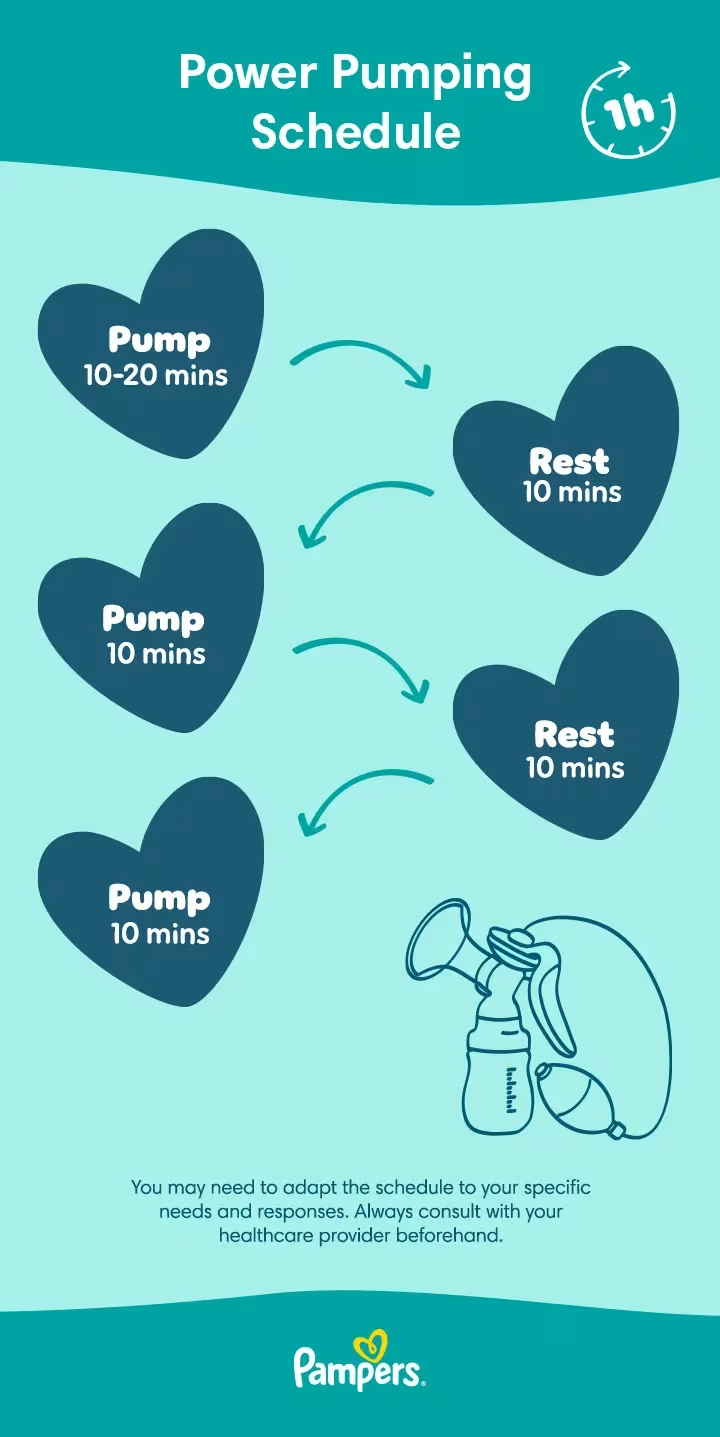
While there’s no set schedule for power pumping to increase breast milk supply, some nursing parents find that pumping for 10 minutes, resting for 10 minutes, and repeating this cycle for about an hour works for them. Your schedule may vary based on your body’s response and daily routine. Here are two examples of power pumping schedules: Start: Pump for 10 minutes Break: Rest for 10 minutes Repeat: Repeat the above cycle for a total of 1 hour
or
Start: Pump for 20 minutes Break: Rest for 10 minutes Pump: 10 minutes Break: Rest for 10 minutes Pump: 10 minutes
When Is The Best Time of the Day to Power Pump?
The best time of the day to power pump can depend on your schedule and when your milk supply seems to be the most responsive.
Tips for Power Pumping
FAQS AT A GLANCE
Some nursing parents find that power pumping can be an effective method to stimulate breast milk production. However, it’s important to discuss any issues with your milk supply with your healthcare provider and follow any personalized advice they give you.
The Bottom Line
Power pumping may offer a solution for some nursing parents seeking to enhance their breast milk supply. However, it’s important to remember that each breastfeeding journey is distinct, and what works for one may not be suitable for another. If you’re considering power pumping or have concerns about your breast milk supply, it’s essential to consult with your healthcare provider or a lactation consultant. They can provide personalized advice and support tailored to your unique circumstances, ensuring the best possible approach for you and your baby. If you want more advice on feeding your baby, take a look at our helpful articles:
How We Wrote This Article The information in this article is based on the expert advice found in trusted medical and government sources, such as the American Academy of Pediatrics and the American College of Obstetricians and Gynecologists. You can find a full list of sources used for this article below. The content on this page should not replace professional medical advice. Always consult medical professionals for full diagnosis and treatment.
- American Academy of Pediatrics, Caring for Your Baby and Young Child: Birth to Age 5, 7th ed. (New York: Bantam Books, 2019).
- American College of Obstetricians and Gynecologists, Your Pregnancy and Childbirth: Month to Month, 6th ed. (Washington, DC: American College of Obstetricians and Gynecologists, 2015).
- Breastfeeding Center. “What is Power Pumping?”
- Healthy Children. “Low Breast Milk Supply.”
- Kids Health. “Breastfeeding FAQs: Supply and Demand”
- Lactation Network. “Power Pumping (aka Cluster Pumping) to Increase Milk Supply.”
- a Leche League International. “Pumping Milk.”

When to Start Weaning a Baby off Breast Milk
Learn signs that indicate when to stop breastfeeding your baby & the start of weaning process. Visit Pampers India for more information on baby care.
Read more
Tips on Feeding your Baby
Follow the guidelines on how to feed your baby & what solid foods should babies have in their early age. For more information on feeding babies, visit Pampers India.
Read more
Baby feeding: when to move to milk
Thinking of moving your baby over to bottled milk? Find out the best time to do so, and how much bottled milk they will need using our handy guide.
Read more
Eat out with kids
The first step in helping to ensure that eating out with your baby is a stress-free experience is ensuring that the restaurant is family-friendly.
Read more
Why You Should Wake a Newborn to Eat
Learn when and how to wake your newborn to eat. Discover feeding schedules, sleep needs, and tips for ensuring your baby gets the right nutrition at the right time.
Read more
Safe Baby Food Chart For 4-12 Month Olds
Discover the safest baby food ideas for 4-12 month old baby.Explore our month wise baby food chart to make your baby a complete diet plan with all the nutrients required for development.
Read more
Dehydration in Infants: Causes, Signs, and Treatment
When the loss of fluid is more than the intake, it causes dehydration in infants. Click here on Pampers India to know more about its causes, signs, and treatment.
Read more
How and When to Start Giving Water to A Newborn and Babies?
Click here on Pampers India to know more about when can you give water to your newborn, why should you wait until your baby turns a certain age, and so on.
Read moreWhen to Start Weaning a Baby off Breast Milk
Learn signs that indicate when to stop breastfeeding your baby & the start of weaning process. Visit Pampers India for more information on baby care.
Read moreTips on Feeding your Baby
Follow the guidelines on how to feed your baby & what solid foods should babies have in their early age. For more information on feeding babies, visit Pampers India.
Read moreBaby feeding: when to move to milk
Thinking of moving your baby over to bottled milk? Find out the best time to do so, and how much bottled milk they will need using our handy guide.
Read moreEat out with kids
The first step in helping to ensure that eating out with your baby is a stress-free experience is ensuring that the restaurant is family-friendly.
Read moreWhy You Should Wake a Newborn to Eat
Learn when and how to wake your newborn to eat. Discover feeding schedules, sleep needs, and tips for ensuring your baby gets the right nutrition at the right time.
Read moreSafe Baby Food Chart For 4-12 Month Olds
Discover the safest baby food ideas for 4-12 month old baby.Explore our month wise baby food chart to make your baby a complete diet plan with all the nutrients required for development.
Read moreDehydration in Infants: Causes, Signs, and Treatment
When the loss of fluid is more than the intake, it causes dehydration in infants. Click here on Pampers India to know more about its causes, signs, and treatment.
Read moreHow and When to Start Giving Water to A Newborn and Babies?
Click here on Pampers India to know more about when can you give water to your newborn, why should you wait until your baby turns a certain age, and so on.
Read more