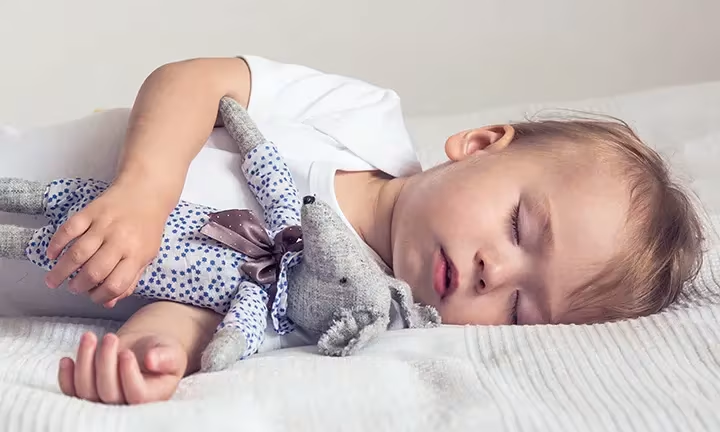
Baby and Toddler Nap Schedules


Key Takeaways for better baby sleep Naps are an integral part of your baby’s daily sleep. They accomplish the following:
One of the keys to nurturing naps is to create a nap schedule and ideal nap environment, both of which we explain below. [Hint: an ideal nap environment is much like an ideal bedtime environment: dark, cool, and quiet.] Here we also explain how many naps babies typically need at various ages and suggest when it’s time to lose naps all together. For more help on the nap front, and all else baby sleep related, download the Smart Sleep Coach by Pampers™. In addition to nap coaching, this innovative, easy-to-use app explains the science behind your baby’s sleep, offers emotional support exercises to keep you positive in frustrating moments, and it includes a sleep tracking tool that automatically updates your baby’s sleep schedule, helping you help them get the rest they need. |
All children need sleep, and this is especially true for babies and toddlers as they grow and develop. For young children to get enough sleep, naps and daytime sleep are essential. Read on to learn more about naps, including how many may be needed each day based on your child's age, how long a nap may be, and what you can do to ensure your little one gets the most out of naps.

Why Naps Are Important for Your Child’s Development
Naps offer a number of benefits for babies and toddlers. Studies have shown that young children who nap regularly tend to have longer attention spans and sleep better at night than those who don't take naps. Here are some other ways naps can be beneficial for your child:
Naps also give you and other caregivers a much-needed break. While your baby or toddler naps, take the opportunity to unwind or do something that's hard to do when your child is awake.
In Summary Experts say that naps are beneficial for your little one’s mental development and can help improve mood. Daytime naps can even help your child fall asleep at night. And, your child’s naptimes can also be good for you, giving you a much-needed break. |
Developing a Nap Schedule
Creating a nap schedule for your older baby or toddler can help your child have better quality sleep at night. Tracking your little one’s sleep times and paying attention to the signs of sleepiness (such as fussiness and rubbing of the eyes) will help you see a pattern in the times when your little one is naturally sleepy throughout the day, and this will help you work out a nap schedule that works. If your baby is fighting naps, or maybe you just want some helpful guidance and practical tips to get sleep on track, take this FREE sleep assessment, brought to you by the Smart Sleep Coach by Pampers™ app. It can help you figure out how to solve your baby's sleep challenges so you can all start getting more sleep. Once you have a nap schedule going, try to make sure your baby naps at the same time every day and that each nap runs for about the same amount of time. Obviously, there will be some days where this may not happen, and that’s OK. Just be sure to get her back on track at the next opportunity. If you baby fights naps, or if you need any kind of sleep support, download the Smart Sleep Coach by Pampers™. This easy-to-use app will guide you step by step to sleep success and is jam packed with helpful tutorials and videos to help you become a sleep pro.
Get started with this FREE sleep assessment.
Don’t miss these must-watch sleep tips from a pediatric sleep consultant.
The Best Times for Naps
Every child is unique, and tracking your child’s sleep will help you pinpoint specific naptimes that work best for your child. Generally speaking, though, the best times for naps are mid- to late- morning and early afternoon. A nap typically lasts anywhere between 30 minutes and 2 hours. Your child may need to nap more often or less often depending on his age and stage of development. It’s a good idea not to let your child nap after 3 or 4 p.m. because he may not be tired enough when bedtime rolls around. Allow for at least four hours between his last nap and his set bedtime. If your baby isn’t tired by bedtime, you may need to play around with an earlier afternoon nap or shortening the duration of the afternoon nap. You may need to drop it altogether if your child no longer needs it. Conversely, in some cases missing a nap may result in your child having more trouble falling asleep at night or a nighttime waking because your child may be overtired by the time bedtime rolls around.

Number of Naps Per Day by Baby Age
Over time, your child will need fewer naps. This chart gives you an idea of the number of daily naps your baby or toddler may take according to age:
| Age | Naps per day |
|---|---|
| 0 to 3 months | 3 to 4 |
| 4 to 7 months | 2 to 3 |
| 8 to 12 months | 2 |
| 12 months to 18 months | 1-2 |
| 18 months to 3 years | 1 |
Keep in mind, every child is unique, so don’t be surprised if your 2-year-old still needs two naps a day, for example. Read on for more on this topic.
Does Your Toddler Need One or Two Naps?
After your child turns 1, you may not be sure whether he needs one or two naps per day. There’s no standard answer, as individual toddlers may require different amounts of daytime sleep. In fact, whether your child needs one or two naps on any given day may depend on what kind of day he’s having. To deal with this, experts suggest alternating the number of naps depending on what’s happened that day:
When Do Kids Stop Napping?
After about 3 years of age, your toddler may start to give up naps entirely and switch to sleeping only at night. However, some children may stop napping as early as 2 years old whereas others may still need to take a nap or two even at about 5 years old.
In Summary
Over time, your child will need fewer naps. Every child is unique, however, and there is no age at which naps should be reduced or eliminated. How many naps a child needs may also depend on how well he slept the night before. As a general guide, in the beginning your baby may take three to four naps per day, and by the time he’s a preschooler, it may be down to just one nap a day. Some children stop napping as early as 2 years old.
Tips for Creating a Naptime Routine
A naptime routine is similar to a bedtime routine except that it is shorter. Children love consistency and being able to anticipate what’s to come, so creating a consistent ritual around naptime can help your little one nap more easily. You can start setting a naptime routine with your infant as early as 6 to 8 weeks old. The key to a naptime routine is keeping things calm and soothing, especially in the moments before you put your little one down for her nap. Carry out the routine in your baby’s room or in your room (if you’re room-sharing), or make sure you finish there. This can help your baby or toddler associate naptime with the bedroom and with her crib or toddler bed. Here are some things your naptime routine can include:
The key to a naptime routine is consistency. If someone else cares for your little one, such as a grandparent or babysitter, make sure the caregiver knows about and follows the established routine. For some toddlers and young kids, naptimes can become a battle. Your child may not want to nap anymore, especially as toddlerhood is filled with so many more exciting things than sleep! It’s OK — don’t force it. Instead, give your child some quiet time to play by herself in her room. You might discover that this can lead to your child falling asleep, even if she insists she isn’t tired at all.
In Summary
A naptime routine can help get your child in the mood for sleep and can help your child learn to anticipate that the time for sleep is coming. Keep the routine short — you want to be able to do it consistently before each nap. What you include is up to you, but it should be relaxing and help your child wind down ahead of the nap.
Creating an Ideal Environment for Naps
Here are some tips for creating an ideal sleep environment for naptime:
In Summary To create an environment that’s conducive to a daytime nap, you might like to darken the room, play some white noise, and make sure your child isn’t feeling too hot or cold. Practicing safe sleep is always important, so follow the safe sleep guidelines appropriate for your child’s age. |
FAQS AT A GLANCE
Your baby should nap in her crib. Sleeping anywhere else, such as on a sofa, in a car seat, in an infant carrier or sling, or even in her stroller, is unsafe. If she does fall asleep on one of these surfaces, move her to her crib as soon as you can.
During the day you may like to have your infant nap nearby, in which case you could use a bassinet for her first month or a portable crib or play yard. Any of these are easier than a crib to move to wherever you happen to be in the house (just don’t move it with your baby inside).
The Bottom Line
Naps are important for your baby and toddler. They contribute to your child’s health and development, and can help improve concentration and mood. Your child may even have better quality nighttime sleep if he has some good, well-timed naps during the day. In the beginning your baby may nap three to four times per day, but as he reaches toddler or preschooler age, he’ll start to nap less and less until naptime is completely phased out. Creating a soothing and safe environment for your child’s naps will help your child get the most out of them. Plus, you might find you look forward to your child’s naps, as they give you opportunities to take on tasks that are hard to do when your child is awake and wants all of your attention. Once your child is on a more predictable nap schedule, you’ll have a little more freedom to plan your day with those sleep blocks in mind as well.
Related Articles:
How We Wrote This Article The information in this article is based on the expert advice found in trusted medical and government sources, such as the American Academy of Pediatrics and the American College of Obstetricians and Gynecologists. You can find a full list of sources used for this article below. The content on this page should not replace professional medical advice. Always consult medical professionals for full diagnosis and treatment.

Why an Early Bedtime Is Important to Babies and Toddlers
the importance of infant sleep routines & newborn bedtime practices. Uncover evolving sleep needs & the significance of a consistent bedtime routine for infants & toddlers.
Read moreBaby Sleep Training: Nap and Bedtime Routines
A well-rested baby will actually sleep better at night. So, try your best to keep nap times consistent during the day. Watch and learn more.
Read more
Babies and toddlers in cars: Top safety tips
Read these car safety tips for babies & toddlers. From ensuring that you have the appropriate gear, to the best driving habits, this guide has it covered.
Read more
Baby Sleep Training
As every new parent knows, it can be challenging to put your baby to bed. Developing good bedtime habits is crucial, especially when the baby is four-month old. Click here on Pampers India for the best baby sleep training routine.
Read more
How To Put Your Baby To Sleep Fast: 9 Tips & Tricks
Learn simple techniques on how to make your newborn baby or infant sleep quickly. Discover proven ways to help your put your baby to sleep at night.
Read more
How Long Does 4-Month Sleep Regression Last and What Are the Causes?
Identify the symptoms of 4-month sleep regression and gain insights into managing your baby's sleep changes during this developmental phase.
Read more
When Can Babies Start Sleeping With Blankets?
why blankets increase the risk of SIDS in the first 12 months. Learn when it's safe for your baby to sleep with a blanket and get expert advice on baby sleep safety. Read on for crucial tips to keep your infant safe.
Read more
How Much Sleep Does a Toddler Need?
Find out how much sleep your toddler needs, effective toddler nap tips, and bedtime routines. Get insights on handling nightmares, teeth grinding, and more for a restful sleep
Read more
Everything Explained About the Cry-It-Out Method for Your Baby's Sleep Training
Sleep training methods like 'cry it out' may work for some families and not for others. Learn more about how to try this tactic to help your baby sleep better.
Read more
Everything Explained About The Ferber Method for Sleep Training
Learn about the Ferber Method, a popular sleep training method to help babies learn to sleep on their own. Read this guide to understand whether it could be a good fit for your little one.
Read moreWhy an Early Bedtime Is Important to Babies and Toddlers
the importance of infant sleep routines & newborn bedtime practices. Uncover evolving sleep needs & the significance of a consistent bedtime routine for infants & toddlers.
Read moreBaby Sleep Training: Nap and Bedtime Routines
A well-rested baby will actually sleep better at night. So, try your best to keep nap times consistent during the day. Watch and learn more.
Read moreBabies and toddlers in cars: Top safety tips
Read these car safety tips for babies & toddlers. From ensuring that you have the appropriate gear, to the best driving habits, this guide has it covered.
Read moreBaby Sleep Training
As every new parent knows, it can be challenging to put your baby to bed. Developing good bedtime habits is crucial, especially when the baby is four-month old. Click here on Pampers India for the best baby sleep training routine.
Read moreHow To Put Your Baby To Sleep Fast: 9 Tips & Tricks
Learn simple techniques on how to make your newborn baby or infant sleep quickly. Discover proven ways to help your put your baby to sleep at night.
Read moreHow Long Does 4-Month Sleep Regression Last and What Are the Causes?
Identify the symptoms of 4-month sleep regression and gain insights into managing your baby's sleep changes during this developmental phase.
Read moreWhen Can Babies Start Sleeping With Blankets?
why blankets increase the risk of SIDS in the first 12 months. Learn when it's safe for your baby to sleep with a blanket and get expert advice on baby sleep safety. Read on for crucial tips to keep your infant safe.
Read moreHow Much Sleep Does a Toddler Need?
Find out how much sleep your toddler needs, effective toddler nap tips, and bedtime routines. Get insights on handling nightmares, teeth grinding, and more for a restful sleep
Read more