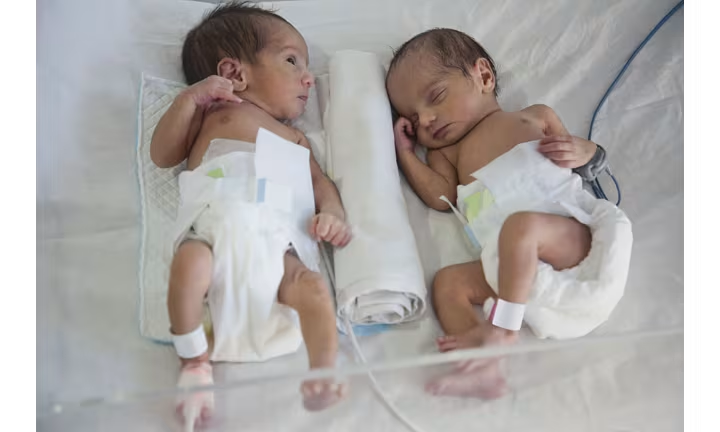
What Is the Ideal Room Temperature for Newborn Baby?


There’s nothing more precious and cuter than watching your little one sleep. As a parent, it’s important for you to know that good sleeping habits play a vital role in your baby’s development and safety. This is why ensuring his comfort becomes your top priority. There are a few strategies to ensure that your baby achieves a sound sleep. Finding an ideal room temperature for a newborn is one of them.
But how does one find the perfect room temperature for a newborn? Read on to discover what is the ideal room temperature for a newborn, how to get the room feeling just right, and how to help keep it that way.
What Should Be The Ideal Room Temperature For Newborn?
It may come to you as a surprise, but the room temperature significantly impacts the quality of your baby’s sleep. Likewise, maintaining an ideal baby room temperature also reduces the risk of overheating which is related to Sudden Infant Death Syndrome (SIDS).
Setting the right temperature might be a little tricky. The best way to gauge the ideal room temperature for a newborn is by finding a temperature where you find yourself comfortable. As per experts, be it winter or summer, it's best to always maintain your baby's room temperature between 20 to 22°C.

Why Setting the Ideal Temperature Is Important for Your Baby?
When your baby’s room temperature is too high or too low, she may not sleep as long or as well. Keeping your baby’s room at the best temperature for sleep can help foster the quantity and quality of sleep necessary for healthy development.
Maintaining the right ambient temperature for your sleeping baby also helps prevent overheating. This, in turn, can help reduce the risk of sudden infant death syndrome (SIDS) and other serious health issues.

Keeping Your Baby Comfortable During Sleep
Aside from maintaining a comfortable room temperature for newborns, these are some other steps you can take to make sure that your little one is comfortable and safe while she takes her sound sleep.
While putting your little one to sleep, lay her on her back until her one-year milestone. This is the safest sleep position for your baby, as it helps reduce the risk of SIDS. Daily tummy time is important but should only be done under your supervision and only when your baby is awake.
Keep your baby’s crib free of everything except for the mattress and fitted sheet. Avoid blankets, loose sheets, pillows, bumpers, and stuffed toys, as they can lead to suffocation or choking.
Too much clothing can cause your little one to overheat and may restrict breathing.
For the first 6 to 12 months, place your baby’s crib in the same room as you. This will enable you to monitor her sleeping habits and will be close by if she needs you during the night.
Don’t use a hood or hat to keep him or her warm. If your baby seems cold, add an extra layer of clothing.
This prevents your child from wriggling under the covers, which carries a risk of suffocation or overheating.
Signs Your Baby May Be Too Hot or Too Cold
| Signs Your Baby May Be Too Hot | Signs Your Baby May Be Too Cold |
|---|---|
| • Sweating | • Your baby's skin feels cool to the touch |
| • Damp sweaty hair | |
| • Flushed cheeks | |
| • Rapid breathing | |
| • A rash |
If you’re worried that your baby appears to be hot or feverish or is becoming overheated even when the room’s temperature is cool and comfortable, contact your baby’s doctor right away for expert advice.
Frequently Asked Questions
As a rule of thumb, your baby’s room should be at a temperature that you find comfortable yourself. The ideal range is between 16 and 20 degrees Celsius.
The Bottom Line
As a parent, it’s important to ensure your little one gets a good sleep. It's vital for your baby’s well-being. By making sure that his room is kept at a cool and comfortable temperature, he or she is more likely to sleep safely and comfortably. Not just that, you will also be able to enjoy some more uninterrupted sleep for yourself which in the initial months after childbirth is a boon! So, set the ideal room temperature for your newborn and let him dream as he dwells into his comfortable sleep.
Related Articles:
Useful Tools:
Benefits of Kangaroo Mother Care for Premature Babies
Kangaroo Care can help premature babies in a number of ways. Read our guide to learn about Kangaroo Mother Care, its benefits, and how to safely practice it.
Read more
What Causes an Outie Belly Button in Babies?
Explore causes and variations of outie belly buttons in babies. Understand the factors behind innie vs. outie belly buttons and potential changes. Gain insights now
Read more
Pneumonia in Babies: Signs, Symptoms and Treatment
Common symptoms of pneumonia in babies include fever, fatigue and coughing. Understand the signs and symptoms of Pneumonia in infants and when to visit a healthcare professional with Pampers India.
Read more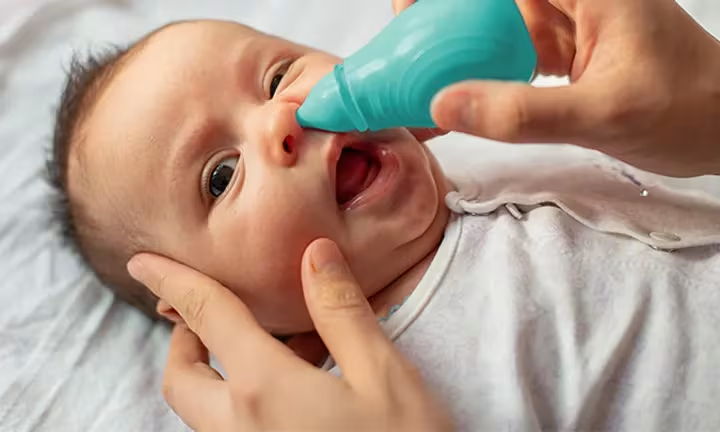
Chest and Nasal Congestion in Newborns and Babies
Discover effective remedies for newborn nasal congestion and chest congestion with Pampers. Ease your baby's discomfort with simple home treatments for congestion in newborns
Read more
What Is Roseola And What Are The Symptoms?
Read on Pampers India to find out more about what roseola is, to learn the signs and symptoms, and for some tips that will help you assess when it may be a good idea to contact your baby's healthcare provider.
Read more
Epstein Pearls in Newborns & Infant: Causes, Symptoms, and Treatment Options
Understand Epstein pearls in newborns & children. Learn the causes, symptoms, and available treatments for Epstein pearls and learn whether these are painful.
Read more
How to Differenciate Between Leaking Amniotic Fluid vs Vaginal Discharge?
Differenciating between leaking amniotic fluid and vaginal discharge can be quite helpful. Trust Pampers to help recognize the signs of amniotic fluid vs vaginal discharge.
Read more
Reasons Your Baby May Have Green Poop
Learn why your newborn baby or infant may have green poop. Find out if dark green stool in infants is normal and whether you should consult a pediatrician.
Read more
What Is Abhyanga Massage And What Are Its Benefits For Children?
Learn about Abhyanga massage, its benefits for babies, and how Ayurvedic therapy promotes relaxation, health, and better sleep.
Read more
Natural Mosquito Repellents To Keep Your Baby Protected This Summer
Find the best natural mosquito repellent for babies, homemade solutions, and safe ways to protect infants from mosquito bites.
Read moreBenefits of Kangaroo Mother Care for Premature Babies
Kangaroo Care can help premature babies in a number of ways. Read our guide to learn about Kangaroo Mother Care, its benefits, and how to safely practice it.
Read moreWhat Causes an Outie Belly Button in Babies?
Explore causes and variations of outie belly buttons in babies. Understand the factors behind innie vs. outie belly buttons and potential changes. Gain insights now
Read morePneumonia in Babies: Signs, Symptoms and Treatment
Common symptoms of pneumonia in babies include fever, fatigue and coughing. Understand the signs and symptoms of Pneumonia in infants and when to visit a healthcare professional with Pampers India.
Read moreChest and Nasal Congestion in Newborns and Babies
Discover effective remedies for newborn nasal congestion and chest congestion with Pampers. Ease your baby's discomfort with simple home treatments for congestion in newborns
Read moreWhat Is Roseola And What Are The Symptoms?
Read on Pampers India to find out more about what roseola is, to learn the signs and symptoms, and for some tips that will help you assess when it may be a good idea to contact your baby's healthcare provider.
Read moreEpstein Pearls in Newborns & Infant: Causes, Symptoms, and Treatment Options
Understand Epstein pearls in newborns & children. Learn the causes, symptoms, and available treatments for Epstein pearls and learn whether these are painful.
Read moreHow to Differenciate Between Leaking Amniotic Fluid vs Vaginal Discharge?
Differenciating between leaking amniotic fluid and vaginal discharge can be quite helpful. Trust Pampers to help recognize the signs of amniotic fluid vs vaginal discharge.
Read moreReasons Your Baby May Have Green Poop
Learn why your newborn baby or infant may have green poop. Find out if dark green stool in infants is normal and whether you should consult a pediatrician.
Read more