
What Is SIDS, and How Can I Reduce the Risk?


You might have heard of SIDS, a topic of concern for mums of young children. SIDS stands for Sudden Infant Death Syndrome, and it refers to the unexpected and unexplained death of an otherwise healthy baby who is less than a year old. It's sometimes called cot death, because many SIDS babies die when they're sleeping. The chance of SIDS occurring is very low, affecting about 0.0001 percent of infants under a year old in India. The cause or causes of SIDS are not known; however, there are steps you can take to create a safe sleep environment for your baby and to help prevent SIDS. Read on to find out more about what SIDS is, what some of the risk factors may be, and what you can do to help prevent it.

What Is Sudden Infant Death Syndrome?
The definition of SIDS is more a matter of what it isn't: it is a death that is unexplained and unexpected, and that usually occurs while the baby is sleeping.
If you're wondering just how common SIDS is, statistics show SIDS is very rare in India. Based on data from 2013, the rate of SIDS is 0.1 deaths per 100,000 live births. This may still sound alarming, but it means only 0.0001 percent of babies under 1 year old are victims of SIDS.
A natural question parents have is when can I stop worrying about SIDS? Most SIDS deaths occur in the first several months of a baby's life, and in fact, infants are most vulnerable between the second and fourth months. The SIDS risk significantly decreases after your baby turns 1.

Safe Sleep and SIDS Prevention Tips
It's important to know how to help prevent SIDS. Take these steps to help keep your baby safe and lower the risk of SIDS:
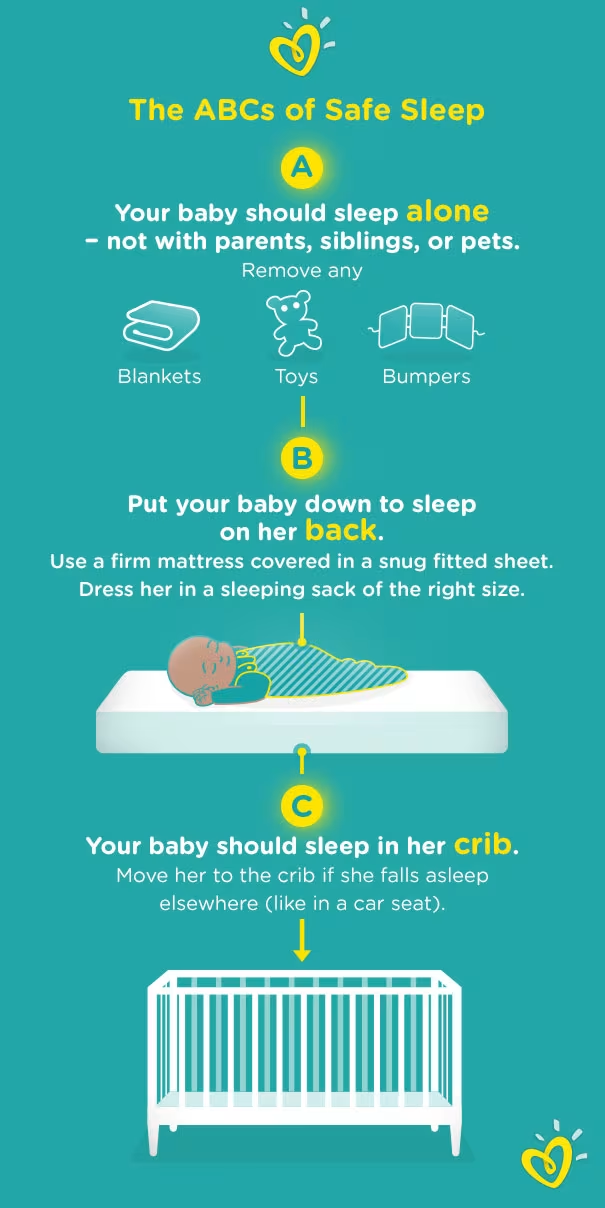
Do this every single time for the first year of his life, and tell anyone else who may care for him that this is a must, whether it's for a nap or to sleep at night. A good way to remember is with the expression ‘Back to sleep'. Some babies turn onto their stomach or side after being placed on their backs; it's OK to leave them in that position, experts say, as long as they are able to roll over in both directions without help.
Make sure the mattress in the cot is firm and fits the cot perfectly without leaving any gaps at the sides. Avoid using any padding, blankets, comforters, pillows, bumper pads, or quilts. Only a tight-fitting fitted sheet should be used — no loose bedding. Never place toys in the cot — not even soft teddy bears. These fluffy surfaces and objects can interfere with your baby's breathing.
Sometimes your baby may fall asleep in the car seat, stroller, or sling. Move him to a firm sleep surface as soon as possible. Never put your baby to sleep on a water bed or a cushion.
Avoid letting your baby get too hot, as this increases the SIDS risk. Make sure his head isn't covered when you put him to bed. Ensure the air temperature is comfortable for you — make sure it's not too hot. Dress your baby in no more than one extra layer than you would wear, and don't use blankets. Instead, try a wearable blanket or a sleeping sack with no hood, or footie pyjamas. If your baby's head is hot and sweaty, or if his chest feels hot, he's too warm.
While this depends on your personal preferences, experts recommend your baby sleep in your room with you, but alone in a cot. If possible, try this for up to a year, and consider keeping the cot or bassinet at about an arm's length away from your bed.
Sleeping in the same bed as your baby isn't recommended, and here's why. It increases the SIDS risk because you can accidentally roll onto your child as you sleep, and the baby is at risk of becoming entangled in the bedding.
If you can, breastfeed for at least the first six months. Research suggests this can significantly reduce the risk of SIDS.
Skin to skin contact has many benefits. You can practice it while breastfeeding or bottle-feeding, or any other time throughout the day.
Experts discourage the use of monitors and other devices that are claimed to reduce SIDS, because they have been found to be ineffective.
Sucking on a dummy at naptime and bedtime might reduce the risk of SIDS. But don't use dummies with a strap or string, or ones that attach to clothing. If you're breastfeeding, wait until your baby is 3 to 4 weeks old and you've settled into a nursing routine before offering a dummy. If the dummy falls out of your baby's mouth while he is sleeping, don't put it back in.
Some research indicates immunisations can help prevent SIDS.
Don't smoke near your baby, and keep your car and home smoke-free, too. Keep your baby away from places where people smoke.
The cot, bassinet, stroller, and play yard should all meet current safety standards. Do not use the item if it's broken, and if you're borrowing or using a hand-me-down, make sure it meets current regulations.
It is better to feed your baby on your bed with all pillows and bedding removed than on a sofa or cushioned chair. If you fall asleep while breastfeeding, move your baby back to his cot as soon as you wake up.
Give your baby plenty of tummy time when he's awake, as it helps strengthen his neck and back muscles. Remember to supervise tummy time, making sure that your baby remains awake.
This is a lot to take in, but this slogan might help. Just remember the ABC's of Safe Sleep: Your baby should always sleep
SIDS Risk Factors and Causes
It's not known exactly what causes SIDS, but there are some environmental factors that make a baby more vulnerable, as well as maternal, physical, and general factors that may increase the risk.
Sleep Environmental Factors
Sleep circumstances that increase SIDS risk include:
Maternal Risk Factors
Even before birth, mums can also unwittingly increase their baby's SIDS risk. Maternal risk factors include if mum
Physical Factors
General Risk Factors
Although the exact cause of Sudden Infant Death Syndrome is unknown, these factors contribute to the overall risk:
SIDS is a risk that almost all mums worry about. Keep in mind that SIDS is rare, and if you take these precautions consistently throughout your baby's first year of life, you can help reduce the risk even further.
Related Articles:
Useful Tools:

Natural Mosquito Repellents To Keep Your Baby Protected This Summer
Find the best natural mosquito repellent for babies, homemade solutions, and safe ways to protect infants from mosquito bites.
Read more
Benefits of Kangaroo Mother Care for Premature Babies
Kangaroo Care can help premature babies in a number of ways. Read our guide to learn about Kangaroo Mother Care, its benefits, and how to safely practice it.
Read more
What Causes an Outie Belly Button in Babies?
Explore causes and variations of outie belly buttons in babies. Understand the factors behind innie vs. outie belly buttons and potential changes. Gain insights now
Read more
Pneumonia in Babies: Signs, Symptoms and Treatment
Common symptoms of pneumonia in babies include fever, fatigue and coughing. Understand the signs and symptoms of Pneumonia in infants and when to visit a healthcare professional with Pampers India.
Read more
What Is Roseola And What Are The Symptoms?
Read on Pampers India to find out more about what roseola is, to learn the signs and symptoms, and for some tips that will help you assess when it may be a good idea to contact your baby's healthcare provider.
Read more
What Is the Ideal Room Temperature for Newborn Baby?
Room temperature for a newborn plays an important role in his development and safety. Click here on Pampers India to discover the ideal room temperature for a newborn and more!
Read more
Epstein Pearls in Newborns & Infant: Causes, Symptoms, and Treatment Options
Understand Epstein pearls in newborns & children. Learn the causes, symptoms, and available treatments for Epstein pearls and learn whether these are painful.
Read more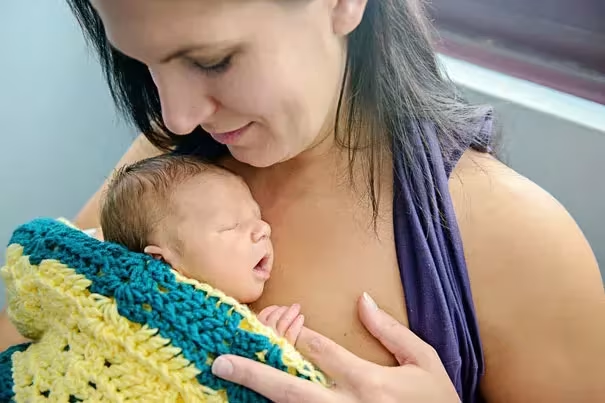
How to Differenciate Between Leaking Amniotic Fluid vs Vaginal Discharge?
Differenciating between leaking amniotic fluid and vaginal discharge can be quite helpful. Trust Pampers to help recognize the signs of amniotic fluid vs vaginal discharge.
Read more
Reasons Your Baby May Have Green Poop
Learn why your newborn baby or infant may have green poop. Find out if dark green stool in infants is normal and whether you should consult a pediatrician.
Read more
What Is Abhyanga Massage And What Are Its Benefits For Children?
Learn about Abhyanga massage, its benefits for babies, and how Ayurvedic therapy promotes relaxation, health, and better sleep.
Read moreNatural Mosquito Repellents To Keep Your Baby Protected This Summer
Find the best natural mosquito repellent for babies, homemade solutions, and safe ways to protect infants from mosquito bites.
Read moreBenefits of Kangaroo Mother Care for Premature Babies
Kangaroo Care can help premature babies in a number of ways. Read our guide to learn about Kangaroo Mother Care, its benefits, and how to safely practice it.
Read moreWhat Causes an Outie Belly Button in Babies?
Explore causes and variations of outie belly buttons in babies. Understand the factors behind innie vs. outie belly buttons and potential changes. Gain insights now
Read morePneumonia in Babies: Signs, Symptoms and Treatment
Common symptoms of pneumonia in babies include fever, fatigue and coughing. Understand the signs and symptoms of Pneumonia in infants and when to visit a healthcare professional with Pampers India.
Read moreWhat Is Roseola And What Are The Symptoms?
Read on Pampers India to find out more about what roseola is, to learn the signs and symptoms, and for some tips that will help you assess when it may be a good idea to contact your baby's healthcare provider.
Read moreWhat Is the Ideal Room Temperature for Newborn Baby?
Room temperature for a newborn plays an important role in his development and safety. Click here on Pampers India to discover the ideal room temperature for a newborn and more!
Read moreEpstein Pearls in Newborns & Infant: Causes, Symptoms, and Treatment Options
Understand Epstein pearls in newborns & children. Learn the causes, symptoms, and available treatments for Epstein pearls and learn whether these are painful.
Read moreHow to Differenciate Between Leaking Amniotic Fluid vs Vaginal Discharge?
Differenciating between leaking amniotic fluid and vaginal discharge can be quite helpful. Trust Pampers to help recognize the signs of amniotic fluid vs vaginal discharge.
Read more