
Safe Sleep for Babies: A Practical Guide


Key Takeaways:
For more sleep-focused tips and sleep tracking for your little one, check out the Smart Sleep Coach by Pampers™ app. |
When it comes to safe sleep for babies, there are a number of important guidelines to know about and follow—and some important questions to answer, too! You’re not the only parent wondering if safe co-sleeping is possible, what a newborn should wear to sleep, and when to move your baby to their own room. We’ve got the answers to all these questions and many more, plus a list of additional tips to help promote safe sleep for your sweet baby.

The Importance of Safe Sleep Habits
Practicing safe sleep habits will help guard your baby against dangers that can happen while snoozing, whether at naptime or during nighttime sleep. Safe sleeping involves taking precautions to avoid potential hazards such as falls, choking, suffocation, and SIDS (Sudden Infant Death Syndrome). Following safe sleep strategies for babies can help you prevent these dangerous outcomes. Keep reading to pick up insights and tips on the best practices for safe sleep in the newborn stage and as your little one grows older.
The Most Important Safety Tip: Put Your Baby to Sleep on Their Back
Every time you put your little one down to sleep, place them on their back. Do this at naptime, bedtime, and in the middle of the night after you are finished feeding or changing your baby. As a general rule, your baby should sleep on their back until their first birthday, though your baby may learn to roll over both ways before then. Back sleeping is the safest and best sleep position for newborns and babies, as it helps reduce the risk of SIDS and accidental suffocation.
Can Newborns Sleep on Their Sides or Stomachs?
Babies will inevitably move when they snooze, so as you check on your little one throughout the night, you may notice that they’ve rolled onto their side or tummy. When babies sleep on their stomach or side, it increases the risk of choking, suffocation, and SIDS. If you notice your newborn or baby roll onto their side or stomach in their sleep, just gently reposition them onto their back. When is it safe for babies to sleep on their stomachs? At some point, your little one will reach an exciting milestone: rolling over! Once your baby has learned how to roll over both ways on their own (typically around 5 or 6 months), it's not necessary to reposition a newborn during sleep if they turn onto their side or stomach.
Sleeping in a Crib: Why It’s Safest for Your Baby
Safe sleeping for newborns and older babies means sleeping in a crib, bassinet, or a play yard. If you start with a bassinet and are wondering when to move your baby to a crib, a few weeks or a month after birth is likely when they’ll need a larger sleeping area, a.k.a. a crib. So, the answer to the question can newborns sleep in a crib is yes, of course! Many parents choose to use a crib from the start, and some Pampers Parents prefer baby cribs that grow with their child by being converted to a bed later on.
Unsafe Places for Babies to Sleep
Following the ABCs of safe sleep—which means your baby sleeps Alone, on their Back, and in a Crib—includes knowing where your child shouldn’t sleep. Is it safe for a baby to sleep in a car seat? What about on the couch? Infants and babies of any age should never sleep in your bed or on a couch, sofa, or armchair. These can be dangerous because your baby could roll off, get stuck in a gap, or suffocate on a pillow, for example. Babies also shouldn’t sleep in a carrier, sling, car seat, or stroller for the same reasons. If your little one falls asleep in one of these, move them to their crib as soon as possible.

Crib Safety
Safe sleep for babies has a lot to do with crib safety. When you select a crib for your little one, check that it meets the latest safety standards. Brand-new cribs purchased in the United States should meet all applicable standards. Some examples of these standards and other aspects of crib safety include the following:
Don’t miss these must-watch sleep tips from a pediatric sleep consultant.
The Dangers of Co-Sleeping
It’s common for parents to wonder if they can safely sleep with their baby in their bed. Co-sleeping or bed-sharing isn’t recommended and isn't considered safe because it puts your baby at a much higher risk of SIDS, suffocation, and strangulation. Co-sleeping dangers include
When it comes to promoting safe sleep for infants and babies, it’s best to put your little one in their own crib and keep the crib in the same room that you're sleeping in. Just remember this distinction: Room sharing with your baby is safe; co-sleeping or bed-sharing is not.
How Long Should Your Baby Sleep in Your Room?
Have your little snoozer sleep in your room for at least the first six months to a year. Keeping your baby in your room but not in your bed—having them sleep in their own bassinet or crib—can decrease the risk of SIDS by as much as 50 percent. With this setup, it may be a lot easier for you to observe, feed, and comfort your baby throughout the night.
Tip
Don't smoke or expose your baby to smoke. Smoke can increase your baby’s risk of SIDS while sleeping. Keep your baby’s room and, ideally, your entire home and car smoke-free. If you’re a smoker and are sharing a room with your baby, try to quit or smoke outside your house.
When to Move Your Baby to Their Own Room
Once your baby is 6 months to 1 year old, you can start transitioning them to their own room. It’s best to wait until then for two main reasons:
Creating Optimal Sleeping Conditions
Babies need particular conditions for safe sleep, and one of the most important rules is to use a firm, flat sleeping surface. It’s natural to want to keep your little one as snuggly as possible, but because of the risk of SIDS, they must sleep on a flat and firm surface. There are two main ways you can achieve this:
When Can Babies Start Sleeping With Blankets and Toys?
Most experts agree that you can introduce some objects, such as blankets, into your baby’s crib at 12 months of age, but no earlier. Until then, keep the crib free of things like loose bedding, pillows, quilts, blankets, comforters, bumper pads, and toys. Any of these objects can cause accidental suffocation. The one object your baby can safely sleep with is a pacifier, which you can offer at bedtime and naptime. A pacifier can help reduce the risk of SIDS, even if it falls out of your baby’s mouth at some point. If you’re breastfeeding, wait two to three weeks before offering your newborn a pacifier. If you’re not breastfeeding, you can start offering a pacifier at any time. Make sure not to use a pacifier that attaches with a string to your baby’s clothes or a toy, as this could pose a suffocation or choking hazard.
What Should a Newborn Wear to Sleep?
Another best practice to promote safe sleep for babies is to avoid overdressing your little one when you put them down to sleep. So, what should a newborn sleep in? Dress your baby in no more than one extra layer than you would wear and keep the room at a temperature that feels cool but comfortable to you. When you check on your baby at night, look for signs of your little one being too hot, such as sweating or feeling warm to the touch. It’s best to keep your baby’s head and face uncovered while they sleep to help prevent them from overheating.

Safe Sleep Guidelines for Babies
To sum up some of the most important advice, we’ve included a handy visual guide. See our infographic below illustrating safe sleep guidelines for babies:
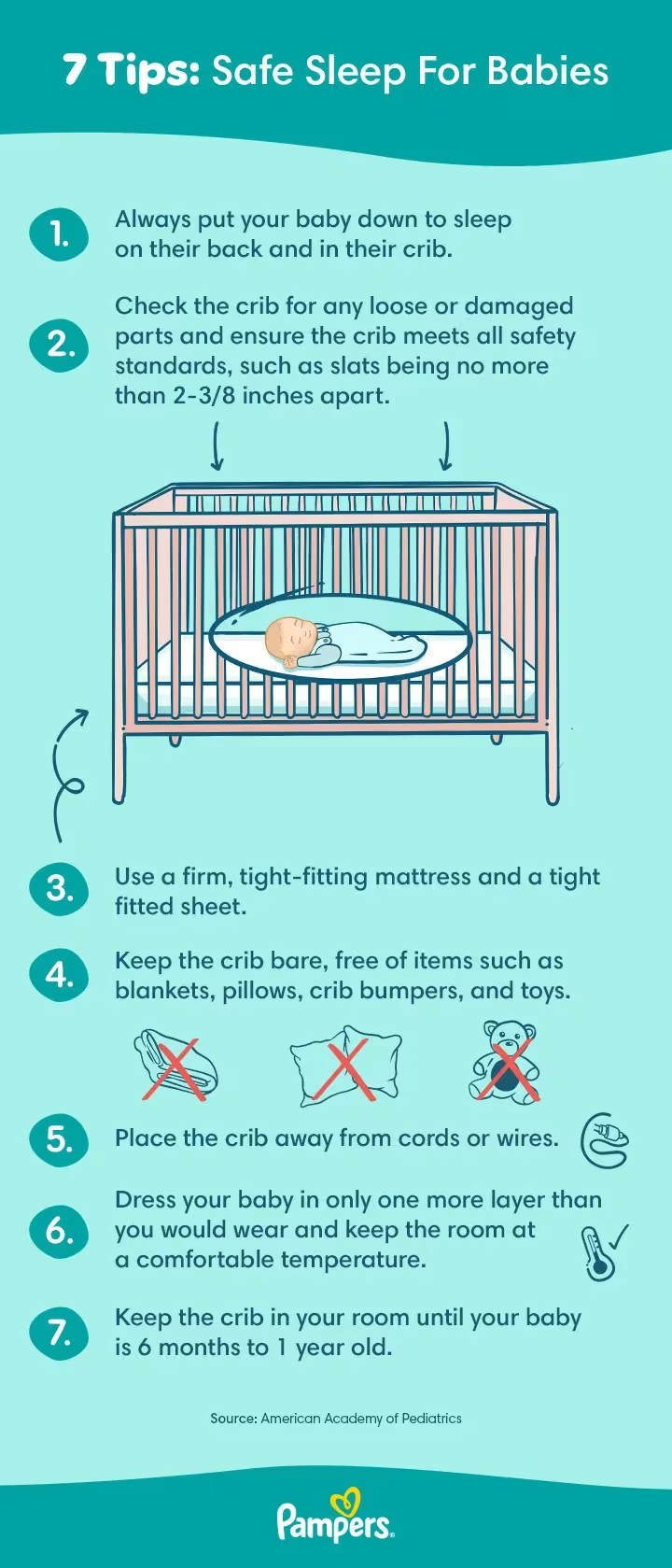
For additional helpful insights, check out the Newborn Sleep Fundamentals class available on the Smart Sleep Coach App by Pampers to get the full scoop on your baby’s sleep now and as they grow.
FAQS AT A GLANCE
Co-sleeping or bed-sharing is not considered safe. It can result in choking, suffocation, strangulation, or other accidents. Let your baby sleep in your room, but place them alone in their own crib or bassinet.
The Bottom Line
You, too, can sleep a little easier knowing that you’ve created a safe sleep environment for your baby. Following these strategies can help ensure your baby stays out of harm’s way while snoozing. To sum it up, here are the most critical guidelines to ensure safe sleep for babies and newborns:
Other helpful tips for safe sleep for babies include checking the crib periodically for any damages and keeping any wires and cords away from the crib. Lower the mattress setting as your little one grows older and can stand, and don’t smoke around your baby. By following these guidelines and tips, you’re creating a safe sleeping environment for your sweet baby, and, before you know it, your little one will be snoozing in comfort!
How We Wrote This Article The information in this article is based on the expert advice found in trusted medical and government sources, such as the American Academy of Pediatrics and the American College of Obstetricians and Gynecologists. You can find a full list of sources used for this article below. The content on this page should not replace professional medical advice. Always consult medical professionals for full diagnosis and treatment.
- American Academy of Pediatrics. Caring for Your Baby and Young Child: Birth to Age 5, 7th ed. (New York: Bantam Books, 2019).
- healthychildren.org. “A Parents’ Guide to Safe Sleep.”
- healthychildren.org. “Preventing SIDS.”
- March of Dimes. “Safe Sleep for Your Baby.”
- NICHD. “Safe Sleep for Your Baby.”
- healthychildren.org. “Dressing your Newborn.”

Tips for Getting Your Baby to Sleep in a Crib
Essential tips for your infant's crib sleep, from transitioning to crib to ensuring safety. Get expert advice on newborn crib use and optimizing your baby's sleep environment.
Read more
When Do Kids Stop Taking Naps?
Uncover when children typically outgrow naps and how to recognize signs indicating it's time to phase them out. Get practical tips for navigating the nap transition smoothly.
Read more
25 Lullaby Lyrics and Bedtime Songs to Help Your Baby Fall Asleep
Best Soothing lullabies for newborns! Ease your baby into sleep with timeless infant songs and nursery rhymes. Explore our collection for a peaceful bedtime routine.
Read more
Understanding Sleep Regression in Your Baby
Has your baby stopped sleeping through the night? Learn more about baby sleep regression, including what it is, understanding its signs, tips for handling it, and how long it lasts.
Read moreWhy Wake Windows Are More Important Than the Clock
Discover why wake windows are essential for your baby’s sleep. Learn how to use wake windows to optimise their sleep schedule and encourage longer, more restful nights.
Read more
When to Convert Crib to a Toddler Bed?
Learn the ideal time to transition your child from a crib to a toddler bed. Discover safety tips and strategies to make the move easy, comfortable, and stress-free.
Read more
Why Your Baby Shouldn't Sleep on Their Stomach
Learn when it's safe for infants to sleep on their stomachs. Learn the recommended age and essential safety measures for your baby's peaceful sleep.
Read more
When Do Babies Start Sleeping Through the Night?
Curious about when newborns start sleeping through the night? Explore insights on nighttime sleep patterns and strategies to support your baby's peaceful slumber
Read more
Early Rising Baby: What to Do When Your Child Wakes Up Too Early
Discover effective strategies to manage early rising in children. Learn how to help your child sleep longer and wake up at a more suitable time with expert tips from Pampers IN
Read more
What to Do if Your Baby Only Sleeps When Held
Discover when it’s okay to hold your baby while they sleep and get expert tips on how to help your baby sleep peacefully in their crib for longer, independent rest
Read moreTips for Getting Your Baby to Sleep in a Crib
Essential tips for your infant's crib sleep, from transitioning to crib to ensuring safety. Get expert advice on newborn crib use and optimizing your baby's sleep environment.
Read moreWhen Do Kids Stop Taking Naps?
Uncover when children typically outgrow naps and how to recognize signs indicating it's time to phase them out. Get practical tips for navigating the nap transition smoothly.
Read more25 Lullaby Lyrics and Bedtime Songs to Help Your Baby Fall Asleep
Best Soothing lullabies for newborns! Ease your baby into sleep with timeless infant songs and nursery rhymes. Explore our collection for a peaceful bedtime routine.
Read moreUnderstanding Sleep Regression in Your Baby
Has your baby stopped sleeping through the night? Learn more about baby sleep regression, including what it is, understanding its signs, tips for handling it, and how long it lasts.
Read moreWhy Wake Windows Are More Important Than the Clock
Discover why wake windows are essential for your baby’s sleep. Learn how to use wake windows to optimise their sleep schedule and encourage longer, more restful nights.
Read moreWhen to Convert Crib to a Toddler Bed?
Learn the ideal time to transition your child from a crib to a toddler bed. Discover safety tips and strategies to make the move easy, comfortable, and stress-free.
Read moreWhy Your Baby Shouldn't Sleep on Their Stomach
Learn when it's safe for infants to sleep on their stomachs. Learn the recommended age and essential safety measures for your baby's peaceful sleep.
Read moreWhen Do Babies Start Sleeping Through the Night?
Curious about when newborns start sleeping through the night? Explore insights on nighttime sleep patterns and strategies to support your baby's peaceful slumber
Read more