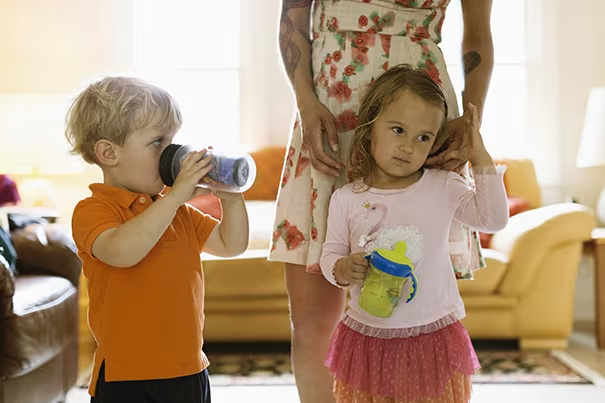
How to handle aggressive behaviour


A certain amount of pushing, grabbing and even punching is normal when young children get together. Most of the time it's nothing to worry about. Injuries are few; disputes are soon forgotten.
Coping equals aggression
Some toddlers and pre-schoolers, however, get into repeated and escalating tussles. For them, aggression becomes their main approach to coping with almost any situation. They're not bullies; in fact, they sometimes pick hopeless fights with children who are much larger and older than they are. As toddlers and pre-schoolers, their developing nervous systems do not seem to let them control their impulses as much as their age mates do. With others, it's more a matter of their needing to learn and practise social skills.

When aggression works
In other areas of their lives, aggressiveness is often rewarded. A child who pushes into the queue to go down the slide at the playground will probably get to use that slide the most. The one who acts up in pre-school will probably get extra attention from the teacher. From a child's point of view, the difference between assertiveness and aggression may not be clear.

Spotting the signs
The best way to handle an overly aggressive child is to prevent the behaviour in the first place. Many of these children show a clear pattern to their behaviour. They may be aggressive only at home or only in public. A child may be much more likely to be aggressive in the afternoon when he's tired, or when he's feeling frustrated. This part of the pattern will help you to be better prepared to intervene.
Also, most aggressive children this age go through a consistent sequence of behaviours before they lash out with a punch or a kick. Some may clench their teeth and stare. Others may rock back and forth.
Helping your child
Once you've determined the most common triggers or timing, and can spot the escalating behaviours, the simplest thing to do is to remove the child from that environment. Greater structure also seems to help these children. With structure comes predictability, which helps them feel more calm and in control. Tempting as it may be at the time, spanking an aggressive child for his behaviour does not work. In fact, it will probably make matters worse since you're modelling the very behaviour that you want him to stop.
Girls vs. boys
While aggressive boys get more attention, girls get into fights too. Their aggression may be more verbal, even at this age. It may also be physical, but less obvious than a boy's punches and kicks. Like boys, aggressive girls need help in learning better social and problem-solving skills.
Could it be depression?
Finally, remember that aggression is sometimes a sign of depression in young children. If your child seems uncharacteristically aggressive and isn't responding to your efforts to change things, talk to your healthcare provider about what's going on. The sooner you take action, the easier it will be for both you and your child.
Importance of play in childhood development
Here we write about the role of different types of play activities and how they affect the cognitive development of your 2-year old toddler.
Read more
Dealing with anxiety & fear in children
Check out these practical tips on how parents can help their toddler to overcome anxiety and deal with their emotions effectively.
Read more
Why Toddlers say ‘no’ to everything
Helping your toddler to speak confidently, while pronouncing words correctly is a top goal for all parents. See our tips for getting toddlers to speak.
Read more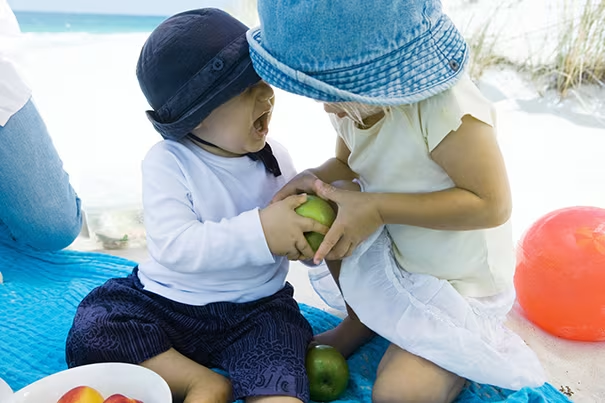
Why does my toddler hit?
Teaching your toddler to express their emotions verbally, as opposed to physically will provide them with a solid emotional foundation to live with.
Read more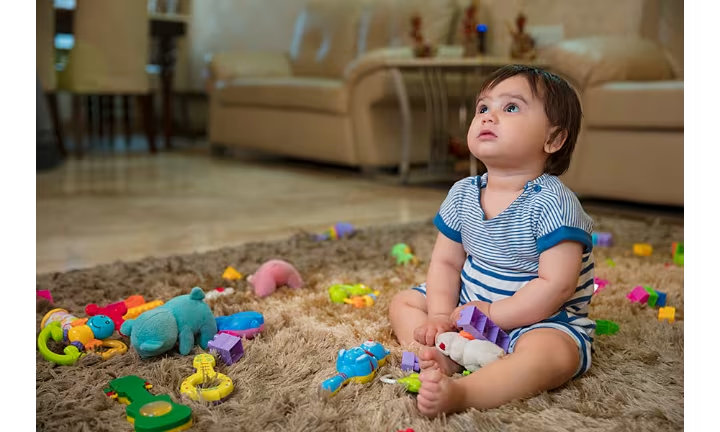
Thumb-Sucking Habit in Children: When to Stop It?
Thumb-sucking is a behaviour that soothes and comforts your baby. But a thumb-sucking habit can hinder a baby's dental development. Click here on Pampers India to know more!
Read more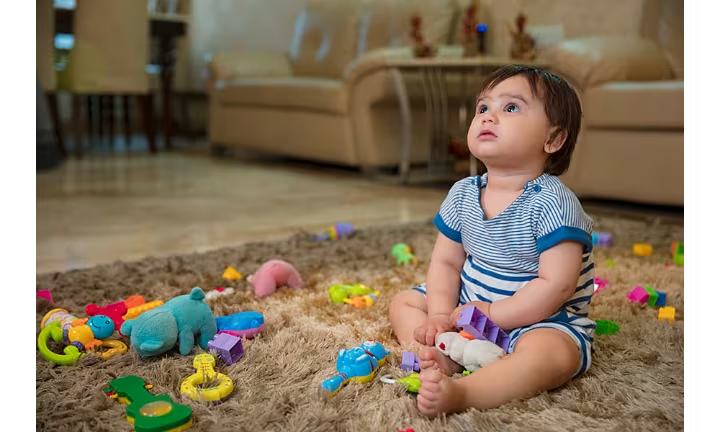
How to Handle Toddler Tantrums
Toddler tantrums are a part of your child's growing phase. To learn how to handle toddler tantrums, click here on Pampers India.
Read more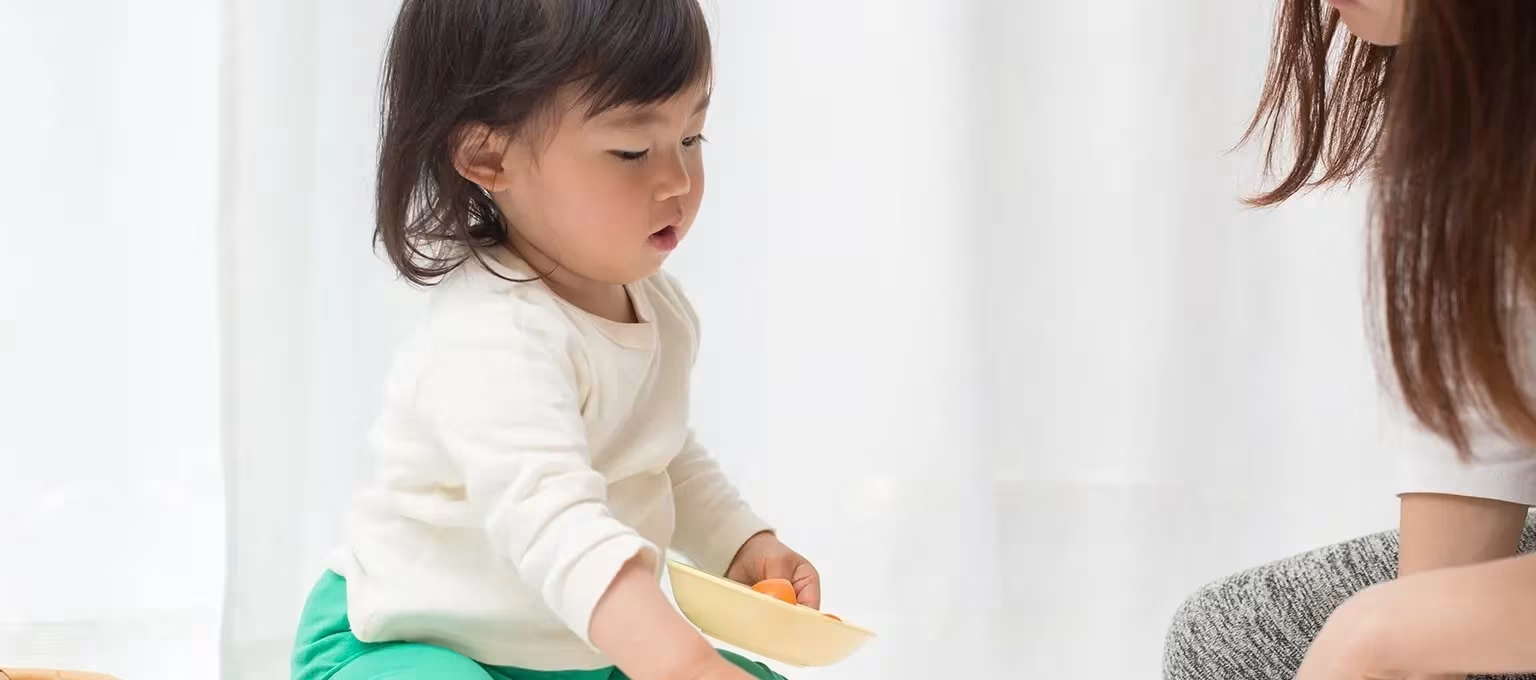
How Understanding ‘Power' Can Help With Toddler Behavior
the power of back-to-basics parenting tools to resolve 90% of behavior issues at home. Master the principle of 'power' for tantrum-free parenting. Learn more here!
Read more
The Benefits and Importance of Pretend Play in Child Development
Pretend play can spur child development while learning new dramatic play ideas, activities, and games. Learn all about the benefits and get ideas on how to encourage fun and creative play.
Read more
3-year-old Behaviour and Development
At 3-years-old your child will be nearing the end of the 'terrible twos' and developing a calmer personality. Learn about development in 3-year-olds.
Read more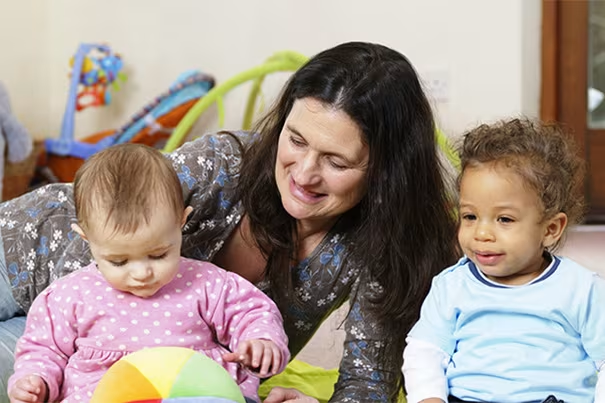
Toddler activities: playmates and interaction
Finding playmates for your toddler can help to increase their group interaction and sociability, which can be useful prior to joining nursery school.
Read moreImportance of play in childhood development
Here we write about the role of different types of play activities and how they affect the cognitive development of your 2-year old toddler.
Read moreDealing with anxiety & fear in children
Check out these practical tips on how parents can help their toddler to overcome anxiety and deal with their emotions effectively.
Read moreWhy Toddlers say ‘no’ to everything
Helping your toddler to speak confidently, while pronouncing words correctly is a top goal for all parents. See our tips for getting toddlers to speak.
Read moreWhy does my toddler hit?
Teaching your toddler to express their emotions verbally, as opposed to physically will provide them with a solid emotional foundation to live with.
Read moreThumb-Sucking Habit in Children: When to Stop It?
Thumb-sucking is a behaviour that soothes and comforts your baby. But a thumb-sucking habit can hinder a baby's dental development. Click here on Pampers India to know more!
Read moreHow to Handle Toddler Tantrums
Toddler tantrums are a part of your child's growing phase. To learn how to handle toddler tantrums, click here on Pampers India.
Read moreHow Understanding ‘Power' Can Help With Toddler Behavior
the power of back-to-basics parenting tools to resolve 90% of behavior issues at home. Master the principle of 'power' for tantrum-free parenting. Learn more here!
Read moreThe Benefits and Importance of Pretend Play in Child Development
Pretend play can spur child development while learning new dramatic play ideas, activities, and games. Learn all about the benefits and get ideas on how to encourage fun and creative play.
Read more