Potty talk: curbing bad language in toddlers


If you listen closely to the words pre-schoolers use, you'll find that their vocabulary is not as innocent as we might hope. Their conversations are peppered with aggressive phrases. Some are simple adult curses. Others, such as 'poo-poo head', are unique to young children.
Children learn the meanings of most words from the context in which they're used. That's why a toddler may ask for 'milk' when they want something else to drink. For them, 'milk' is simply the word associated with drinking. They have derived the meaning of that word from what happens when they say it.
Tools for getting attention
Your child understands the power of words – especially certain words – even if she doesn't quite know their meaning.
Dr. Timothy B. Jay, a professor of psychology at North Adams State College in Massachusetts, has been studying the patterns of swearing and other forms of aggressive language among children. He's found that here, as in other areas of verbal development, girls take the lead. On average, three – and four-year-old girls know 23 aggressive phrases and swear words, compared with only 17 for the boys.
It's important to understand not only why children speak this way, but also how their interpretations of these words are often quite different from ours.

Strong words, strong emotions
A three-year-old may use 'potty language' to tease a play-mate. She's not being literal, of course. Instead, it's a way for her to own her recent mastery of toilet training or even her current struggle with it. These are years of intense emotions. One of the challenges facing pre-schoolers is learning to keep their emotions under greater control. By calling someone else such a name, a child can send the message that she's not scared. Once again, the language of the child reflects the developmental issues that dominate her own life.

It's everywhere
It's highly unlikely that you'll be able to protect your children from hearing foul language. It's all around them in nursery school, in the playground and on television, even if those words are never uttered at home. The real challenge is to help children learn when using such language is socially appropriate and to help them master the verbal skills they'll need to express themselves more effectively without using such language.
Helpful hints
Here's what you can do:
It's important not only to understand why children use ‘bad' words in their first years of development, but also what their interpretations of these words might be.
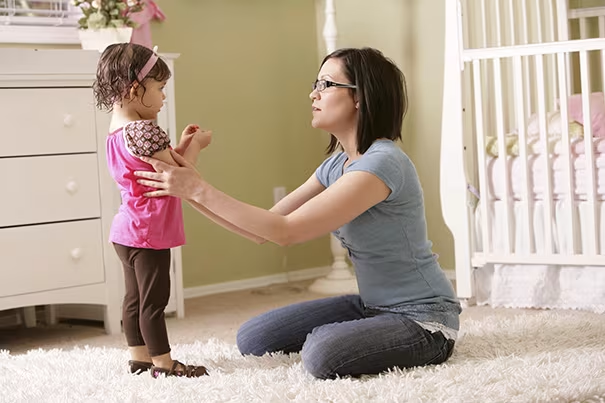
Toddler pronunciation: speaking properly
Find out about how to track and progress your toddlers language development milestones with the details outlined in this article.
Read more
Teaching toddlers to share
Sharing is something that is crucial for toddlers to learn at an early age, as it will shape the way that they interact their peers and act in older life.
Read more
How Toddlers Learn through Play
Active toddlers will typically learn well using the medium of play, especially with other children their own age, who are also practical learners.
Read more
How to Teach Manners to Children
Teaching manners to your child at a young age will help set a clear framework for the way that they act towards others throughout the rest of their lives.
Read more
Important things know before choosing a good preschool for your toddler
Preschool is a program that offers a curriculum along with preschool activities for toddlers to improve their gross and fine motor skills. Read on to know more
Read more
Toddler Pushing Boundaries? Learn Techniques to Help you Best Handle the Situation
Learn the importance of setting boundaries for children's behavior. Explore effective parental responses to guide them towards acceptable conduct.
Read more
What Moms of Babies Close in Age Need to Know
Handling Close-in-Age Babies: Balancing needs, spreading yourself thin. Tips for nurturing their bond while managing their unique demands.
Read more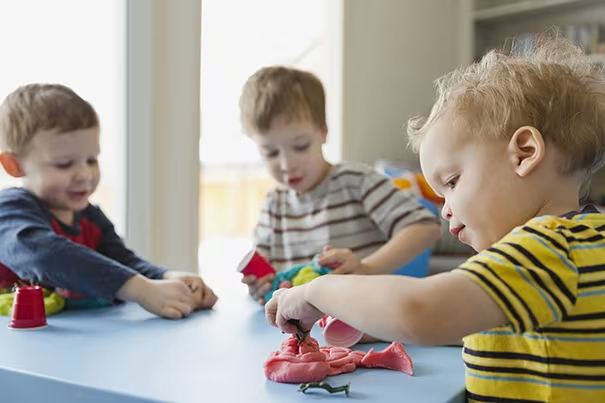
Socialising for babies: learning from others
Socialising at a young age will give your toddler strong interpersonal and relationship management skills, which will benefit them throughout their life.
Read more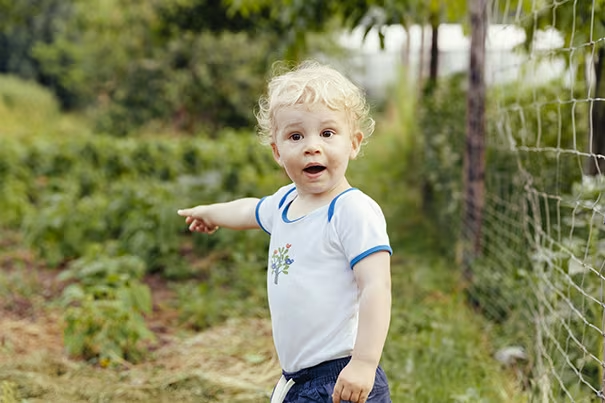
Toddler Discipline: Being Consistent
Learn why is it essential to be consistent with toddler discipline to ensure that their behaviour does not deviate from the desired outcome.
Read moreToddler pronunciation: speaking properly
Find out about how to track and progress your toddlers language development milestones with the details outlined in this article.
Read moreTeaching toddlers to share
Sharing is something that is crucial for toddlers to learn at an early age, as it will shape the way that they interact their peers and act in older life.
Read moreHow Toddlers Learn through Play
Active toddlers will typically learn well using the medium of play, especially with other children their own age, who are also practical learners.
Read moreHow to Teach Manners to Children
Teaching manners to your child at a young age will help set a clear framework for the way that they act towards others throughout the rest of their lives.
Read moreImportant things know before choosing a good preschool for your toddler
Preschool is a program that offers a curriculum along with preschool activities for toddlers to improve their gross and fine motor skills. Read on to know more
Read moreToddler Pushing Boundaries? Learn Techniques to Help you Best Handle the Situation
Learn the importance of setting boundaries for children's behavior. Explore effective parental responses to guide them towards acceptable conduct.
Read moreWhat Moms of Babies Close in Age Need to Know
Handling Close-in-Age Babies: Balancing needs, spreading yourself thin. Tips for nurturing their bond while managing their unique demands.
Read moreSocialising for babies: learning from others
Socialising at a young age will give your toddler strong interpersonal and relationship management skills, which will benefit them throughout their life.
Read more