
Gross Motor Skills in Infants, Older Babies, and Toddlers


Whether you have an infant, older baby, toddler, or preschooler on your hands, gross motor skills are an important aspect of your child’s physical development. Gross motor skills are large movements—some examples include rolling over, sitting up, and walking. Read on to learn when you can anticipate these important physical milestones and what activities support your little one’s gross motor skill development.

What Are Gross Motor Skills?
Gross motor skills (also known as gross motor control) are those that involve large physical movements that your child will gradually develop over time. Even before your little one begins to become active and move independently, these skills are needed to support their body, enabling them to hold their head up and sit on their own. In addition to this crucial head and neck control, examples of gross motor skills include lifting legs, flexing arms, rolling over, sitting up, standing, and walking. The development of these movements takes time, as gross motor skills require coordination and properly functioning muscles, bones, and nerves.
Gross Vs. Fine Motor Skills
If you’re looking for the definitions of fine and gross motor skills, think of the terms in this way: gross motor skills are large, sweeping motions using the larger muscles and the entire body, and fine motor skills are small, exact movements using smaller body parts, like hands and fingers. The difference between fine and gross motor skills lies in the location and degree of movement, but both types of skills require complex coordination of the muscles, bones, and nervous system, including the brain. The importance of gross motor skills can't be overstated, as these are the skills that foster continued growth and development throughout childhood. Infants and older babies need to develop gross motor skills before fine motor skills, but these are often intertwined as little ones grow and progress toward physical milestones for each age group. Some examples of gross vs. fine motor skills include the following:
Fine motor skills. These smaller, more precise movements include grasping and holding onto something, picking up objects with the palmar grasp and pincer grasp, scribbling or drawing, stacking blocks or toys, cutting with safety scissors, folding clothing, self-feeding with utensils, and using a zipper.
Gross Motor Skills Examples by Age
All of the fine and gross motor skills listed above evolve gradually as your child grows and develops. So, of course what your little one can do physically as an infant will differ from what they can do as a toddler. Below, you’ll find insights and lists for gross motor skill milestones for infants, older babies, toddlers, and preschoolers.
Gross Motor Skills Examples for Infants and Older Babies
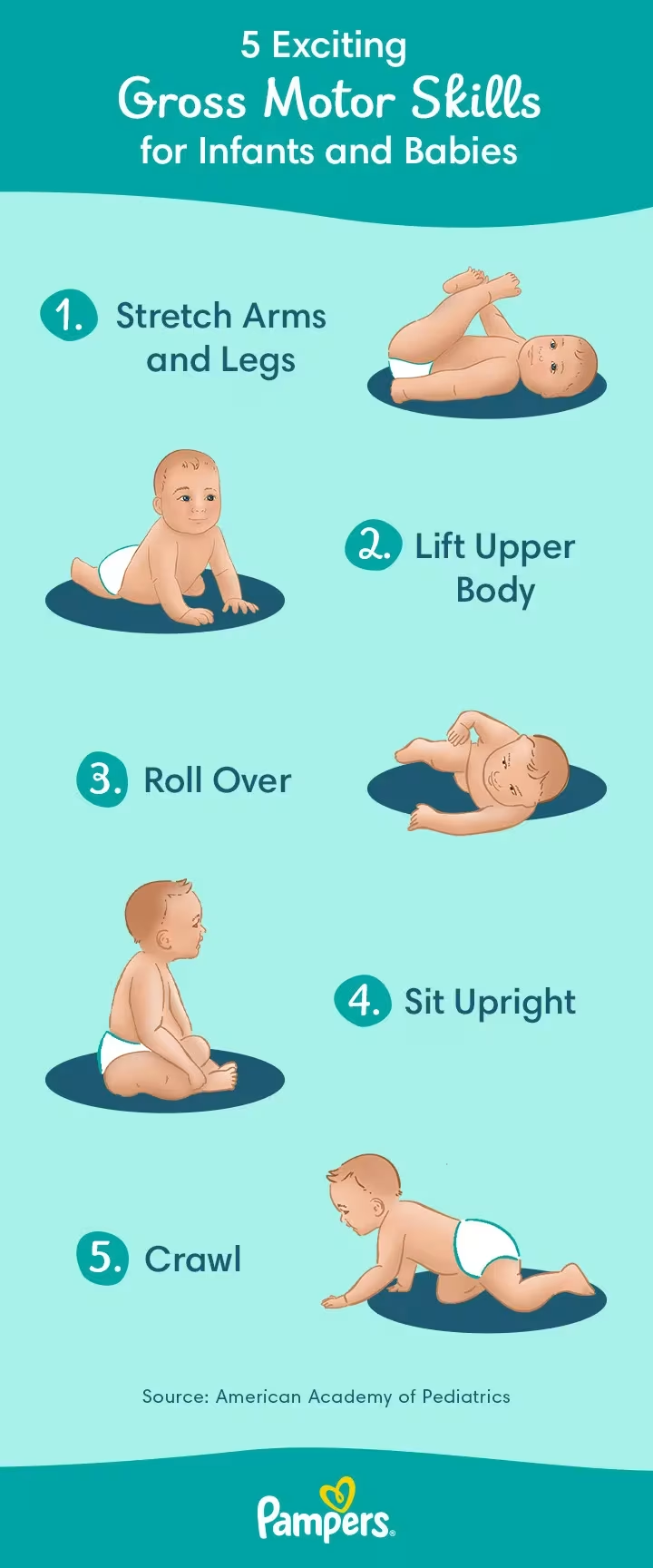
Gross motor skills for young infants and older babies are important development milestones, as they lay the foundation for future physical growth. It takes time for babies to build these skills, but some exciting gross motor skill milestones to anticipate in this age group include improved head control, sitting upright, crawling, and taking those wobbly first steps when they start walking. Keep in mind that your baby is born with several reflexes, which may mimic gross motor skills. For example, the walking/stepping reflex happens when your little one’s feet touch a surface while you support them. Although your baby is making brisk walking movements in that moment, it’s only a reflex, which they have no control over. Of course, true walking will come in time! Here are common gross motor skill achievements your little one may reach for each age as an infant and baby:
| Gross Motor Skills for Infants and Babies | |
|---|---|
| Age Range | Gross Motor Skills Development |
| 1 month to 3 months |
|
| 4 to 7 months |
|
| 8 to 12 months |
|
Gross motor skills and accompanying milestones are exciting to observe, especially in your baby’s first year. However, keep in mind that every child develops at their own pace. Although most babies take their first shaky steps close to, or just after reaching, 12 months, others might start walking a little earlier or later.
Tip
Now that your baby is on the move, it’s time to buy shoes to protect their feet for outdoor strolls. When looking for appropriate footwear, look for a flexible, closed-toe style that comes with nonskid soles.
Gross Motor Skills Examples for Toddlers and Preschoolers
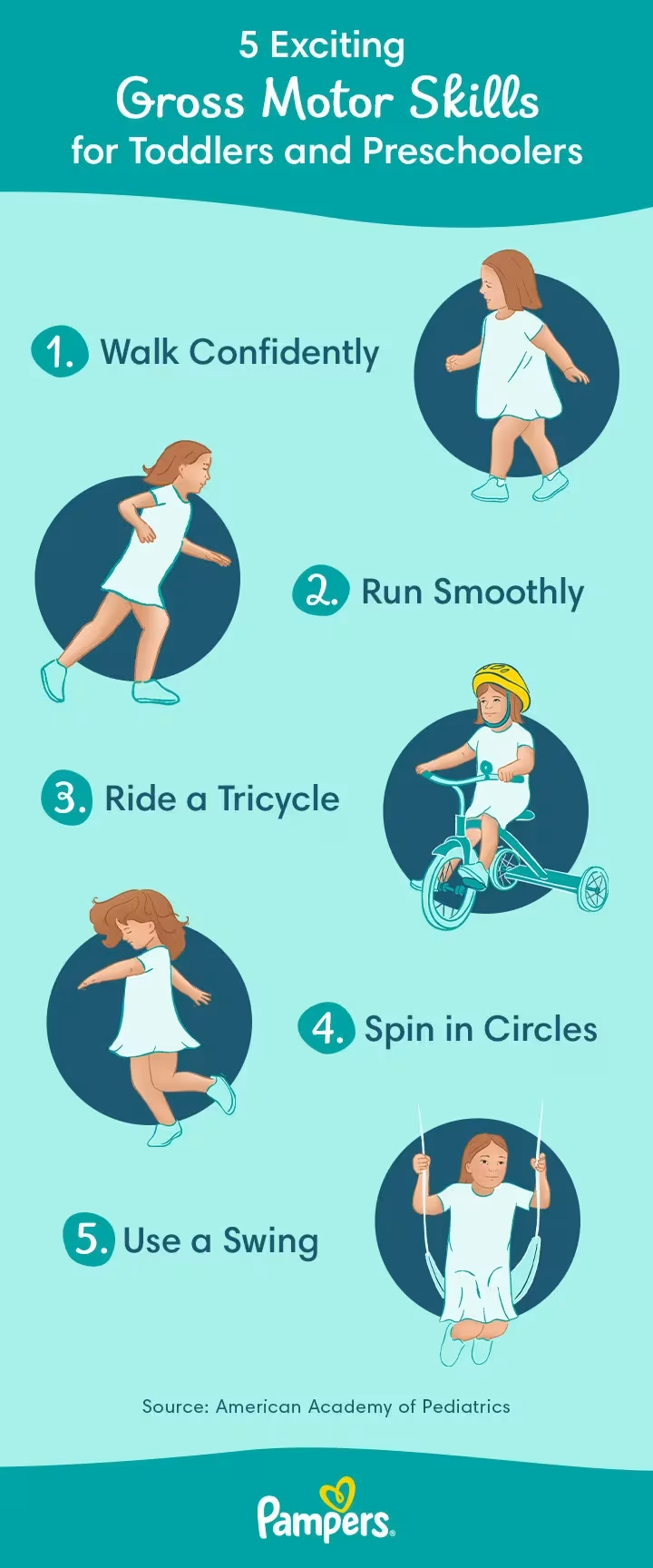
After you celebrate your baby’s first birthday, toddlerhood is at hand! This stage comes with many new gross motor skills your little one will master when they are 1, 2, or 3 years old, when your child might be ready to start preschool. Although there’s plenty to celebrate during these years, some of the most significant gross motor skill milestones for toddlers and preschoolers include walking up and down stairs, running, jumping, skipping, and riding a tricycle. Here’s a chart of some gross motor skill achievements your child may reach during this period:
| Gross Motor Skills for Toddlers and Preschoolers | |
|---|---|
| Ages | Gross Motor Skills Development |
| 1 and 2 years |
|
| 2 and 3 years |
|
| 3 and 4 years |
|
| 4 and 5 years |
|
Tip
As your child's gross motor skills improve, they'll start to run and play more actively, and you'll need to keep a close eye on them for their safety. Young children can't yet recognize when they may be in danger and aren't aware of hazardous consequences for their actions, such as when they run into the street to get a ball.

Activities to Encourage Gross Motor Skills Development
It's a joy to watch your little one grow from a newborn to an older baby and from a toddler into a preschooler. Reaching those gross motor skill milestones is not only something to celebrate, but also to encourage. There are several activities for kids that help support their gross motor skill development.
Gross Motor Skills Activities for Infants and Older Babies
Below are some gross motor skill activities for young infants and older babies:
Gross Motor Skills Activities for Toddlers and Preschoolers
Once children become more mobile and independent, they typically have no trouble finding ways to be active and play from the moment they wake up! Keep in mind that older toddlers and preschoolers may start to enjoy having playdates with other children. Besides encouraging motor development, these interactions can also help with social skills, such as learning how to share. Here are some general play ideas and gross motor skills activities for toddlers and preschoolers that can help build and strengthen these important skills.
Household tasks and toys. Kids love to mimic what you’re doing, so consider either getting your toddler involved in some simple chores or purchasing household toys, like a toy vacuum or lawnmower. On rainy days, you can still help encourage those gross motor skills with indoor activities like letting your little one “help” you clean the house or prepare a meal.
Gross Motor Skills Delay
Typically, children develop motor skills from the top down, meaning your infant’s first gross motor skills will be head control. From that point on, you should see a gradual progression in these large movements, as head control leads to upper body strength, which leads to rolling over, and so on. Children develop at different rates, so don't be surprised if your little one doesn’t reach gross motor skill milestones at the exact ages suggested above. Instead, look for steady progression at each stage. If you have questions about what your child is or isn't doing at a certain age, or are concerned about a possible gross motor skills delay, contact your child’s healthcare provider. Most likely, your child is simply developing at their own rate, but the provider can help identify any issues.
Tip Did you know that some children never crawl? They skip that developmental milestone and simply scoot along the floor on their bottom or use their arms to pull themselves while on their tummy. Still, they eventually learn to stand up and walk! Kids develop in different ways and at different rates, and that’s OK. |
FAQS AT A GLANCE
Gross motor skills are any large body movements that require coordination and properly functioning muscles, bones, and nerves. There are more than five gross motor skills, and some examples include head control, sitting up, rolling over, walking, running, jumping, spinning, swimming, and riding a bike.
The Bottom Line
Children grow and develop at different rates, and as you follow your child's unique pattern of development, you’ll have plenty of gross motor skills to celebrate. Perhaps your infant is gaining head control and pushing up on their elbows, or maybe your older baby is getting ready to take their first teetering steps. You’ll love seeing your toddler begin to run and kick balls or watching your preschooler balance on one foot and turn somersaults. Watching your child grow and change is undoubtedly one of the most rewarding aspects of parenthood! There are also lots of interactive activities you can do to support and encourage gross motor skill development. For example, let your baby enjoy tummy time frequently or provide active outdoor games for your energetic toddler. If you have any questions about your child’s development of gross motor skills, contact their healthcare provider. Kids reach these milestones at different ages, and your provider can provide reassurance that all is well and suggest any necessary steps to address issues, including a gross motor skill delay. Enjoy your little one’s progress and soak in all these exciting development milestones. Before you know it, you’ll have an active and independent preschooler on your hands!
How We Wrote This Article The information in this article is based on the expert advice found in trusted medical and government sources, such as the American Academy of Pediatrics and the American College of Obstetricians and Gynecologists. You can find a full list of sources used for this article below. The content on this page should not replace professional medical advice. Always consult medical professionals for full diagnosis and treatment.
Articles Related To Baby Development
- Book: Caring for your baby and young child, birth to age 5, Sixth Edition Paperback – November 2, 2014 by American Academy of Pediatrics (Author)
- Healthy Children: Physical Development Delays
- Medline Plus: Developmental Milestones Record
- Medline Plus: Fine Motor Control
- Medline Plus: Gross Motor Control
Your 11 Month Old Baby’s Development & Activities
Your 11 month old baby is now ready to take her first step while holding onto furniture for support. So make sure your house is childproof! Know more about 11 month old baby activities & development on Pampers India!
Read more
Your 10 Month Old Baby’s Development & Activities
Your 10 month old baby will now become more mobile & independent & he may also be cautious about straying too far from you. To know more about 10 month old baby activities & development visit Pampers India!
Read more
When Do Babies Crawl?
Learn to spot the signs that your baby is preparing to crawl, also know the timeline when babies typically start to crawl, the different stages of crawling, and how to teach your baby to crawl.
Read more
Your 8 Month Old Baby’s Development & Activities
Your 8 month baby is growing stronger, understand how you can help your baby walk, speak words. To know more about 8 month old baby activities & development visit Pampers India!
Read more
Fine Motor Skills Development of Infants and Toddlers
Every kid has his own pace of fine motor skills development. Read on Pampers India to know how fine motor development activities will help your child.
Read more
Separation Anxiety in Babies
When do babies develop separation anxiety? Separation anxiety can start when your baby is about 8 months old. Learn more to know about separation anxiety.
Read more
When Do Babies Start Crawling?
When do babies start crawling? In the second half of the first year, most babies are really starting to move. Learn how to encourage the little ones to crawl.
Read more
When Can Babies Sit Up By Themselves?
Find out at what age your baby might sit up on his own, learn the signs your baby is about to reach this milestone, and how to help your baby learn to sit up.
Read more
When Does the Change in Baby's Eyes Colour Occur?
When do babies eyes change colour? It could take about six to eight months for your baby’s eye colour to change after birth. Learn how genetics will influence the final eye colour.
Read more
Baby Crawling 101: When do Babies Crawl & 5 Tips to Encourage
Crawling is like the bridge between a baby sitting and beginning to walk. Soon after your baby learns to roll, the little one also learns other ways and means of mobility. Click here to read more about baby crawling 101 on Pampers India
Read moreYour 11 Month Old Baby’s Development & Activities
Your 11 month old baby is now ready to take her first step while holding onto furniture for support. So make sure your house is childproof! Know more about 11 month old baby activities & development on Pampers India!
Read moreYour 10 Month Old Baby’s Development & Activities
Your 10 month old baby will now become more mobile & independent & he may also be cautious about straying too far from you. To know more about 10 month old baby activities & development visit Pampers India!
Read moreWhen Do Babies Crawl?
Learn to spot the signs that your baby is preparing to crawl, also know the timeline when babies typically start to crawl, the different stages of crawling, and how to teach your baby to crawl.
Read moreYour 8 Month Old Baby’s Development & Activities
Your 8 month baby is growing stronger, understand how you can help your baby walk, speak words. To know more about 8 month old baby activities & development visit Pampers India!
Read moreFine Motor Skills Development of Infants and Toddlers
Every kid has his own pace of fine motor skills development. Read on Pampers India to know how fine motor development activities will help your child.
Read moreSeparation Anxiety in Babies
When do babies develop separation anxiety? Separation anxiety can start when your baby is about 8 months old. Learn more to know about separation anxiety.
Read moreWhen Do Babies Start Crawling?
When do babies start crawling? In the second half of the first year, most babies are really starting to move. Learn how to encourage the little ones to crawl.
Read moreWhen Can Babies Sit Up By Themselves?
Find out at what age your baby might sit up on his own, learn the signs your baby is about to reach this milestone, and how to help your baby learn to sit up.
Read more