
What Causes an Outie Belly Button in Babies?


A baby's belly button is a fascinating part of their body—and like babies themselves, belly buttons can be unique and different. You may have noticed that your baby has either an “innie” or an “outie” belly button. In this article, we will discuss what an outie belly button is, what causes or leads to this type of belly button, how to care for an outie belly button, and when to contact your healthcare provider.
What’s an Outie Belly Button?
Let’s start with how belly buttons are formed. The belly button—also called the navel or umbilicus—forms at the spot where the umbilical cord was once attached. The cord is cut and removed after birth, leaving behind just a small stump, which usually dries and falls off after about three weeks. As the cord area heals on your baby's tummy, the belly button is created.
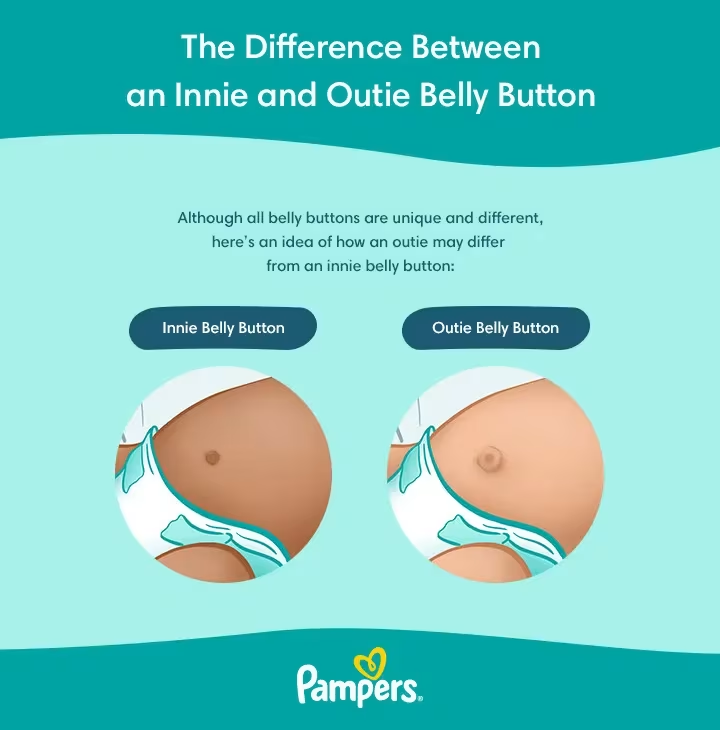
An outie is an informal, nonscientific term referring to a navel that protrudes outward, rather than being concave or inward facing, called an innie. So if your newborn’s belly button is sticking out, you can call your little's one adorable little belly button an outie.

What Determines an Innie or Outie Belly Button
The primary difference between an innie vs an outie belly button lies in the way the umbilical cord heals and the appearance of the navel after the cord stump falls off. An innie belly button is concave, with the surrounding skin folding inward, while an outie belly button protrudes outward.
Remember, though outie belly buttons may be less common than innies, they’re just as cute and are nothing to be concerned about. In our section below, you can find more information on other conditions that may be mistaken for an outie belly button.
What Causes an Outie Belly Button?
As mentioned above, a belly button is formed where the umbilical cord once was, after the stump falls off and the area heals. But why do some people have outies and others do not? It’s unclear exactly what causes an outie belly button, but it may have to do with the way the umbilical cord heals and detaches from your baby's body. Although we’ve mentioned that an outie belly button is typically a natural occurrence, in some cases, it may be a result of certain medical conditions. An outie could form because of an umbilical hernia or an umbilical granuloma, conditions that are generally harmless but that should be looked into by your little one’s healthcare provider.

Umbilical Hernia
An umbilical hernia in babies is a condition in which part of the intestine or fatty tissue bulges through a weak spot near the belly button (potentially causing the belly button to protrude). This hernia may look like a swelling or bulge and may be most evident when your little one cries or coughs. Most umbilical hernias close on their own by about 12 to 18 months. If you suspect your baby has an umbilical hernia or if they seem to be in pain, consult their healthcare provider for proper evaluation and management.
Umbilical Granuloma
An umbilical granuloma is a small, moist, red lump that can form on a baby's belly button after the umbilical cord stump falls off. It's a harmless overgrowth of scar tissue and usually resolves on its own after about a week, or with simple treatments. If it persists or causes any issues, consult your baby’s healthcare provider.
Can an Outie Belly Button Become an Innie?
Parents often have questions about outie belly buttons, including how to make an outie belly button go in naturally, how to prevent an outie belly button in newborns, and when do babies’ belly buttons go in? A key point to remember is that each belly button is unique and that there isn’t just one type. And, in most cases, an outie belly button will not change into an innie as the child grows, and there's no medical need for it to do so. However, if the outie is due to an umbilical hernia, it may resolve on its own within the first few years of your child's life. If you have any questions or concerns, contact your baby's provider. Don't try to do anything on your own to try to make the umbilical hernia close or to change the appearance of your little's one belly button, as this will not help and may cause discomfort in your baby.
How to Care for Your Baby’s Belly Button
Whether your little one has a tiny innie or outie belly button, you'll want to know how to care for it and keep it clean.
Read our helpful for more information on how to care for your newborn’s umbilical cord.
When to Contact Your Healthcare Provider
As we mentioned above, an outie belly button is most often no cause for concern. However, if you observe any of the following, contact your baby’s healthcare provider:
FAQS AT A GLANCE
There’s no exact answer for what causes an outie belly button; however, it’s possible an outie belly button is caused by the healing process after the umbilical cord stump falls off.
The Bottom Line
Outie belly buttons in babies are a normal variation in appearance and usually do not require any special care. By keeping the area clean and dry and watching for any signs of infection or discomfort, you can ensure your baby's outie belly button remains healthy and simply adorable.
If you have some spare time today, download the Pampers Club app to get rewards on all those diapers your baby is going through.
How We Wrote This Article The information in this article is based on the expert advice found in trusted medical and government sources, such as the American Academy of Pediatrics and the American College of Obstetricians and Gynecologists. You can find a full list of sources used for this article below. The content on this page should not replace professional medical advice. Always consult medical professionals for full diagnosis and treatment.
- American Academy of Pediatrics, Caring for Your Baby and Young Child: Birth to Age 5, 7th ed. (New York: Bantam Books, 2019).
- Cleveland Clinic. “Belly Button Yeast Infection.”
- Cleveland Clinic. “Umbilical Cord Appearance and Care.”
- Healthy Children. “Bathing Your Newborn.”
- Healthy Children. “Umbilical Hernia in Children.”
- Healthy Children. “Umbilical Cord Care.”
- Kids Health. “Navel.”
- Mayo Clinic. “Umbilical Hernia.”

Natural Mosquito Repellents To Keep Your Baby Protected This Summer
Find the best natural mosquito repellent for babies, homemade solutions, and safe ways to protect infants from mosquito bites.
Read more
Benefits of Kangaroo Mother Care for Premature Babies
Kangaroo Care can help premature babies in a number of ways. Read our guide to learn about Kangaroo Mother Care, its benefits, and how to safely practice it.
Read more
Pneumonia in Babies: Signs, Symptoms and Treatment
Common symptoms of pneumonia in babies include fever, fatigue and coughing. Understand the signs and symptoms of Pneumonia in infants and when to visit a healthcare professional with Pampers India.
Read more
Chest and Nasal Congestion in Newborns and Babies
Discover effective remedies for newborn nasal congestion and chest congestion with Pampers. Ease your baby's discomfort with simple home treatments for congestion in newborns
Read more
What Is Roseola And What Are The Symptoms?
Read on Pampers India to find out more about what roseola is, to learn the signs and symptoms, and for some tips that will help you assess when it may be a good idea to contact your baby's healthcare provider.
Read more
What Is the Ideal Room Temperature for Newborn Baby?
Room temperature for a newborn plays an important role in his development and safety. Click here on Pampers India to discover the ideal room temperature for a newborn and more!
Read more
Epstein Pearls in Newborns & Infant: Causes, Symptoms, and Treatment Options
Understand Epstein pearls in newborns & children. Learn the causes, symptoms, and available treatments for Epstein pearls and learn whether these are painful.
Read more
How to Differenciate Between Leaking Amniotic Fluid vs Vaginal Discharge?
Differenciating between leaking amniotic fluid and vaginal discharge can be quite helpful. Trust Pampers to help recognize the signs of amniotic fluid vs vaginal discharge.
Read more
Reasons Your Baby May Have Green Poop
Learn why your newborn baby or infant may have green poop. Find out if dark green stool in infants is normal and whether you should consult a pediatrician.
Read more
What Is Abhyanga Massage And What Are Its Benefits For Children?
Learn about Abhyanga massage, its benefits for babies, and how Ayurvedic therapy promotes relaxation, health, and better sleep.
Read moreNatural Mosquito Repellents To Keep Your Baby Protected This Summer
Find the best natural mosquito repellent for babies, homemade solutions, and safe ways to protect infants from mosquito bites.
Read moreBenefits of Kangaroo Mother Care for Premature Babies
Kangaroo Care can help premature babies in a number of ways. Read our guide to learn about Kangaroo Mother Care, its benefits, and how to safely practice it.
Read morePneumonia in Babies: Signs, Symptoms and Treatment
Common symptoms of pneumonia in babies include fever, fatigue and coughing. Understand the signs and symptoms of Pneumonia in infants and when to visit a healthcare professional with Pampers India.
Read moreChest and Nasal Congestion in Newborns and Babies
Discover effective remedies for newborn nasal congestion and chest congestion with Pampers. Ease your baby's discomfort with simple home treatments for congestion in newborns
Read moreWhat Is Roseola And What Are The Symptoms?
Read on Pampers India to find out more about what roseola is, to learn the signs and symptoms, and for some tips that will help you assess when it may be a good idea to contact your baby's healthcare provider.
Read moreWhat Is the Ideal Room Temperature for Newborn Baby?
Room temperature for a newborn plays an important role in his development and safety. Click here on Pampers India to discover the ideal room temperature for a newborn and more!
Read moreEpstein Pearls in Newborns & Infant: Causes, Symptoms, and Treatment Options
Understand Epstein pearls in newborns & children. Learn the causes, symptoms, and available treatments for Epstein pearls and learn whether these are painful.
Read moreHow to Differenciate Between Leaking Amniotic Fluid vs Vaginal Discharge?
Differenciating between leaking amniotic fluid and vaginal discharge can be quite helpful. Trust Pampers to help recognize the signs of amniotic fluid vs vaginal discharge.
Read more