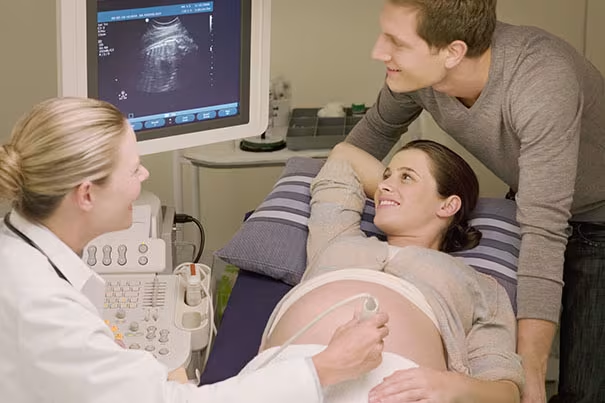
Labour advice and tips for childbirth


The techniques you learn in childbirth classes to lessen your discomfort during labour don't stop working once you've given birth; they are life skills as well. Find the most suitable childbirth classes for you during pregnancy.
These methods can help you to relax while breastfeeding, stay calm during the most trying moments of parenthood and even cope with the emotional and physical pains of life in general.
Of course, your primary concern at the moment is making your labour more manageable and these techniques will do just that. There a few stages when it comes to pregnancy labour you can visit Pampers India website to read about these stages. You may find that the strategies alone will ease the pain of your contractions. Or you may discover that they allow you to decrease the amount of medication you need or delay the start of an epidural anaesthetic, which may benefit your baby and your progress in labour.

Here are a few of the skills that you'll learn to assist you in delivery and beyond:
1. Pelvic Rock
Labour benefit:
Decreases the discomfort of back labour by helping the baby to move into an anterior position, with the back of the head towards the mother's abdomen and the face towards the mother's back.
Life skill:
Soothes lower backache. It also strengthens abdominal muscles and improves posture.
How it's done
Although you can practice the pelvic rock in almost any position, the easiest way to learn it is on your back. Be sure to turn onto your side after doing the exercise so you're not flat on your back for more than a few minutes. (Lying on your back puts more pressure on the blood vessels in your pelvis, which in turn may decrease oxygen supply and cause you to feel lightheaded.) Also, try post pregnancy workouts to heal & tighten your body after delivery.
2. Progressive Relaxation
Labour benefit:
This 'walk through your body' helps you to remain relaxed between contractions and minimises pain during contractions.
Life skill:
Relaxes you whenever you're feeling tense.
How it's done
4. End with a couple of slow, deep breaths, again going in through your nose and out through your mouth and open your eyes. Your limbs should feel heavy and your entire body relaxed.
3. Visual Imagery
Labour benefit:
Visual imagery – creating a picture in your mind – helps you to stay calm during and between contractions.
Life skill:
Creates a sense of peace whenever you feel stressed.
How it's done
You can practise visual imagery after progressive relaxation or on its own.
4. Slow-paced Breathing
Labour benefit:
Helps you to relax and focus during contractions.
Life skill:
Can be used to let off steam whenever you're feeling stressed, nervous or angry.
How it's done
By putting these methods to practice you will find that they will become life-long habits that will help you to relax while breastfeeding, stay calm during the most trying moments of parenthood and even cope with the emotional and physical pains of life in general.
Know what to expect during labour & childbirth during pregnancy. Also, You can ease out the pain with the things you can do before going into labour.
Articles Related To Labour & Delivery
Prenatal Ultrasounds
Discover the significance of prenatal ultrasounds, an unforgettable moment for parents-to-be. Learn all about ultrasound scans during pregnancy with insights from Pampers In.
Read more
Preparing For Labor and Delivery
Retrieving data. Wait a few seconds and try to cut or copy again.
Read more
What to Expect After Birth
Get prepared for postpartum with our essential checklist. Navigate the whirlwind of delivery room activity confidently. Learn about breastfeeding after birth & postpartum care.
Read more
The Full Prenatal Care Guide
Prenatal care guide: Ensure a healthy pregnancy with expert advice from a prenatal care doctor. Discover how Pampers IN can support your journey.
Read more
Lochia: Is Postpartum Bleeding Normal?
Postpartum bleeding, known as lochia, is a part of your body’s natural recovery mechanism. Click here on Pampers India to know more about what bleeding after delivery entails!
Read more
What to Expect from a 6-Week Ultrasound? 3D and 4D Scans Explained
At 6 weeks pregnant? Explore the benefits of a 3D ultrasound and 4D scan. Get insights into your baby's development during your 6-week ultrasound appointment.
Read more
Benefits of postpartum massages for new mothers
Discover how postpartum massages aid recovery, reduce stress, relieve pain, and promote better sleep after delivery for new mothers.
Read more
20 Affirmations to Prepare for Labour and Delivery
Empower yourself with pregnancy affirmations for a calm labor, positive birth experience, and a confident mindset for delivery.
Read more
What Is a Mucus Plug, and What Happens When You Lose It?
Learn about the mucus plug during pregnancy, including what its role is, what losing your mucus plug could mean, and how these changes indicate labor.
Read more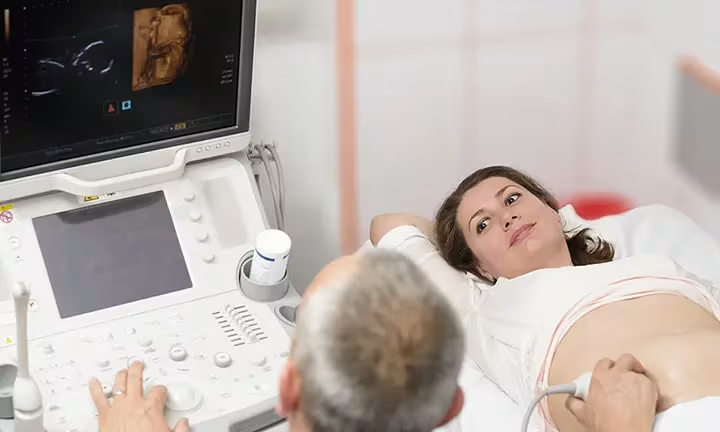
What Are 3D and 4D Ultrasound Scans?
Discover the enhanced clarity of 3D and 4D ultrasound scans in pregnancy. Learn all you need to know about these advanced imaging techniques, with insights from Pampers IN.
Read morePrenatal Ultrasounds
Discover the significance of prenatal ultrasounds, an unforgettable moment for parents-to-be. Learn all about ultrasound scans during pregnancy with insights from Pampers In.
Read morePreparing For Labor and Delivery
Retrieving data. Wait a few seconds and try to cut or copy again.
Read moreWhat to Expect After Birth
Get prepared for postpartum with our essential checklist. Navigate the whirlwind of delivery room activity confidently. Learn about breastfeeding after birth & postpartum care.
Read moreThe Full Prenatal Care Guide
Prenatal care guide: Ensure a healthy pregnancy with expert advice from a prenatal care doctor. Discover how Pampers IN can support your journey.
Read moreLochia: Is Postpartum Bleeding Normal?
Postpartum bleeding, known as lochia, is a part of your body’s natural recovery mechanism. Click here on Pampers India to know more about what bleeding after delivery entails!
Read moreWhat to Expect from a 6-Week Ultrasound? 3D and 4D Scans Explained
At 6 weeks pregnant? Explore the benefits of a 3D ultrasound and 4D scan. Get insights into your baby's development during your 6-week ultrasound appointment.
Read moreBenefits of postpartum massages for new mothers
Discover how postpartum massages aid recovery, reduce stress, relieve pain, and promote better sleep after delivery for new mothers.
Read more20 Affirmations to Prepare for Labour and Delivery
Empower yourself with pregnancy affirmations for a calm labor, positive birth experience, and a confident mindset for delivery.
Read more