
What Is a Mucus Plug, and What Happens When You Lose It?


As labor nears, you might be wondering what a mucus plug is and why someone might mention it with a grimace on their face. Rest assured that it’s a normal part of pregnancy and not a cause for concern. In fact, you might not even notice it! Still, it’s helpful to understand what the mucus plug is, what it looks like, and how long after losing the mucus plug labor might start. Read on for all the details.
What Is the Mucus Plug?
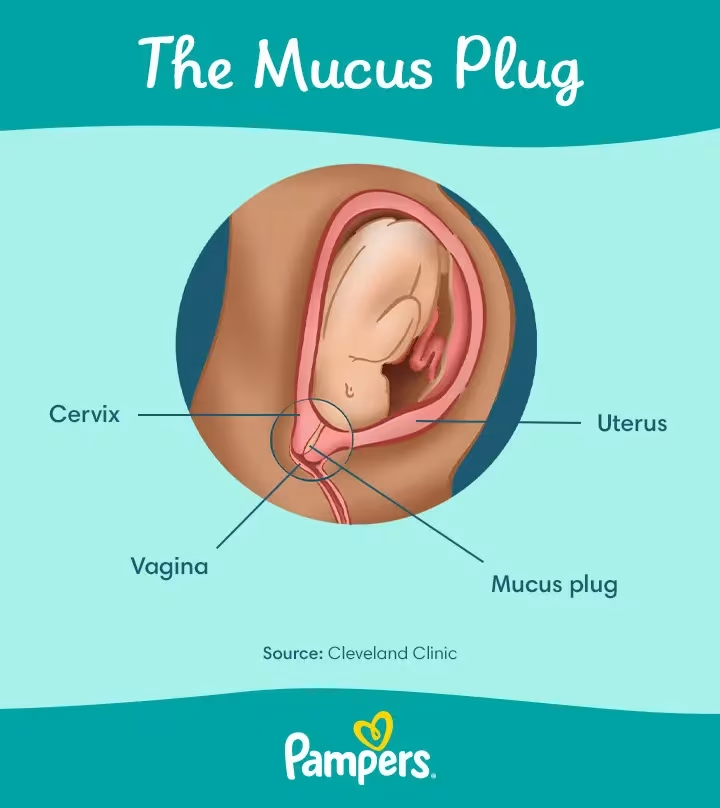
The mucus plug is a normal part of pregnancy. During your pregnancy, mucus accumulates in the cervix, forming a plug that protects your baby by preventing bacteria or infection from entering the uterus. You can think of it like a seal creating a barrier between your uterus and your vagina. Sometimes, the mucus plug is called the “bloody show,” or simply “the show.” This name comes from the fact that, when released, the mucus plug may mix with a little bit of blood in your cervix, which could give the discharge a slightly pink, red, or brown hue.
Is There a Difference Between the Bloody Show and the Mucus Plug?
The names mucus plug and bloody show are often used interchangeably. In some instances, as mentioned above, a slight distinction is made between a mucus plug that is clear and one that is bloody or has streaks of blood in it, which may instead be called a bloody show. Whichever term you use, your healthcare provider will know what you mean; you could even describe what you see to be more accurate.
In Summary During pregnancy, t he mucus plug forms and creates a barrier that protects your uterus, inhibiting bacteria and infection from reaching your baby. If it mixes with blood from your cervix, it’s sometimes called a bloody show. |
What Does a Mucus Plug Look Like?
The discharge you might see in a mucus plug can be clear, pink, a little bloody, or brownish in color. The mucus can come out in one thick string, one big glob, or in smaller segments. You might notice it on the toilet paper after you wipe, or you may not see it at all! If you notice bleeding that’s heavy, like a menstrual period, contact your healthcare provider, as this might not be the mucus plug coming out but something else that may require medical attention. The overall look and texture of a mucus plug will vary from person to person, but most commonly the plug will be:

Is It the Mucus Plug or Vaginal Discharge?
Because vaginal discharge is common during pregnancy, it’s easy to mistake this for the mucus plug, especially as you near labor. So, if you’re wondering if it’s the mucus plug you see or normal vaginal discharge, here’s how you can tell:
In Summary The mucus plug is usually thick, stringy, sticky, and/or jelly-like, and may appear clear, off-white, or slightly bloody with a pink, red, or brown hue. Your mucus plug is not the same as regular vaginal discharge, which tends to be thinner and yellow in color. |
Why and When Do You Lose Your Mucus Plug?
Losing your mucus plug is typically a sign that your cervix is starting to dilate (open). As the cervix dilates, the mucus pushes out into the vagina, which can be a sign you’re approaching labor—or it can be an early sign of labor itself. Read more about the other common signs of labor, including your water breaking. If you’ve reached at least 38 weeks in your pregnancy, then losing the mucus plug can be a sign that labor is approaching. You can contact your healthcare provider, who’ll advise you on the next steps, or you can wait until you experience contractions or your water breaking. Watch the video below to learn when it’s time to head to the hospital.
In Summary Losing your mucus plug typically happens as a result of your cervix starting to dilate—an exciting sign that labor is approaching! |
How Long After Losing the Mucus Plug Does Labor Start?
Although losing the mucus plug can be a sign of labor, it doesn’t always mean it’s baby time in the near future. The mucus plug can come loose several days or even one or two weeks before labor starts. Or, your mucus plug might want to wait until the last moment and appear at the very onset of labor. Every pregnancy is different, so contact your healthcare provider with any questions or concerns. If your pregnancy goes to full term, you’ll most likely lose your mucus plug in the ninth month of pregnancy. If you notice what looks like the mucus plug before 37 weeks of pregnancy, contact your healthcare provider, because this may be a sign of preterm labor. In many cases, contractions will start sometime soon after you lose the mucus plug. You might want to track them using this handy, printable contraction tracking chart. This will help you collect accurate information about your contractions that you can share with your healthcare provider. This downloadable chart, together with our information on how to time contractions, should make preparing for labor a bit easier.

In Summary Losing your mucus plug tends to happen late in pregnancy, though not everyone experiences this. If you lose your mucus plug before 37 weeks, contact your healthcare provider, as it may be a sign of preterm labor. |
FREQUENTLY ASKED QUESTIONS
You can lose your mucus plug days or even weeks before going into labor. Or, you might lose your mucus plug at the onset of labor. Every pregnancy is different, so check with your healthcare provider if you have any questions or concerns.
The Bottom Line
Losing your mucus plug is a normal and typical occurrence in late pregnancy. The mucus plug creates a barrier to help protect your developing baby from any bacteria or infection, so it’s only natural to lose it as you near labor. And although it could come out in one go, many people don’t even notice the mucus plug or mistake it for light vaginal discharge. So, although the mucus plug might not be the prettiest part of pregnancy, it’s an exciting sign that your baby is on the way. When you lose your mucus plug, you might want to get your hospital bag ready for when it’s time to go. And if you have a written birth plan, now might be a good time to read over it, and pack it in your hospital bag, too! Are you waiting until your sweet baby’s arrival to decide on a name? For a little inspiration, use our Baby Name Generator to filter through thousands of names!
How We Wrote This Article The information in this article is based on the expert advice found in trusted medical and government sources, such as the American Academy of Pediatrics and the American College of Obstetricians and Gynecologists. You can find a full list of sources used for this article below. The content on this page should not replace professional medical advice. Always consult medical professionals for full diagnosis and treatment.
Articles Related To Labour & Delivery

Preparing For Labor and Delivery
Retrieving data. Wait a few seconds and try to cut or copy again.
Read more
What to Expect After Birth
Get prepared for postpartum with our essential checklist. Navigate the whirlwind of delivery room activity confidently. Learn about breastfeeding after birth & postpartum care.
Read more
The Full Prenatal Care Guide
Prenatal care guide: Ensure a healthy pregnancy with expert advice from a prenatal care doctor. Discover how Pampers IN can support your journey.
Read more
Top 9 Postpartum Workout Ideas
Reclaiming your pre-baby fitness can be tough. Discover top postpartum exercise ideas and tips to kickstart your journey back to shape after pregnancy!
Read more
Lochia: Is Postpartum Bleeding Normal?
Postpartum bleeding, known as lochia, is a part of your body’s natural recovery mechanism. Click here on Pampers India to know more about what bleeding after delivery entails!
Read more
What to Expect from a 6-Week Ultrasound? 3D and 4D Scans Explained
At 6 weeks pregnant? Explore the benefits of a 3D ultrasound and 4D scan. Get insights into your baby's development during your 6-week ultrasound appointment.
Read more
Benefits of postpartum massages for new mothers
Discover how postpartum massages aid recovery, reduce stress, relieve pain, and promote better sleep after delivery for new mothers.
Read more
20 Affirmations to Prepare for Labour and Delivery
Empower yourself with pregnancy affirmations for a calm labor, positive birth experience, and a confident mindset for delivery.
Read more
What Are 3D and 4D Ultrasound Scans?
Discover the enhanced clarity of 3D and 4D ultrasound scans in pregnancy. Learn all you need to know about these advanced imaging techniques, with insights from Pampers IN.
Read more
Prenatal Ultrasounds
Discover the significance of prenatal ultrasounds, an unforgettable moment for parents-to-be. Learn all about ultrasound scans during pregnancy with insights from Pampers In.
Read morePreparing For Labor and Delivery
Retrieving data. Wait a few seconds and try to cut or copy again.
Read moreWhat to Expect After Birth
Get prepared for postpartum with our essential checklist. Navigate the whirlwind of delivery room activity confidently. Learn about breastfeeding after birth & postpartum care.
Read moreThe Full Prenatal Care Guide
Prenatal care guide: Ensure a healthy pregnancy with expert advice from a prenatal care doctor. Discover how Pampers IN can support your journey.
Read moreTop 9 Postpartum Workout Ideas
Reclaiming your pre-baby fitness can be tough. Discover top postpartum exercise ideas and tips to kickstart your journey back to shape after pregnancy!
Read moreLochia: Is Postpartum Bleeding Normal?
Postpartum bleeding, known as lochia, is a part of your body’s natural recovery mechanism. Click here on Pampers India to know more about what bleeding after delivery entails!
Read moreWhat to Expect from a 6-Week Ultrasound? 3D and 4D Scans Explained
At 6 weeks pregnant? Explore the benefits of a 3D ultrasound and 4D scan. Get insights into your baby's development during your 6-week ultrasound appointment.
Read moreBenefits of postpartum massages for new mothers
Discover how postpartum massages aid recovery, reduce stress, relieve pain, and promote better sleep after delivery for new mothers.
Read more20 Affirmations to Prepare for Labour and Delivery
Empower yourself with pregnancy affirmations for a calm labor, positive birth experience, and a confident mindset for delivery.
Read more