
Ringworm in Babies & Toddlers: Diagnosis, Treatment, and Prevention


You’ve probably heard of ringworm before. The name is actually a misnomer because ringworm has nothing to do with worms. Instead, the name is a reference to the ring-shaped rash caused by a fungal infection. Read on to learn more about what ringworm is, available treatments, and how you can try to prevent your baby or toddler from getting ringworm in the first place.

What Is Ringworm?
Ringworm is a common type of fungal skin infection that is somewhat contagious and can happen to anybody—not just young children. The fungus can spread through people, animals, and contaminated objects. So, for example, the clothing, bed linen, or towel of someone who has ringworm being used by someone else could help spread the infection. You may be more familiar with ringworm than you think, as it’s the same fungal infection that causes jock itch (tinea cruris) and athlete’s foot (tinea pedis). Essentially, when fungus grows on the groin area, it’s called jock itch; when it grows on the feet, it’s called athlete’s foot; and when it grows on any other part of the body, it’s called ringworm. The medical name of a fungal skin infection begins with tinea and is followed by a word referring to the infection's location. For example, tinea capitis means infections of the scalp, and tinea corporis means infections of the body.
In Summary Ringworm is a fungal skin infection that can happen to anyone, not just babies. Athlete’s foot and jock itch are some of the common forms of ringworm. |
How Do Babies and Toddlers Get Ringworm?
Ringworm can be spread to babies and toddlers in three different ways:
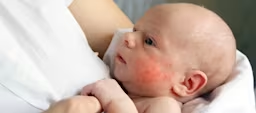
What Does Ringworm Look Like on Your Baby or Toddler?
Ringworm causes red, scaly, circular patches with raised edges. As the rash grows, the patches may become smoother in the center. The rash can show up on your child’s scalp or elsewhere on their body. Multiple ring-shaped patches can develop if the infection spreads untreated. Here’s how the rash evolves when symptoms appear, usually 4 to 14 days after the initial infection:
Keep in mind that hair may be lost in the affected area, especially if the ringworm rash is on the scalp. In some severe cases, the infection can cause scarring and permanent hair loss. It can be easy to confuse certain types of ringworm with dandruff, eczema, cradle cap, or another skin condition. Cradle cap only occurs in infancy, which means that if your child is over 1 year old, the infection is unlikely to be cradle cap and is more likely to be ringworm or another condition. Your child’s healthcare provider will be able to make a diagnosis if you’re unsure what’s causing the red, scaly patches on your little one’s skin.
In Summary Ringworm appears as red, scaly patches in roundish shapes on the skin, including the scalp. |

Ringworm Treatment for Babies and Toddlers
Your healthcare provider may recommend an over-the-counter cream, such as clotrimazole, tolnaftate, or miconazole, to treat your baby’s ringworm. Typically, this medication has to be applied two to three times a day for at least a week before the ringworm infection begins to clear. Read the instructions on the product label, and consult the pharmacist or your healthcare provider if you have any questions. If the over-the-counter cream doesn’t work, your child’s provider may prescribe a stronger oral antifungal medication. Tinea capitis (ringworm on the scalp) usually needs to be treated by oral antifungal medication, and sometimes a special shampoo may be recommended. Be sure to use the medication as directed and for as long as it’s recommended to ensure your baby’s ringworm clears up entirely.
Other members of the household may also need to get treatment. While the infection is still circulating in your home, be sure that items like combs, hats, and towels aren’t shared to prevent the fungal infection associated with ringworm from spreading (or re-spreading).
In Summary Ringworm can be treated with over-the-counter antifungal creams, or your baby’s healthcare provider may prescribe an oral medication. If the ringworm is on your baby’s scalp, the provider may recommend a special shampoo. |
How Can Ringworm Be Prevented?
Ringworm can be prevented through simple measures, including:
It may be a good idea to keep your child home from daycare or preschool to prevent spreading ringworm to others. Check with the daycare center or preschool as to what their policy might be regarding an infection like ringworm, or ask your child’s healthcare provider for personalized advice.
In Summary Ringworm can be prevented with proper hygiene, including keeping your baby’s skin dry, always using clean towels, avoiding sharing personal items like combs, laundering clothing regularly, and avoiding tight clothes. |
The Bottom Line
Ringworm is a completely treatable condition. It’s best to catch it early before it spreads to other parts of your baby’s body or to another member of the family. Over-the-counter medication and/or medication prescribed by your child’s healthcare provider can help eradicate the fungal infection. The key to helping prevent your baby or another family member from getting or spreading ringworm is to ensure articles of clothing, towels, and bed linen aren’t shared and that towels and clothes are washed regularly. If you suspect your pet has ringworm, take it to the veterinarian immediately, and be sure to wash your hands after contact. Ringworm infection can be contained with the proper precautions. With tender love and care combined with effective treatment, your baby or toddler will heal from this infection and have clear skin once again.
How We Wrote This Article The information in this article is based on the expert advice found in trusted medical and government sources, such as the American Academy of Pediatrics and the American College of Obstetricians and Gynecologists. You can find a full list of sources used for this article below. The content on this page should not replace professional medical advice. Always consult medical professionals for full diagnosis and treatment.
Articles Related To Baby Development

Neonatal Intensive Care Unit (NICU): Equipment
Get to know the NICU equipment crucial for premature baby care. Find out what tools are in the neonatal intensive care unit and their role in supporting your baby's health and growth.
Read more
Neonatal Intensive Care Unit (NICU): Common Problems
Retrieving data. Wait a few seconds and try to cut or copy again.
Read more
Hand, Foot, and Mouth Disease: Causes, Symptoms, Prevention & Treatment Hand, Foot, and Mouth Disease Explained
Hand, Foot, and Mouth Disease (HFMD) in newborns: Learn all the symptoms, causes, prevention tips, and treatment options to tackle this contagious illness in babies. Hand, Foot, and Mouth Disease (HFMD) in newborns: explore symptoms, causes, and treatment options to tackle this contagious illness for your baby's well-being.
Read more
Stork Bite Birthmarks
Navigate newborn skin markings: Stork bites, angel kisses, & nevus simplex—frequent birthmarks on baby's face or neck. Uncover their traits and significance.
Read more
Oral Thrush in Babies: Causes, Symptoms and Treatment
Oral thrush is a common fungal infection detected in babies. With proper treatment, oral thrush in newborns can be resolved easily. Click here on Pampers India to know more!
Read more
Pinkeye (Conjunctivitis) in Babies: Signs, Causes and Treatment
Pinkeye in babies and newborns can be caused by an infection or allergy. Read this guide to learn about the symptoms, treatments for pink eye, and how you can prevent it.
Read more
How to stop your newborn baby's hiccups in 10 easy ways
Newborn baby hiccups are very common and usually harmless. Get 10 tips on how to stop your baby's hiccups, and learn what causes baby hiccups and how to prevent them.
Read more
Baby Arching Back: Why Do Babies Arch Their Backs?
Learn why babies might arch their backs. So learn about common reasons, understand when it's normal, potential medical issues, and when to seek professional advice.
Read more
What to Know About Your Baby’s 2-Month Checkup
Curious about what to expect at your baby's 2-month checkup? Read on to learn from pediatricians about the screenings involved, important questions to ask, and how to best prepare for the visit.
Read more
Ear Infections in Babies and Toddlers: Signs and Symptoms
Is your baby pulling their ear, crying, or having trouble sleeping? These may be signs of an ear infection. Learn about the symptoms, causes, treatment, and how to tell if your child has one.
Read moreNeonatal Intensive Care Unit (NICU): Equipment
Get to know the NICU equipment crucial for premature baby care. Find out what tools are in the neonatal intensive care unit and their role in supporting your baby's health and growth.
Read moreNeonatal Intensive Care Unit (NICU): Common Problems
Retrieving data. Wait a few seconds and try to cut or copy again.
Read moreHand, Foot, and Mouth Disease: Causes, Symptoms, Prevention & Treatment Hand, Foot, and Mouth Disease Explained
Hand, Foot, and Mouth Disease (HFMD) in newborns: Learn all the symptoms, causes, prevention tips, and treatment options to tackle this contagious illness in babies. Hand, Foot, and Mouth Disease (HFMD) in newborns: explore symptoms, causes, and treatment options to tackle this contagious illness for your baby's well-being.
Read moreStork Bite Birthmarks
Navigate newborn skin markings: Stork bites, angel kisses, & nevus simplex—frequent birthmarks on baby's face or neck. Uncover their traits and significance.
Read moreOral Thrush in Babies: Causes, Symptoms and Treatment
Oral thrush is a common fungal infection detected in babies. With proper treatment, oral thrush in newborns can be resolved easily. Click here on Pampers India to know more!
Read morePinkeye (Conjunctivitis) in Babies: Signs, Causes and Treatment
Pinkeye in babies and newborns can be caused by an infection or allergy. Read this guide to learn about the symptoms, treatments for pink eye, and how you can prevent it.
Read moreHow to stop your newborn baby's hiccups in 10 easy ways
Newborn baby hiccups are very common and usually harmless. Get 10 tips on how to stop your baby's hiccups, and learn what causes baby hiccups and how to prevent them.
Read moreBaby Arching Back: Why Do Babies Arch Their Backs?
Learn why babies might arch their backs. So learn about common reasons, understand when it's normal, potential medical issues, and when to seek professional advice.
Read more