
Everything Explained About the Cry-It-Out Method for Your Baby's Sleep Training


Key Takeaways:
- The Cry-It-Out sleep training method involves helping your little one learn to self-soothe by letting them cry for a short period of time before tending to them in their crib (so long as they're safe).
- Crying is a natural form of communication for young babies and changing habits can be met with some protest. Consider your baby's readiness for sleep training and their unique temperament. Always consult your healthcare provider before introducing sleep training.
- This sleep training method might not be for you, and that's okay! Be patient and consistent in finding the right sleep solutions.
- Check out the Smart Sleep Coach by Pampers™ app for dedicated sleep tips, expert training, and tracking tools for getting your little one into a peaceful sleep routine.
If you're getting ready to start sleep training your little one, you're probably searching for the right technique. You may have heard of the cry-it-out (CIO) method from fellow parents, but is it a good fit for you and your baby? There are many sleep-training methods to consider, and crying it out (also known as the extinction method) is just one.
In this article, Mandy Treeby, our resident Pediatric Sleep Consultant for the Smart Sleep Coach by Pampers™ app, has detailed what this technique is and how it works, so you can make the right choice for your family.

What Is the Cry-It-Out (CIO) Sleep Training Method for Babies?
The cry-it-out (CIO) method is just as it sounds: letting your baby cry it out during sleep training. The method works because babies need to learn how to fall asleep, just like they learn other skills, such as rolling over, crawling, and walking. And to learn this ability, your little one needs a safe space and enough time to practice. As a parent, it might help to remember this tidbit, stay patient through the process, and know it will inevitably take time for your baby to master the skill.
The CIO (cry-it-out or extinction) method is one way to give your baby the necessary space to learn this skill. This method has you meet all your baby’s needs (feeding, a clean diaper, etc.) before placing them down to sleep while drowsy yet still awake. At which point you leave the room, and your baby is left to self-settle.
CIO is a non-parental involvement method, so essentially, you don't enter the room once you've put your baby down (of course, knowing you’ve met all their needs). If your baby is used to being rocked to sleep or fed to sleep, you can expect this change in approach will be met with some protesting. However, they will eventually fall asleep within a few nights and will have learned to self-soothe.
Tip It's also important to keep in mind that habit change is hard, and crying is a natural and normal response for babies and children of all ages. No matter what sleep-training approach or method you take, it’s likely to be met with some level of protest and crying. |
If you’re just starting to think about sleep training and don’t know where to begin, you can take this free sleep assessment and get a personalized sleep plan to address your baby’s sleep challenges.
CIO, Ferber, Pick-Up/Put-Down Methods: What’s the Difference?
We can classify sleep-training methods on a sliding scale from no-parental involvement (like CIO) to high parental involvement. This table gives you an idea of how to compare some of the different methods, but this is just three in a range of options to help your child learn to fall asleep:
| Sleep-Training Method | CIO | Ferber | Pick-Up/Put-Down |
|---|---|---|---|
| Parental Involvement | None | Moderate | High |
| Description | Allow your baby the space to self-soothe. | Uses timed checks to provide a brief reassurance, where the intervals between visits increase each time. | Pick your baby up every time they protest, placing them back in the crib once they’ve calmed down. |
| Best For | CIO works best for babies who are more resistant to change or parents who are looking for the fastest solution to sleep training. | The Ferber Method is best for easy-going babies that go with the flow and parents who can be consistent in waiting out the necessary intervals. | Parents who want to ease their way into habit change with little protesting might find the Pick-up/Put-down method to be the best. |
| Considerations | Protesting can last a long time (an hour or more) for the first night or two, but this method does work the fastest. You’ll see results in a couple of days, and it’s the easiest method for your baby to understand, as the message is consistent and clear for all sleeps. | If crying/protesting escalates when you enter the room, this may not be the best method for your baby. You could switch to the CIO method in this case. Ferber will take a little longer than CIO, and it doesn’t work well for naps (CIO tends to be better for napping). | If crying/protesting escalates when you enter the room, this might also not be the best method for your baby. You could switch to Ferber/CIO. This method takes longer for your baby to learn how to self-soothe, as they have less time to practice. |
| How long it takes* | 3-4 days for initial results | 7-10 days for initial results | 14-21+ days for initial results |
*Every baby is different, so it can be hard to put a time on each method. It also depends on how consistently you have applied the sleep-training method. Keep in mind that every time you “cave in” to your baby’s cries, you essentially return to the start.
When Can You Start and Stop the Cry-It-Out Method?
Pediatricians recommend you don’t start sleep training in general, including using the cry-it-out method, until your baby has reached the age of 12 weeks and a weight of 12 pounds.
Some parents assume sleep training should come much earlier and ask the question, how long should you let a newborn cry? The answer is never, and that’s because during the first 12-16 weeks of life, your baby’s circadian rhythm is maturing, and they are adjusting to life outside of the womb while learning the difference between night and day. This means their sleep is very disorganized and sleep training won’t work well, and that’s why you shouldn’t let a newborn cry it out.
Tip Regardless of when you start sleep training, it’s always a good idea to get the green light from your pediatrician first. |
As a sleep consultant, I find that babies are most ready, and you are most likely to succeed, when you start sleep training from 16 weeks of age. However, you can start with healthy sleep fundamentals from day one, which include:

Is My Baby Ready for Sleep Training with the CIO Method?
Remember that every baby and situation is different, so you might have to adjust your timeline a bit according to your little one’s specific needs. You might notice one or more of the following signs when your baby is ready for sleep training:
Remember, the goal of sleep training is for your little one to learn to fall asleep on their own. Once they've accomplished this, they will no longer protest at bedtime or wake crying in the night; they will simply roll over and go to sleep.
As you select the right approach to sleep training for your family, use your best judgment to decide what will work for you. But remember, if your little one doesn’t seem to be responding to your chosen approach, you can always consider trying a different method.
Tip It’s always easier to move from a higher parental involvement method to a lower parental involvement method rather than the other way around. |
And as you prepare for sleep training, check out this video from Mandy, our Pediatric Sleep Coach, so you are set up for success:
How to Do the Cry-It-Out (CIO) or Extinction Method
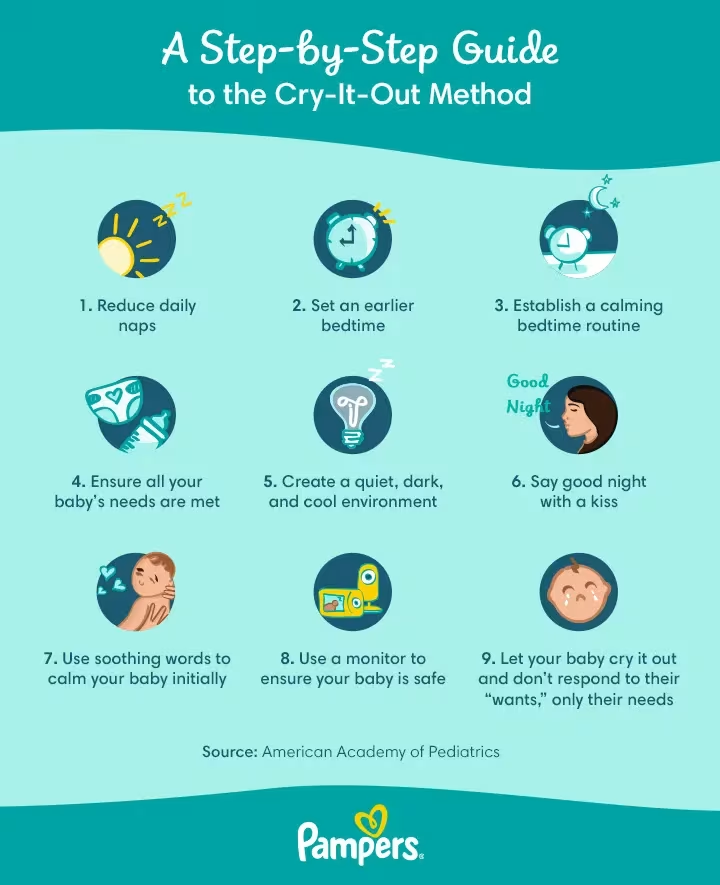
Preparing to sleep train is almost as essential as consistently delivering the sleep-training method itself. So, before you actually start the CIO method, there are a few important steps you should take:
Check your baby’s sleep environment. Ensure your baby is sleeping in a room that is:
set at a temperature between 68 and 72°F.
RELATED ARTICLE

Implementing the CIO Method
Once you have all the above in place, and you’ve decided when to “start sleep training,” whether you realize it or not! So, now, you’re ready to deliver the cry-it-out method using the following steps:
Remember, by being consistent and patient, you’re giving the cry-it-out method the best chance to be effective and your baby the best chance at learning how to become a strong, independent sleeper.
Tip If you struggle to hear the protesting, try swapping with your partner and taking a walk to clear your head. |
Is It Bad to Let a Baby Cry It Out?
You're not the only one out there asking this exact question; every parent worries and wonders if the cry-it-out method is bad for their baby. It might give you peace of mind to know that it is OK to let your baby cry; it doesn't harm them. In fact, short periods of crying can be helpful for babies.
Crying is a natural form of communication for babies and can actually aid in processing an active day, settling down, and falling asleep. Just as important is knowing that the crying-it-out method does not harm babies or damage their relationship with their parents.
That said, we understand that listening to your baby cry isn't easy and can be very challenging. One way to help you move forward with the cry-it-out method is to give your baby lots of attention and love during the day. This conveys that you love them and that daytime is for fun and attention, whereas nighttime is for independent sleeping. And when in doubt, remember that babies have ways to self-soothe when needed—not just tears, but also sucking on their hand or fingers, rocking their head, or rubbing the bedsheet. Crying it out can even help your little one learn how to self-soothe.
Is There a Modified Version of the Cry-It-Out Method?
There’s no official, modified cry-it-out method, but there are a few alternative sleep-training techniques to consider. But keep in mind that many sleep-training techniques result in at least a few tears and that some methods are more suitable and effective for toddlers and older kids. Learn how to sleep train without crying it out with the following methods:
If you’re unsure about CIO it’s better to start with one of these methods and switch to cry-it-out if the alternative is not working well for you and your little one.
Every baby and family is different, so it's best to give any sleep-training method at least two weeks of consistent delivery before switching. As always, be sure to consult your child's healthcare provider if you have additional questions or concerns.
FAQS AT A GLANCE
If you’re following the CIO or cry-it-out sleep-training method, the concept is to let your baby protest and cry until they fall asleep. With that logic, there’s no amount of time that’s too long. They’ll typically cry the longest on night one but significantly less by night three or four, with most babies not protesting at all within seven days. If your baby ever sounds in pain, then it’s best to check-in.
The Bottom Line
The cry-it-out method is just one sleep-training strategy. The framework involves you preparing your baby for the night and letting them cry themselves to sleep without any intervention from you (unless, of course, in an emergency). Whether this is the right technique for you and your family will be up to you to decide!
The cry-it-out method works best when the timing is right (no earlier than 3 months) and when your baby is fully ready for sleep training. This way, their natural sleep cycle will even out, and they'll start to adopt a more regular pattern and schedule for getting those much-needed Zs. Waiting for the right time and preparing your little one for peaceful snoozes with a calming bedtime routine may help reduce the number of tears as your baby gradually learns to fall asleep independently.
Of course, there are other sleep-training methods to try, and you can always swap one for the other if cry-it-out (CIO) is not working well for you. Just remember to stay consistent, be patient, and know that you’re doing a great job. Before you know it, your little one will understand how to self-soothe and fall asleep without any tears.
- Book: Caring for your baby and young child, birth to age 5, Sixth Edition Paperback – November 2, 2014, by American Academy of Pediatrics (Author)
- Book: Sleep: What Every Parent Needs to Know. American Academy of Pediatrics. Rachel Ed Moon (Editor). September 3, 2013
- Book: Sleeping Through the Night: How Infants, Toddlers, and Their Parents Can Get a Good Night's Sleep, Revised Edition Paperback—2005 by Jodi A. Mindell (Author)

Baby and Toddler Nap Schedules
Effective strategies for establishing a nap schedule tailored to your baby's needs. Learn about ideal nap durations and the number of naps recommended for infants and toddlers.
Read moreBaby Sleep Training: Nap and Bedtime Routines
A well-rested baby will actually sleep better at night. So, try your best to keep nap times consistent during the day. Watch and learn more.
Read more
Babies and toddlers in cars: Top safety tips
Read these car safety tips for babies & toddlers. From ensuring that you have the appropriate gear, to the best driving habits, this guide has it covered.
Read more
Baby Sleep Training
As every new parent knows, it can be challenging to put your baby to bed. Developing good bedtime habits is crucial, especially when the baby is four-month old. Click here on Pampers India for the best baby sleep training routine.
Read more
How To Put Your Baby To Sleep Fast: 9 Tips & Tricks
Learn simple techniques on how to make your newborn baby or infant sleep quickly. Discover proven ways to help your put your baby to sleep at night.
Read more
How Long Does 4-Month Sleep Regression Last and What Are the Causes?
Identify the symptoms of 4-month sleep regression and gain insights into managing your baby's sleep changes during this developmental phase.
Read more
When Can Babies Start Sleeping With Blankets?
why blankets increase the risk of SIDS in the first 12 months. Learn when it's safe for your baby to sleep with a blanket and get expert advice on baby sleep safety. Read on for crucial tips to keep your infant safe.
Read more
How Much Sleep Does a Toddler Need?
Find out how much sleep your toddler needs, effective toddler nap tips, and bedtime routines. Get insights on handling nightmares, teeth grinding, and more for a restful sleep
Read more
Everything Explained About The Ferber Method for Sleep Training
Learn about the Ferber Method, a popular sleep training method to help babies learn to sleep on their own. Read this guide to understand whether it could be a good fit for your little one.
Read more
Why an Early Bedtime Is Important to Babies and Toddlers
the importance of infant sleep routines & newborn bedtime practices. Uncover evolving sleep needs & the significance of a consistent bedtime routine for infants & toddlers.
Read moreBaby and Toddler Nap Schedules
Effective strategies for establishing a nap schedule tailored to your baby's needs. Learn about ideal nap durations and the number of naps recommended for infants and toddlers.
Read moreBaby Sleep Training: Nap and Bedtime Routines
A well-rested baby will actually sleep better at night. So, try your best to keep nap times consistent during the day. Watch and learn more.
Read moreBabies and toddlers in cars: Top safety tips
Read these car safety tips for babies & toddlers. From ensuring that you have the appropriate gear, to the best driving habits, this guide has it covered.
Read moreBaby Sleep Training
As every new parent knows, it can be challenging to put your baby to bed. Developing good bedtime habits is crucial, especially when the baby is four-month old. Click here on Pampers India for the best baby sleep training routine.
Read moreHow To Put Your Baby To Sleep Fast: 9 Tips & Tricks
Learn simple techniques on how to make your newborn baby or infant sleep quickly. Discover proven ways to help your put your baby to sleep at night.
Read moreHow Long Does 4-Month Sleep Regression Last and What Are the Causes?
Identify the symptoms of 4-month sleep regression and gain insights into managing your baby's sleep changes during this developmental phase.
Read moreWhen Can Babies Start Sleeping With Blankets?
why blankets increase the risk of SIDS in the first 12 months. Learn when it's safe for your baby to sleep with a blanket and get expert advice on baby sleep safety. Read on for crucial tips to keep your infant safe.
Read moreHow Much Sleep Does a Toddler Need?
Find out how much sleep your toddler needs, effective toddler nap tips, and bedtime routines. Get insights on handling nightmares, teeth grinding, and more for a restful sleep
Read more