When Will Your Baby Turn Head Down?


During pregnancy, your baby’s position can change frequently. One of the most important changes occurs when the baby turns to a headfirst, head-down position in the uterus, which often happens toward the end of your pregnancy. Wondering when “should” your baby be head down, or how to tell if your baby is head down? Get these answers as well as more information on the baby’s head-down position, the symptoms of a baby turning head down, and the optimal baby position for birth.

Why Does a Baby Turn to a Head-Down Position for Birth?
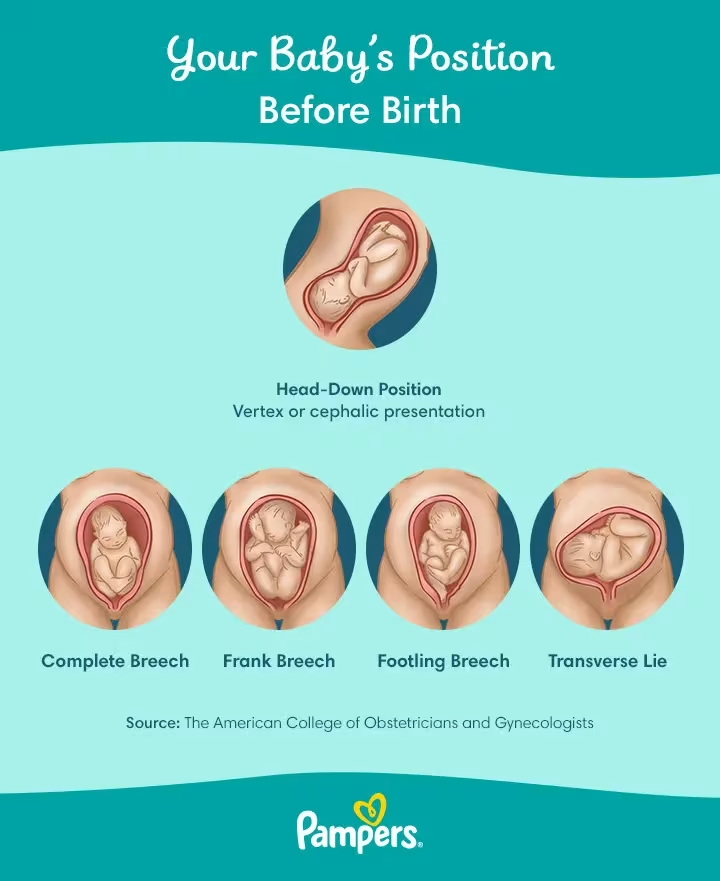
So, what does it mean when a baby is head down? Babies generally turn head down toward the birth canal as a part of their natural instinct to get into the best possible position for birth. This is known as the vertex or cephalic presentation. A baby may settle into the optimal position, which is head down and facing the mother's back (occiput anterior position), but occasionally they may position themselves head down and face forward (occiput posterior position). The face-forward position may cause more discomfort during delivery.
Remember, each pregnancy is unique. If you have any concerns about your baby's position, it's always best to consult your healthcare provider.
When Does a Baby Turn Head Down?
Curious about when a baby “should” be head down? It’s important to remember that the exact timing of when a baby turns head down can vary from pregnancy to pregnancy. Generally, babies turn head down during the third trimester (which ranges from 28 to 40 weeks), a few weeks before birth.

How to Tell if Your Baby Is Head Down
To determine your baby’s position, your healthcare provider will usually perform a physical exam during the final few weeks of your pregnancy, feeling your abdomen to locate your baby’s head. They may also perform an ultrasound to confirm the position, especially if your baby is suspected of being in breech presentation, meaning your baby’s feet or buttocks are positioned downward, lower than the head.
So, how to tell if your baby is head down without an ultrasound? And can you feel when your baby turns head down? You may notice signs and symptoms indicating your baby is turning head down. These could include:
These symptoms may be more evident when your baby “drops” lower into your pelvis in preparation for labor. This process is known as lightening.
Remember, every pregnancy is different, and you may not experience any sensation or signs that your baby is head down.
If you're unsure if your baby is head down, your healthcare provider can confirm the position during a prenatal checkup.
What if Your Baby Doesn’t Move Head Down?
When a baby is not head down, they might be in what's known as a breech position or a sideways transverse lie position. In a breech position, the baby's buttocks or feet are positioned to descend down the birth canal first, instead of the head. This position can pose certain risks during vaginal birth, as the baby's head is the last part to emerge. Three main types of breech positions include frank breech, complete breech, and footling breech.
If you're getting closer to your due date and your baby is still not head down, there are a few options that your healthcare provider may consider:
It's important to discuss these options with your healthcare provider to determine the best course of action for you and your baby. In some cases, your little one may continue to move around and switch positions in the weeks before birth. Again, keep in mind that every pregnancy and birth is unique and your healthcare team will work with you to ensure a safe delivery for both you and your little one.

Can You Help Your Baby Move to a Head-Down Position?
If your baby is not yet in a head-down position and your due date is approaching, you may be wondering how to “get” your baby to turn head down. While you can’t actually make your little one do something, there are some gentle things you can try to encourage them to move, after checking with your healthcare provider. It's important to note that these methods are not guaranteed to work. They include:
Remember to always consult your provider before attempting any exercises or techniques to help your baby move.
FAQS AT A GLANCE
The timing varies for when a baby turns head down. In general, babies turn head down a few weeks before birth.
The Bottom Line
In the final weeks of pregnancy, you could be concerned about your baby's positioning and wondering “When do babies turn head down?” if your little one hasn't settled into this position yet. But rest assured, your baby still has time to turn head down, and even if they don't do this, there are safe delivery options available. Remember to stay in close communication with your healthcare provider and reach out if you have any questions or concerns. You're doing a great job—keep up the good work!
How We Wrote This Article The information in this article is based on the expert advice found in trusted medical and government sources, such as the American Academy of Pediatrics and the American College of Obstetricians and Gynecologists. You can find a full list of sources used for this article below. The content on this page should not replace professional medical advice. Always consult medical professionals for full diagnosis and treatment.
Articles Related To Labour & Delivery
- American College of Obstetricians and Gynecologists, Your Pregnancy and Childbirth: Month to Month, 7th ed. (Washington, DC: American College of Obstetricians and Gynecologists, 2021).
- ACOG. “If Your Baby is Breech.”
- Cleveland Clinic. “Breech Baby.”
- Cleveland Clinic. “Fetal Positions for Birth.”
- Cleveland Clinic. “Vertex Presentation.”
- Mayo Clinic. “Fetal Presentation Before Birth.”
Prenatal Ultrasounds
Discover the significance of prenatal ultrasounds, an unforgettable moment for parents-to-be. Learn all about ultrasound scans during pregnancy with insights from Pampers In.
Read more
Preparing For Labor and Delivery
Retrieving data. Wait a few seconds and try to cut or copy again.
Read more
What to Expect After Birth
Get prepared for postpartum with our essential checklist. Navigate the whirlwind of delivery room activity confidently. Learn about breastfeeding after birth & postpartum care.
Read more
The Full Prenatal Care Guide
Prenatal care guide: Ensure a healthy pregnancy with expert advice from a prenatal care doctor. Discover how Pampers IN can support your journey.
Read more
Lochia: Is Postpartum Bleeding Normal?
Postpartum bleeding, known as lochia, is a part of your body’s natural recovery mechanism. Click here on Pampers India to know more about what bleeding after delivery entails!
Read more
What to Expect from a 6-Week Ultrasound? 3D and 4D Scans Explained
At 6 weeks pregnant? Explore the benefits of a 3D ultrasound and 4D scan. Get insights into your baby's development during your 6-week ultrasound appointment.
Read more
Benefits of postpartum massages for new mothers
Discover how postpartum massages aid recovery, reduce stress, relieve pain, and promote better sleep after delivery for new mothers.
Read more
20 Affirmations to Prepare for Labour and Delivery
Empower yourself with pregnancy affirmations for a calm labor, positive birth experience, and a confident mindset for delivery.
Read more
What Is a Mucus Plug, and What Happens When You Lose It?
Learn about the mucus plug during pregnancy, including what its role is, what losing your mucus plug could mean, and how these changes indicate labor.
Read more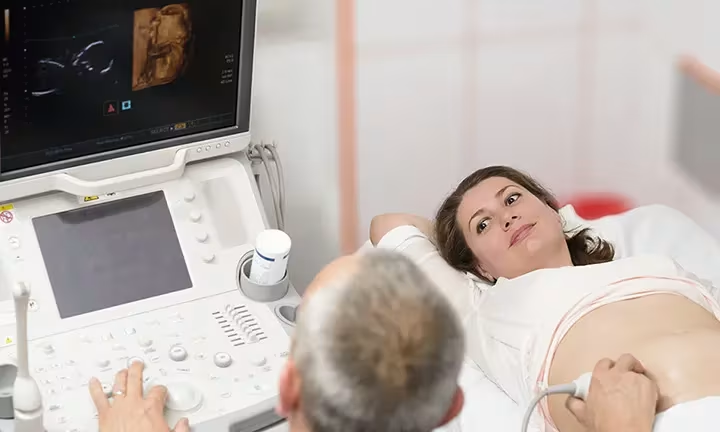
What Are 3D and 4D Ultrasound Scans?
Discover the enhanced clarity of 3D and 4D ultrasound scans in pregnancy. Learn all you need to know about these advanced imaging techniques, with insights from Pampers IN.
Read morePrenatal Ultrasounds
Discover the significance of prenatal ultrasounds, an unforgettable moment for parents-to-be. Learn all about ultrasound scans during pregnancy with insights from Pampers In.
Read morePreparing For Labor and Delivery
Retrieving data. Wait a few seconds and try to cut or copy again.
Read moreWhat to Expect After Birth
Get prepared for postpartum with our essential checklist. Navigate the whirlwind of delivery room activity confidently. Learn about breastfeeding after birth & postpartum care.
Read moreThe Full Prenatal Care Guide
Prenatal care guide: Ensure a healthy pregnancy with expert advice from a prenatal care doctor. Discover how Pampers IN can support your journey.
Read moreLochia: Is Postpartum Bleeding Normal?
Postpartum bleeding, known as lochia, is a part of your body’s natural recovery mechanism. Click here on Pampers India to know more about what bleeding after delivery entails!
Read moreWhat to Expect from a 6-Week Ultrasound? 3D and 4D Scans Explained
At 6 weeks pregnant? Explore the benefits of a 3D ultrasound and 4D scan. Get insights into your baby's development during your 6-week ultrasound appointment.
Read moreBenefits of postpartum massages for new mothers
Discover how postpartum massages aid recovery, reduce stress, relieve pain, and promote better sleep after delivery for new mothers.
Read more20 Affirmations to Prepare for Labour and Delivery
Empower yourself with pregnancy affirmations for a calm labor, positive birth experience, and a confident mindset for delivery.
Read more