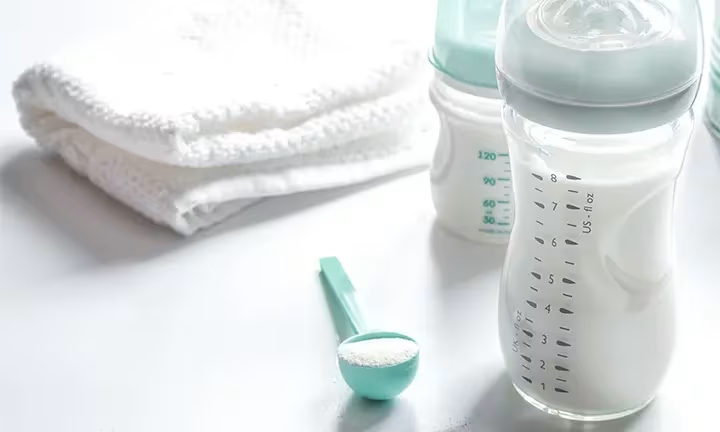
When Do Babies Stop Drinking Formula


When do babies stop drinking formula? This is a question every parent of a formula-fed baby asks themselves, as there will come a time when your little one is ready to make the big switch to milk. Would you like to know how long babies drink formula and how to transition from formula to milk? We’ve got you covered with all the answers to these common questions and more!

How Long Do Babies Drink Formula?
So, at what age do babies stop drinking formula? The general rule of thumb is to start transitioning from formula to cow’s milk at 1 year, but not anytime sooner. During the first year of life, babies experience rapid growth and development and require nutrient-rich breast milk or formula to supply what’s necessary and essential to support their development. Though nutritious, cow’s milk can’t be digested by babies younger than 1.
Tip Wait until your baby is at least 12 months old to start transitioning from formula to milk. Consult your healthcare provider if you have any questions or concerns. |
How to Transition From Formula to Milk
Switching from formula to milk is fairly straightforward—you simply swap the two! This is because formula and milk are nutritionally similar. Of all the formulas sold in the United States, 8 out of 10 are cow’s milk-based formulas. Manufacturers make formula digestible and adequately nutritious for newborns by treating and fortifying it. And since babies can start drinking milk only when their digestive systems are ready, formula will get them through that first year. By the time your little one is 12 months, they’ll be ready to enjoy nutritious cow’s milk!
Tip When choosing cow’s milk, opt for whole or 2 percent so your toddler still gets that necessary high fat content. This helps support healthy growth and brain development during the active toddler phase. |
To learn more about how your little one will develop through the years, check out our baby growth calculator below!
Introducing Solids: 6 Months
Prior to the transition from formula to milk, you’ll expand your baby’s menu by incorporating a few solid foods into their diet, usually when your little one is about 6 months old. This will help your child (and their digestive system) get used to trying new flavors. Here’s what to do at 6 to 12 months, before you begin switching from formula to milk:
As your baby gets used to this new smorgasbord of foods, you can simply swap the formula for milk. It doesn’t have to be a gradual process unless that better fits your little one’s needs.
In Summary Switching from formula to milk is fairly easy—you just swap them when your baby is 1 year old! Your baby’s digestive system will encounter new flavors and textures a little earlier, when you start introducing small, soft solid foods at 6 months. |
Making the Transition: 12 Months
At 12 months, your baby is ready to make the full switch to milk. However, as your little one starts drinking milk, you may notice a few changes in feeding behavior. Here are a couple of things to keep in mind:
In Summary After 12 months, toddlers need about three cups of whole milk or 2 percent milk per day along with various solid foods. |

Alternatives to Cow’s Milk
There are a few reasons you might choose an alternative to cow’s milk as you start transitioning from formula to milk. Some babies may have lactose intolerance or a milk allergy. Perhaps your little one simply doesn’t like the taste, or maybe your family prefers to avoid animal products. A fortified, unsweetened soy milk is often recommended as a substitute for cow’s milk. There are other plant-based options that may or may not contain the right amount of protein and vitamins to support healthy growth. If you’d like to use an alternative to cow’s milk, consult your healthcare provider to make sure your baby is getting the nutrients they need.
How to Start Weaning Your Baby Off Formula
Luckily, the process of transitioning from formula to milk is fairly simple. However, there are a few tips to make the switch as smooth as possible as you wean your baby off formula. Weaning typically refers to the gradual transitioning from breast feeding to bottle feeding; in this case, it can also refer to preparing your baby to switch from formula to milk. Although you can simply swap formula for milk, here are a few things you can do to get ready for the big change!
3.1. Start gradually by letting your baby hold a cup and get a feel for it. Then put a little formula in it and show them how to tip it back and sip. Use a baby-friendly sippy cup to help avoid spills and dribbles!
3.2. Once your baby has the hang of it, change one bottle feeding to a cup each day and work your way up. Eventually, you can swap every bottle for a cup.
3.3. Every child is different, and your baby may not want to drink from a cup right away. Be patient, as your little one may need 6 months or more to make the full transition.
Tip When you stop using a bottle for your baby, it should help if the final change is the feeding before bedtime. That pre-bedtime bottle is a source of comfort and can be a tough one for your baby to give up, even when they no longer need the extra nourishment to get them through the night. |

Transitioning Gradually From Formula to Milk
Some babies need a little more time to make the switch from formula to milk, and that’s OK! Simply introduce milk little by little. Be patient and know that your toddler is on the right path. In the end, what’s most important is offering your little one food with a variety of nutrients, flavors, and textures throughout the week. No need to worry if you have a picky eater on your hands. Within an entire week—believe it or not—it usually works out, and even the pickiest eaters will most likely get the nutrients they need!
In Summary Help your toddler prepare for the switch to milk by introducing solid foods, self-feeding, and a sippy cup before starting the transition. And no need to worry if your little one needs more time or a gradual transition. Every child is different! |
When Do Toddlers Stop Drinking Milk?
Once you’ve made the switch, and your little one is drinking milk every day, the next question on your mind could be: when do toddlers stop drinking milk? This common question has a complex answer. Milk is an important source of fats, protein, calcium, and vitamins A and D, and children of any age as well as adults can continue to drink it for the rest of their lives if they wish. However, lactose intolerance can appear later in life, typically in older children and adults. So, just watch for signs of digestive discomfort and talk to your healthcare provider if you suspect an intolerance or allergy to milk. During the stage when your child is drinking milk, it’s helpful to know how much of it a toddler typically needs:
At 24 months, your child is getting important nutrients from other sources, like solids. So, you can lower the amount of milk they consume.
In Summary Toddlers don’t need to stop drinking milk unless they have an intolerance or allergy. However, after 24 months, you can reduce the amount of milk they drink from three cups to two cups. |
FAQS AT A GLANCE
Typically, switching from formula to milk can start at about 12 months. This is when your baby’s digestive system may be ready to start digesting cow’s milk. After stopping formula, your little one will need the nutrients in milk to keep growing and developing.
The Bottom Line
So, when do babies stop drinking formula? The answer is surprisingly simple! At about 12 months, your baby’s digestive system is ready to start processing nutrient-rich cow’s milk. And transitioning from formula to milk is even easier—just swap it!Before you make the transition, you can introduce new flavors via solid foods to your little one at around 6 months. And once your baby develops coordination and hand skills, start the gradual move to a sippy cup. This will all help ease the process of switching from formula to milk.Read more about baby development milestones as your little one grows from a bottle-loving newborn to a self-feeding toddler!How We Wrote This Article The information in this article is based on the expert advice found in trusted medical and government sources, such as the American Academy of Pediatrics and the American College of Obstetricians and Gynecologists. You can find a full list of sources used for this article below. The content on this page should not replace professional medical advice. Always consult medical professionals for full diagnosis and treatment.
- American Academy of Pediatrics, Caring for Your Baby and Young Child
- Kids Health: When can babies start drinking cow’s milk?
- Healthy Children: Cow’s milk alternatives
- Nemours Kids Health: Stopping the bottle
- CDC: Weaning
- Nemours Kids Health: Weaning your child
- Healthy Children: Lactose intolerance in infants and children
- Nemours Kids Health: Nutrition guide for toddlers
- Healthy Children: Feeding and nutrition tips: your 2-year-old

When Can Babies Eat Eggs?
Wondering when it's safe to give eggs to your baby? Explore tips on introducing eggs safely into your baby's diet and how to prepare them. Plus, find Pampers IN for more parenting advice.
Read more
Newborn to 12 Month Old Baby: Feeding Schedule & Charts
Develop a perfect feeding schedule for your baby with our detailed guide. Ensure your baby receives the right nutrition at every stage of their growth.
Read more
Baby-Led Weaning- (BLW): How to start solids, best foods & safety tips
Baby-led weaning involves introducing solid foods to babies while skipping the pureed food phase. Get expert tips on when to start BLW and the safest foods for BLW.
Read more
How a Lactation Consultant Can Help You
Tips on how lactation consultants can support breastfeeding, addressing issues like sore nipples and low milk supply. Get expert advice to enhance your breastfeeding experience with help from Pampers.
Read more
What is nipple confusion and how to prevent it?
Understand what nipple confusion is, its causes, signs, and practical tips to prevent confusion between breast and bottle feeding for newborns.
Read more
5 Tips for Breastfeeding in Public
Make public breastfeeding easier with these tips. Learn how to breastfeed comfortably and what essentials to have on hand for a smooth experience.
Read more
Sore, Cracked, or Bleeding Nipples While Breastfeeding
Effective relief for cracked nipples during breastfeeding. Explore causes, treatments, and prevention methods for soothing comfort. Find solutions for cracked nipples.
Read more
Find Out Whether You Can Consume Caffeine While Breastfeeding
" Can you consume caffeine while breastfeeding? Find out how much caffeine it’s safe to consume while breastfeeding and what effect too much caffeine can have on your breastfeeding baby’s health and well-being."
Read more
The 19 Most Useful Breastfeeding Tips and Tricks
Struggling with breastfeeding? Discover helpful tips to ease the process for you and your newborn. Get started with confidence and ensure a successful breastfeeding journey
Read more
When Can You Introduce Honey to Your Baby
Explore the risks of giving honey to infants and learn when it's safe to introduce this sweet treat to your little one. Get expert guidance here, brought to you by Pampers IN
Read moreWhen Can Babies Eat Eggs?
Wondering when it's safe to give eggs to your baby? Explore tips on introducing eggs safely into your baby's diet and how to prepare them. Plus, find Pampers IN for more parenting advice.
Read moreNewborn to 12 Month Old Baby: Feeding Schedule & Charts
Develop a perfect feeding schedule for your baby with our detailed guide. Ensure your baby receives the right nutrition at every stage of their growth.
Read moreBaby-Led Weaning- (BLW): How to start solids, best foods & safety tips
Baby-led weaning involves introducing solid foods to babies while skipping the pureed food phase. Get expert tips on when to start BLW and the safest foods for BLW.
Read moreHow a Lactation Consultant Can Help You
Tips on how lactation consultants can support breastfeeding, addressing issues like sore nipples and low milk supply. Get expert advice to enhance your breastfeeding experience with help from Pampers.
Read moreWhat is nipple confusion and how to prevent it?
Understand what nipple confusion is, its causes, signs, and practical tips to prevent confusion between breast and bottle feeding for newborns.
Read more5 Tips for Breastfeeding in Public
Make public breastfeeding easier with these tips. Learn how to breastfeed comfortably and what essentials to have on hand for a smooth experience.
Read moreSore, Cracked, or Bleeding Nipples While Breastfeeding
Effective relief for cracked nipples during breastfeeding. Explore causes, treatments, and prevention methods for soothing comfort. Find solutions for cracked nipples.
Read moreFind Out Whether You Can Consume Caffeine While Breastfeeding
" Can you consume caffeine while breastfeeding? Find out how much caffeine it’s safe to consume while breastfeeding and what effect too much caffeine can have on your breastfeeding baby’s health and well-being."
Read more